




Ladybug
Coccinellidae
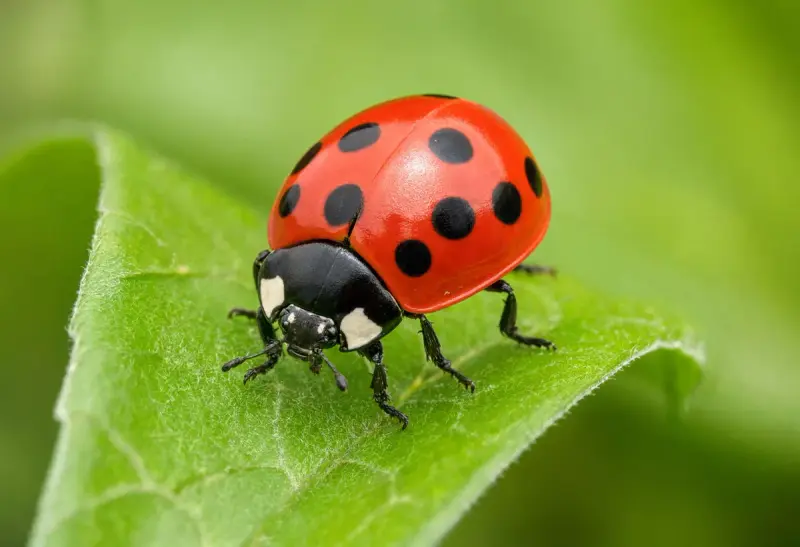
Ladybugs (family Coccinellidae) are among the most beneficial insects in any garden or plant collection. Both adults and larvae are voracious predators — a single adult can consume 50–100 aphids per day, while larvae eat even more. Coccinella septempunctata (seven-spotted ladybug) and Harmonia axyridis (harlequin ladybug) are the species most commonly encountered. They should never be treated as pests.
How to Identify
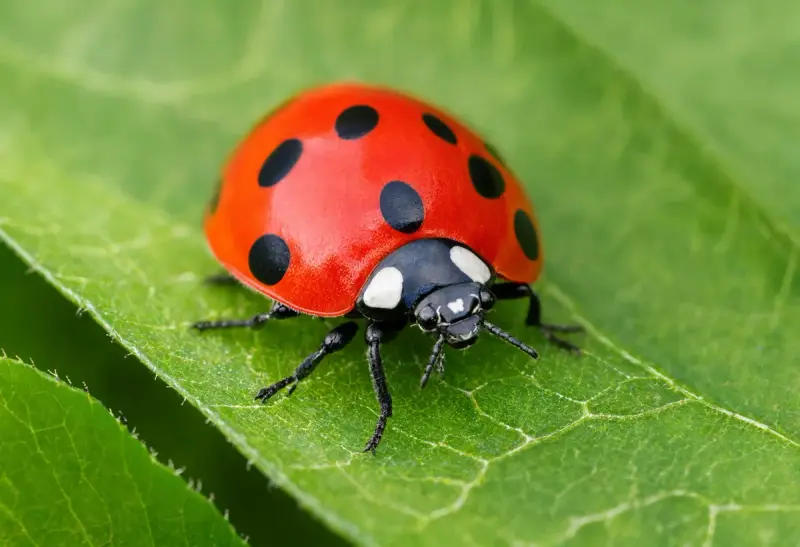
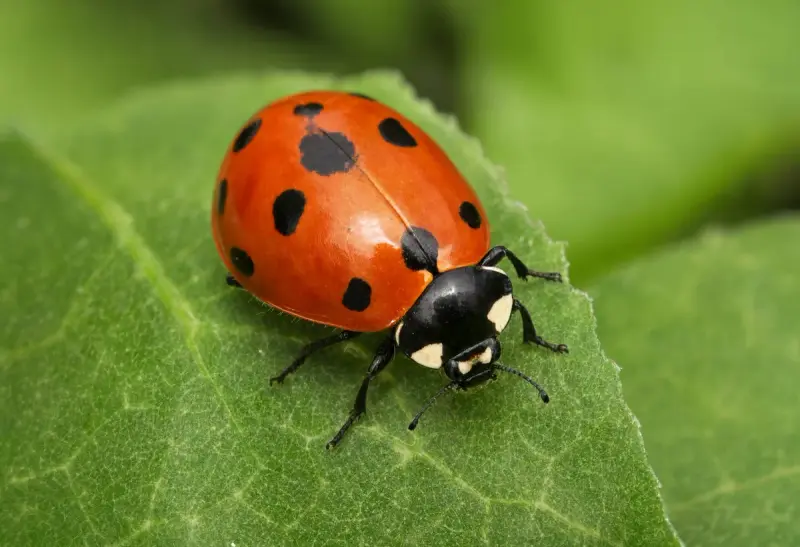
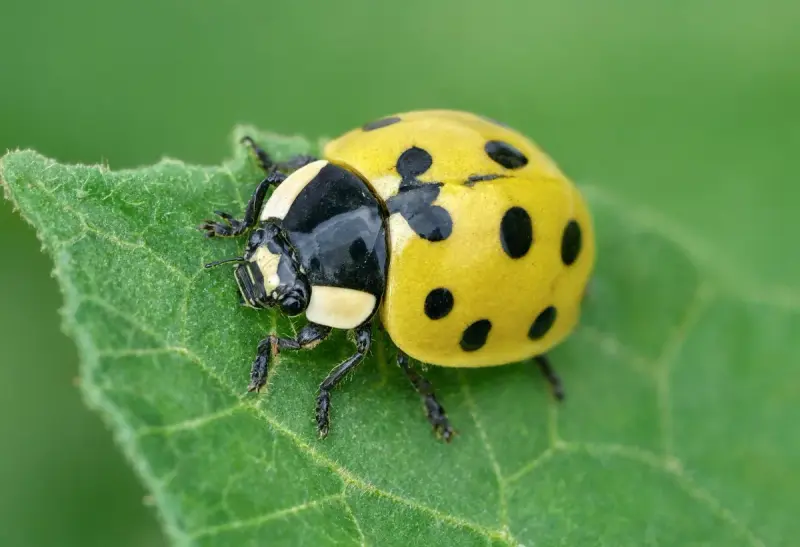
Round, dome-shaped beetles 4–8 mm long with distinctive spot patterns. Most are red or orange with black spots, though yellow, black, and cream varieties exist. Larvae are elongated, dark grey or black with orange or yellow markings, and are often mistaken for pests — they are the most effective predatory stage. Eggs are yellow ovals laid in clusters of 10–50 near aphid colonies.
Life Cycle
Females lay 400–500 eggs near aphid colonies over their lifespan. Larvae hatch in 3–5 days and pass through 4 instars over 3 weeks, consuming hundreds of aphids. Pupation takes 1–2 weeks. Adults overwinter in sheltered locations and emerge in spring. Multiple generations occur per year in warm climates.
Visual Identification
Red Variety
Orange Variety
Yellow Variety
How to Encourage Them
- 1
Do NOT apply pesticides — ladybugs are beneficial and should be protected
- 2
If found indoors in large numbers, gently relocate them outside near pest-affected plants
- 3
Place near aphid or mealybug infestations to harness their predatory feeding
- 4
Avoid using broad-spectrum insecticides that would eliminate this natural pest control
Prevention
Encourage ladybug presence by avoiding broad-spectrum pesticides that kill them
Plant nectar-producing flowers near your plant collection to attract adults
Purchase and release Cryptolaemus montrouzieri (mealybug destroyer, a ladybug relative) for mealybug control
Provide overwintering habitat with leaf piles or insect hotels near outdoor plants
Frequently Asked Questions
Are ladybugs harmful to plants?
No — ladybugs are entirely beneficial. Both adults and larvae are predators that eat aphids, spider mites, scale insects, and mealybugs. They are one of the most effective forms of natural pest control available.
How many aphids does a ladybug eat?
A single adult ladybug can eat 50–100 aphids per day. Larvae eat even more — up to 400 aphids during their larval development. Releasing ladybugs near an aphid infestation can significantly reduce populations within days.
See how growers dealt with Ladybug
Browse real grow diaries from the community — treatments, timelines, and results.
Browse community diaries →