


Plant Comparison
Drosera Binata vs Adelae
Binata and adelae barely look like the same genus. Binata forks its leaves into thin forked tines, sometimes repeatedly, for a spidery look unlike any other sundew. Adelae keeps broad, strap-shaped leaves and tolerates the kind of low light and shade that would stall most other sundews. The real difference is light: binata wants it bright and direct, adelae is one of the few sundews that copes with shade.
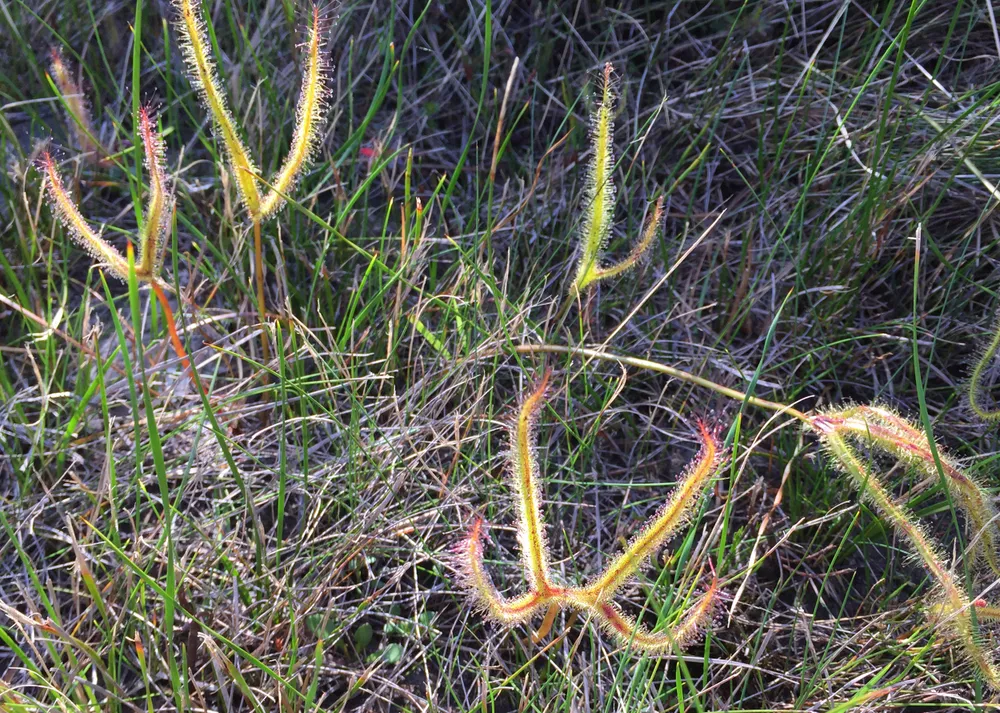
Drosera binata
Drosera binata
Sundew with dramatically forked, fork-like leaves — some cultivars fork repeatedly for a spidery silhouette. Wants strong light and goes dormant in cold winters outdoors.
Photo: PotMart186 / CC BY-SA 4.0 · Wikimedia Commons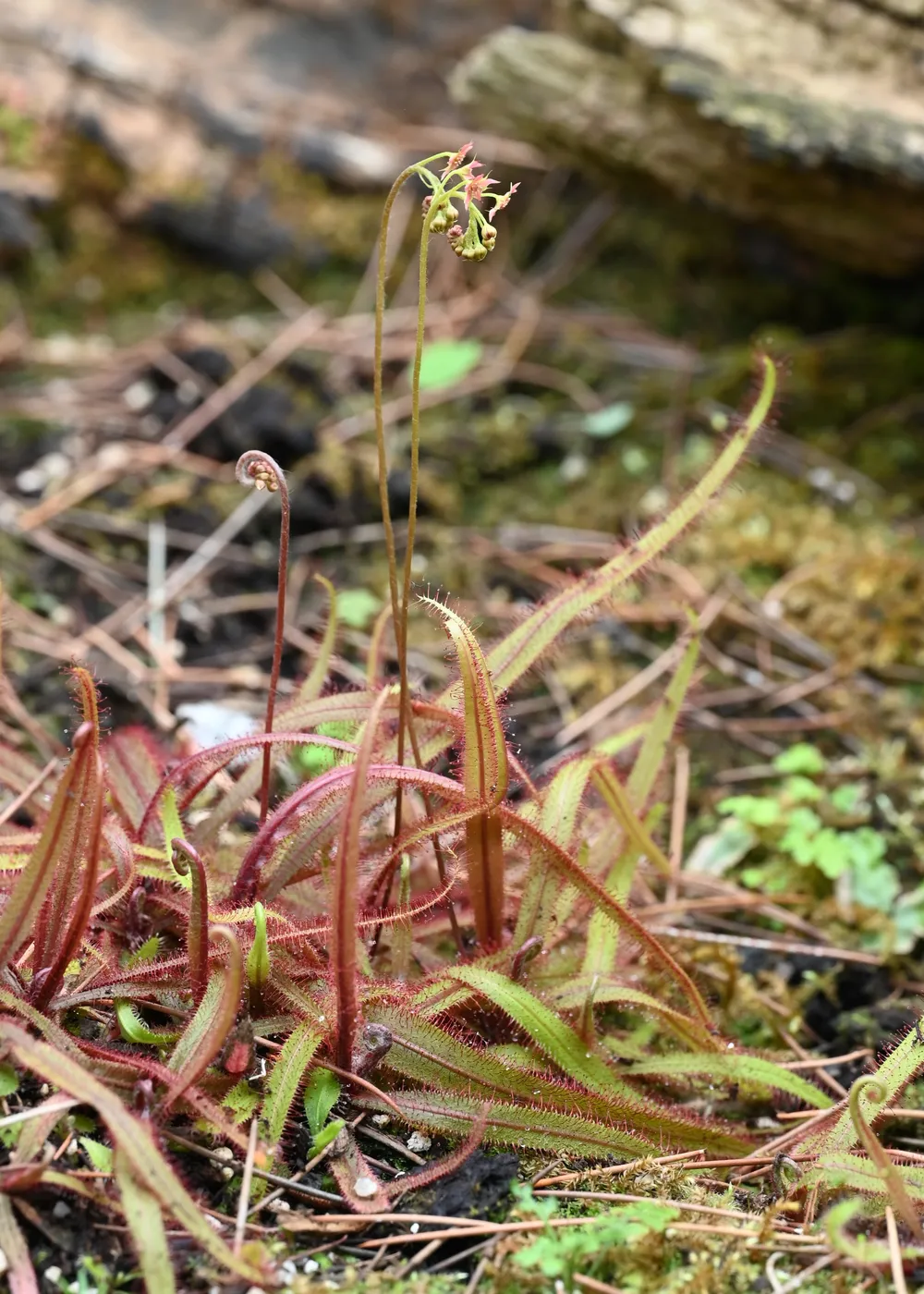
Drosera adelae
Drosera adelae
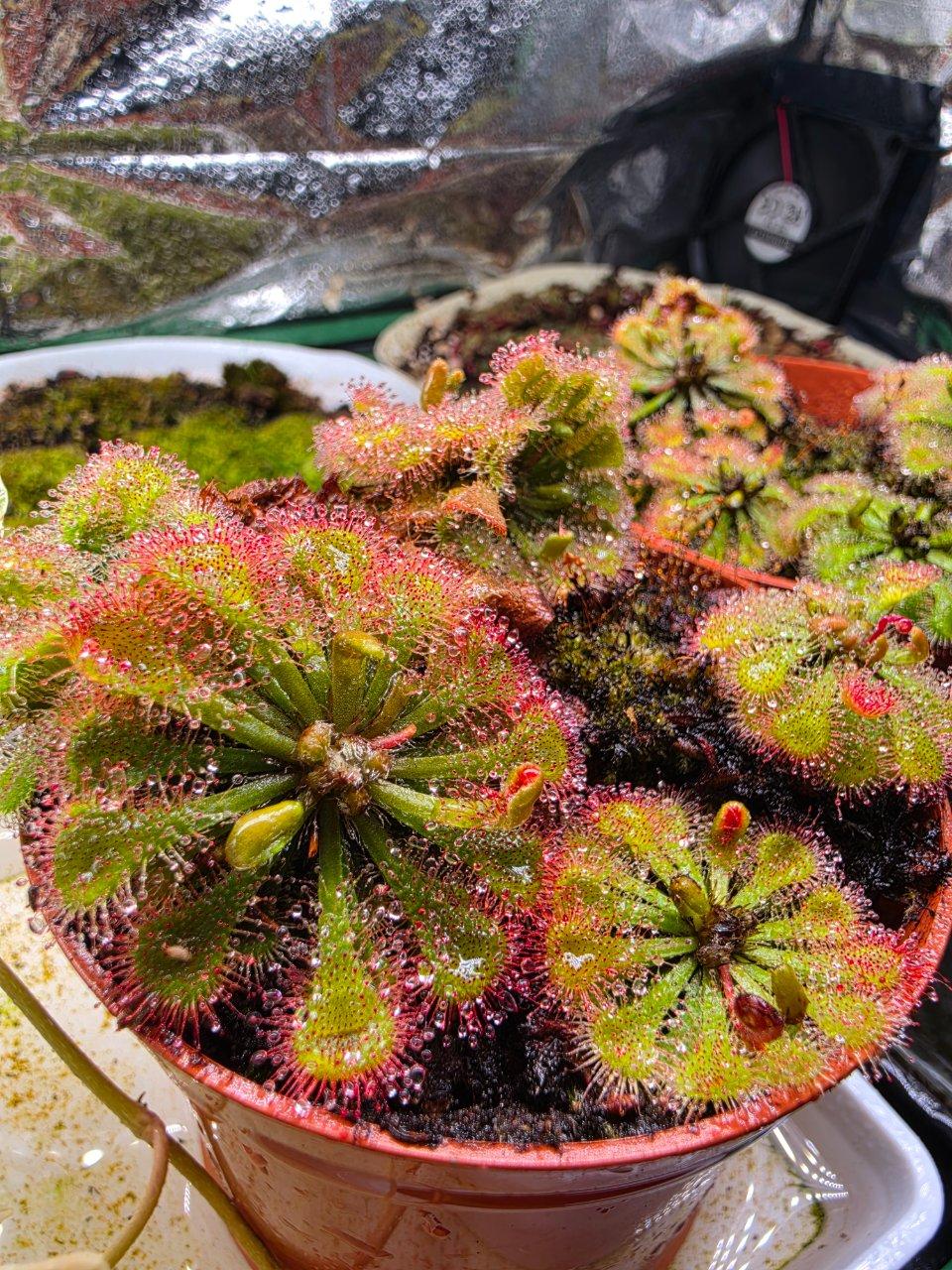
Tropical sundew with broad, lance-shaped leaves. One of the few sundews that tolerates part shade, and stays evergreen year-round with no dormancy.
Photo: Krzysztof Ziarnek, Kenraiz / CC BY-SA 4.0 · Wikimedia CommonsSide-by-Side Comparison
Choose Drosera binata if…
- ✓You have very strong light — a south-facing window or a grow light
- ✓You want the most visually unusual sundew shape available
- ✓You are growing outdoors and can give a winter dormancy
- ✓You want a taller, more architectural specimen
Choose Drosera adelae if…
- ✓Your light is bright but not intensely direct
- ✓You want a sundew with no dormancy period to manage
- ✓You want the most forgiving tropical sundew for an average room
- ✓You are new to carnivorous plants and want minimal fuss
What They Have in Common
- •Both are grown in the tray method with permanently moist, pure water
- •Both need rainwater, distilled, or reverse-osmosis water — never tap
- •Both catch prey passively and need no hand-feeding indoors
- •Both are Drosera and share the same basic sticky-leaf trapping mechanism
The Verdict
If your light is merely bright rather than intense, adelae is the easier and more forgiving choice — it is one of the only sundews that does not demand full sun. Binata rewards strong light with a genuinely striking, forked silhouette, but it stalls and stops producing sticky dew in anything less than very bright conditions.
🍴 Drosera binata
Drosera binata
🌿 Drosera adelae
Drosera adelae
Real Drosera binata grow diaries
Growers on DailyGrowers log their plant week by week, one photo at a time. Here's how theirs are going.
Growing Drosera binata too? Start your own diary. It's free and takes 2 minutes.
Start my Drosera binata diary →