
Chafer / May Bug
Melolontha melolontha
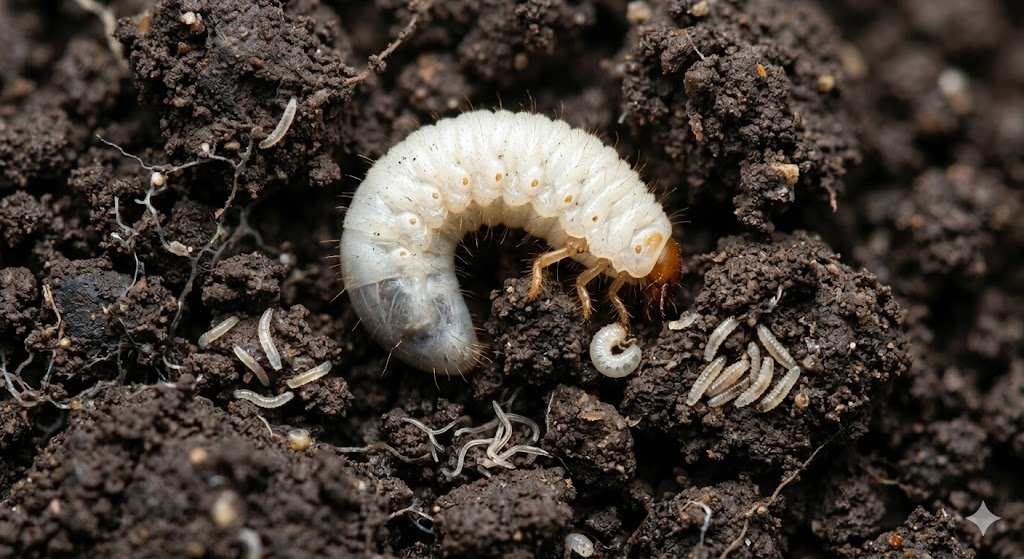
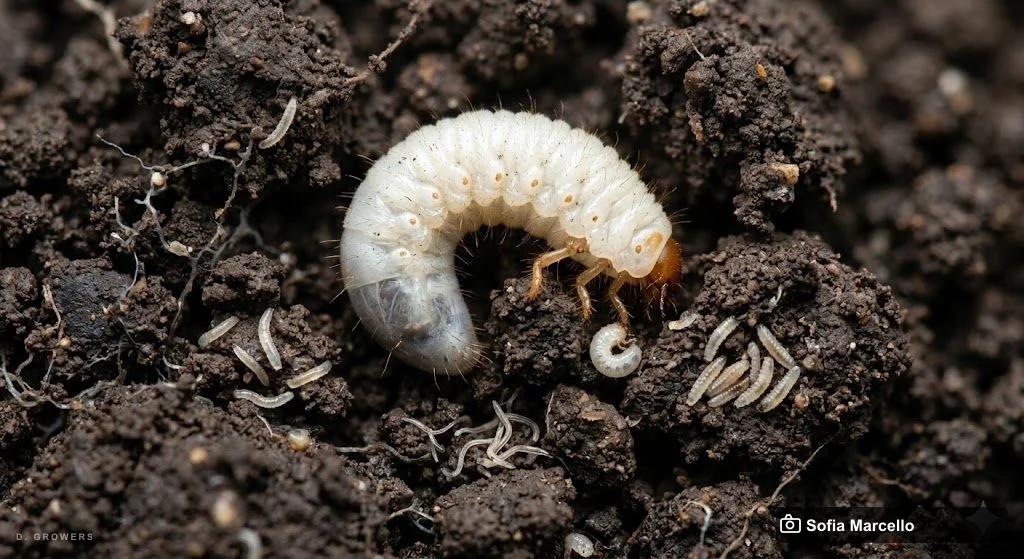
Chafer beetles (Melolontha melolontha, the common cockchafer or May bug) are large brown beetles whose larvae are major root pests in container plants and garden beds. The larvae — sometimes called white grubs — are large (up to 40 mm), C-shaped, and creamy white. They feed on plant roots from late summer through to their second or third spring, growing continuously. A single larva can destroy the root system of a container plant within weeks. Adults are attracted to lights and occasionally enter buildings.
How to Identify
Sudden wilting and collapse of plants despite adequate watering. Removing the plant from its pot reveals large C-shaped grubs up to 40 mm long, cream-coloured with orange-brown legs and head capsule. Adult beetles are 25–30 mm, reddish-brown, with fan-shaped antennae. Found flying around lights on warm evenings in May and June. Substrate surface may show disturbance from burrowing.
Life Cycle
Females lay 60–80 eggs 20–30 cm deep in soil in June–July. Larvae hatch in 4–6 weeks and feed on roots for 3–4 years (the cycle takes 3 years to complete). Pupation occurs in soil in the 3rd or 4th year. Adults emerge in May (hence 'May Bug') and fly for 4–6 weeks. Only one generation every 3–4 years.
Visual Identification
Adult May Bug
Root Destruction
Treatment Steps
- 1
Apply Heterorhabditis bacteriophora nematodes as a substrate drench in late summer for biological control
- 2
Remove the plant from its pot and hand-pick all visible grubs
- 3
Discard all old substrate — do not reuse contaminated growing medium
- 4
Imidacloprid soil drench is effective against young larvae
- 5
Repot in fresh substrate and monitor recovery over 4–6 weeks
Prevention
Apply Heterorhabditis bacteriophora nematodes to substrate in late summer when young larvae are present
Check substrate thoroughly when repotting container plants — remove any grubs found
Avoid bringing garden soil indoors — it may contain eggs or early-stage larvae
Place fine mesh over substrate surface on outdoor container plants during the June–July egg-laying period
Frequently Asked Questions
How do I know if I have chafer grubs?
Your plant suddenly collapses despite adequate watering. Remove it from the pot — large C-shaped cream-coloured grubs up to 40 mm long in the substrate confirm chafer larvae. Adult May bugs flying around lights in May–June are the adult stage.
How do I get rid of chafer grubs?
Apply Heterorhabditis bacteriophora nematodes as a soil drench in late summer when larvae are young and most vulnerable. Hand-pick visible grubs when repotting and discard all old substrate. Imidacloprid soil drench is effective for container plants.
See how growers dealt with Chafer / May Bug
Browse real grow diaries from the community — treatments, timelines, and results.
Browse community diaries →