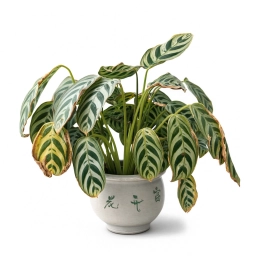
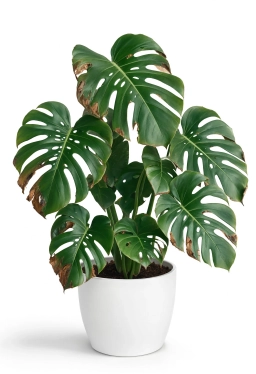
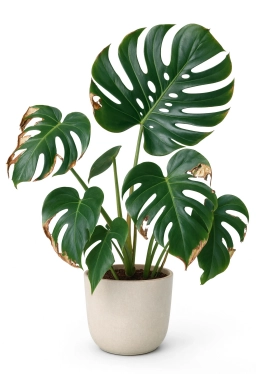
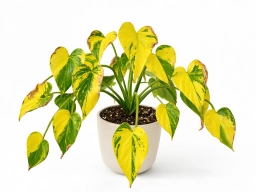
 ⚠ Minor
Pale, bleached patches on leaves suddenly exposed to intense sun � a hardening-off issue rather than disease.
Sunscald and Leaf Bleaching on Basil
Commonly affects: Ocimum basilicum (Basil)
Pale, bleached, or papery patches develop on leaves that were recently moved into much stronger direct sun than the plant was previously accustomed to, particularly after being hardened off too quickly.
The short answer
Bleached white or pale tan patches on the leaves facing the light are sunburn, and they appear within a day or two of a move — almost always after a plant that was indoors or in shade went straight into direct sun. Damaged tissue never recovers its colour. Move the plant back into shade now, and reintroduce it to brighter light over about a week rather than in one step.
Confirm it before you treat it
- 1Check which side the damage is on. Sunburn hits the surfaces facing the light and leaves shaded leaves untouched — no pest or disease respects orientation that precisely.
- 2Work out when the plant last moved. Sunburn appears 24–72 hours after a change in light and then stops spreading. Anything that keeps worsening for a week is something else.
- 3Feel the patch. Sunburn is dry and papery, often with a thin darker border where living tissue meets dead. Water damage is soft.
- 4Look at the newest leaves. Leaves that unfurled after the move are usually fine, because they developed with the light they now get — that contrast confirms the diagnosis.
- 5Consider glass. Window glass concentrates heat without blocking much visible light, so a spot that feels fine to you can be far harsher for a plant than the same light outdoors.
Potential Causes
- 1Sudden transition from indoor or shaded growing conditions to intense direct outdoor sun
- 2Skipping or rushing the hardening-off process for seedlings started indoors
- 3An unexpected heatwave hitting plants not yet acclimated to intense light
Solution Steps
- 1Move the plant back to a slightly shadier spot, or provide temporary shade cloth during the hottest hours.
- 2Reintroduce increasing sun exposure gradually over 7�10 days rather than an abrupt full-sun placement.
- 3Remove severely bleached leaves, since they won't recover, but new growth should acclimate normally.
- 4Water consistently during the adjustment period, since a well-hydrated plant tolerates light stress better.
What else looks like this
| Could be | How to tell it apart |
|---|---|
| Underwatering | Crisping starts at leaf edges and tips all round the plant, not on one side, and improves within a day of watering. |
| Fertiliser burn | Brown crisp edges on the newest growth first, often with a white salt crust on the soil surface. Follows feeding rather than a change in position. |
| Powdery mildew | A white film that rubs off. Sunburn bleaching is in the tissue and cannot be wiped away. |
| Spider mites | Fine stippling spread across the leaf regardless of which way it faces, with damage on the underside too. |
| Cold damage from glass | Also affects the window side, but the tissue goes translucent and water-soaked rather than dry and bleached, and it follows a cold night rather than a sunny day. |
Recovery timeline
- Day 1Move out of direct sun immediately. Do not remove damaged leaves yet — a partly bleached leaf still photosynthesises in the green areas.
- Days 2–4Damage stops spreading. If new patches keep appearing, the plant is still getting too much light where you moved it.
- Week 1Begin reintroducing brighter light in steps — an hour or two more a day, or one position closer to the window every few days.
- Weeks 2–4New leaves emerge adapted to the brighter position, with thicker cuticles and often a slightly darker colour.
- OngoingRemove badly damaged leaves only once new growth has replaced their photosynthetic capacity, not before.
If you do nothing
Sunburn itself does not spread — it is a burn, not an infection. But a plant left in light it cannot handle keeps losing leaf area with every sunny day, and the dead patches become entry points for fungal infection. Herbs and leafy plants lose most of their usable harvest, and a badly scorched seedling rarely recovers enough leaf area to catch up.
Common mistakes
- Watering more because the leaves look crisp. The damage is light, not drought, and extra water in a hot spot risks root problems on top of the burn.
- Moving the plant back into full sun once it 'looks better'. The leaves that survived are still unadapted, and the same thing happens again.
- Cutting off every damaged leaf at once. A plant that just lost leaf area needs what remains; remove only leaves that are more than half dead.
- Assuming outdoor plants cannot burn. A plant moved outside in spring burns readily even in mild weather, because outdoor light is several times stronger than the brightest windowsill.
- Blaming the heat. Sunburn is caused by light intensity the leaf cannot process, which is why it happens on cool bright days as well as hot ones.
Prevention Tip
Harden off basil seedlings gradually over a week to 10 days when moving them from indoors to full outdoor sun, increasing direct light exposure a little more each day.
Questions people actually ask
- Will the white patches turn green again?
- No. The cells in those areas are dead and the tissue stays bleached for the life of the leaf.
- How do I harden a plant off properly?
- Increase exposure gradually over 7–10 days — start with an hour of direct sun, or a shaded outdoor spot, and build up. Overcast days are ideal for the first steps.
- Can I still eat sunburned basil?
- Yes. Trim the bleached areas; the rest of the leaf is fine, though flavour is usually weaker in stressed plants.
- Why did only some leaves burn?
- Because only some were facing the light at the angle and duration needed to do damage. Leaf age matters too — older leaves adapted to lower light burn more easily than new ones.
- Does a sheer curtain help?
- Considerably. It diffuses direct sun into bright indirect light, which is what most houseplants actually want, and it is the simplest fix for a south-facing window.