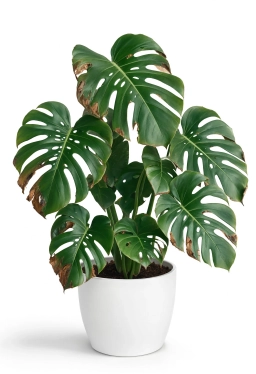
 ⚠ Moderate
LED grow light bleaching follows the lamp's photon distribution pattern — areas of maximum intensity directly below the light source show the most severe photooxidative damage.
LED Grow Light Burn — Bleaching & Necrosis from Artificial Light
Commonly affects: Monstera deliciosa, Philodendron spp., Anthurium andraeanum, Calathea spp., Alocasia spp.
Leaves directly beneath or closest to the LED grow light develop bleached, pale, or white patches — often with brown necrotic zones in the most severely exposed areas. The damage pattern reflects the light distribution of the lamp: typically a central circular zone of maximum bleaching surrounded by a gradient of lesser damage. Unlike sun scorch, grow light burn can occur at any time of year regardless of season and is often gradual rather than sudden.
Potential Causes
- 1Grow light positioned too close to the plant canopy — most full-spectrum LED panels cause bleaching when mounted less than 30–40 cm from foliage at high intensity settings
- 2Light duration exceeding 14–16 hours per day, accumulating photooxidative damage even at safe intensities
- 3Incorrect spectrum or intensity setting — high-intensity 'bloom' or 'boost' settings designed for fruiting plants can exceed the PAR tolerance of tropical foliage
- 4Acclimation failure — plants moved directly from natural light to grow lights without a gradual intensity increase
Solution Steps
- 1Immediately raise the grow light height by 15–20 cm above its current position. The inverse square law means doubling the distance reduces intensity to 25% — small height adjustments have large effects.
- 2Reduce the light intensity setting to 40–60% for tropical foliage plants — most do not require the maximum output designed for fruiting crops.
- 3Limit photoperiod to 12–14 hours maximum using a timer. Darkness periods are essential for plant recovery and hormonal regulation.
- 4Remove bleached leaves that have lost more than 50% of their green tissue — they cannot recover and will decay in place.
- 5Rotate the plant 180° every 1–2 weeks to ensure even light distribution across all leaf surfaces.
- 6When introducing a new grow light, start at 30% intensity or maximum height and reduce gradually over 2 weeks.
Prevention Tip
Use a PAR meter (or a phone app that converts lux to approximate PPFD) to measure light intensity at the plant's topmost leaves. Target 50–150 PPFD for low-light tropicals, 150–400 PPFD for medium-light aroids. Readings above 400 PPFD risk bleaching in shade-adapted species.
Related Issues to Explore

Sun Scorch & Leaf Bleaching — Photooxidative Damage
The photooxidative mechanism is identical to sun scorch — the corrective approach of reducing exposure and gradual acclimatisation applies to both.
Read guide
Etiolation — Leggy, Weak Growth from Insufficient Light
The solution to etiolation (too little light) is grow lights — but transitioning too rapidly from low to high artificial light causes the bleaching described here.
Read guideMore Light Issues Problems
See all →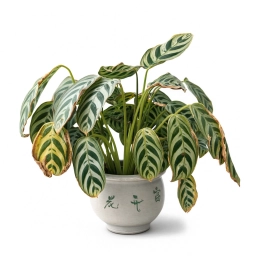
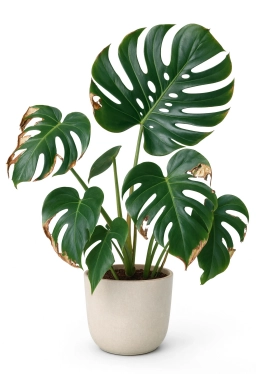
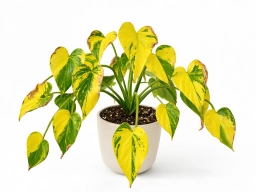
Real Monstera grow diaries
Growers on DailyGrowers log their plant week by week, one photo at a time. Here's how theirs are going.
Growing Monstera too? Start your own diary. It's free and takes 2 minutes.
Start my Monstera diary →More rare plants and collector grows every day on Facebook: follow Exotics plants