Plant Clinic
Select Your Plant to Diagnose
Plant Categories • Select a species below for a targeted search within our Plant Clinic.
🌿
Found the problem? Track the fix.
Log your treatment and recovery in a free diary — the best way to know if what you're doing is working.
636 problems — page 1 of 27
Yellowing Leaves — Overwatering Stress
Leaves turn uniformly pale yellow or lime-green, progressing from older lower foliage upward. Unlike nutrient deficiency, the yellowing is diffuse — no distinct green veining remains. Affected leaves feel limp and soft rather than crisp, and the potting substrate stays wet or waterlogged for extended periods.
Root Rot — Pythium & Phytophthora Infection
The plant wilts consistently even when the soil is moist or wet. Lower leaves yellow and drop rapidly, and stems near the soil surface may turn dark brown or black and feel hollow. On inspection, roots are black, slimy, and emit a distinctive fetid odour caused by anaerobic decomposition.
Brown, Crispy Leaf Tips — Low Humidity & Salt Stress
Leaf tips and outer margins turn brown, dry, and brittle. The browning begins at the very tip and progresses symmetrically inward along the leaf margins. Affected tissue is desiccated — sharply distinct from the healthy green centre. In severe cases, entire outer thirds of leaves are brown and paper-thin.
Spider Mite Infestation — Tetranychus urticae
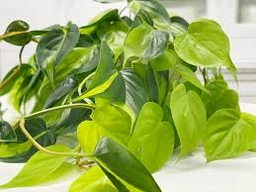
Fine, stippled yellow or bronze speckling appears on upper leaf surfaces as mites pierce individual cells to feed. Infestations progress to visible webbing beneath leaves and between stems, giving a dusty, silken appearance. Severely affected leaves turn bronze-brown and desiccate. Spider mites thrive in hot, dry conditions and reproduce extremely rapidly — a single female can lay 300 eggs over her lifespan.
Etiolation — Leggy, Weak Growth from Insufficient Light
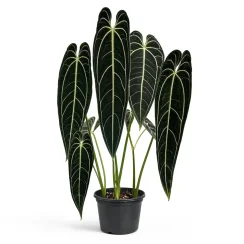
New growth emerges pale, small, and widely spaced along elongated, thin stems. Leaves are significantly smaller than previous growth, may appear yellow-green, and internodal distances (the gaps between leaf nodes) are conspicuously long as the plant 'reaches' toward light. Variegated species may partially or fully revert to solid green as chlorophyll production increases to compensate.
Powdery Mildew — Erysiphe & Golovinomyces spp.
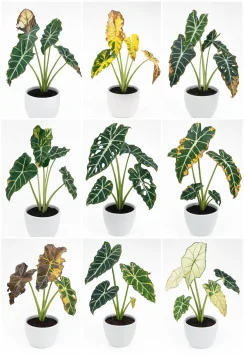
A white to grey powdery coating appears on leaf surfaces, stems, and occasionally flower buds. Unlike other fungal diseases, powdery mildew grows on the surface rather than inside plant tissue, giving it a dusted-flour appearance. Affected tissue may yellow beneath the coating. Unlike downy mildew, it occurs on the upper leaf surface and does not require standing water — in fact, it thrives in dry conditions with high humidity.
Bacterial & Fungal Leaf Spot — Xanthomonas & Cercospora spp.
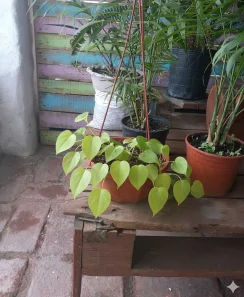
Dark brown to black spots with yellow halos appear on leaf surfaces, often water-soaked in early stages. Bacterial spots have irregular margins and a translucent, greasy appearance when held to light. Fungal spots (Cercospora, Alternaria) develop concentric rings with a tan, dry centre. Spots coalesce under humid conditions to form large necrotic patches.
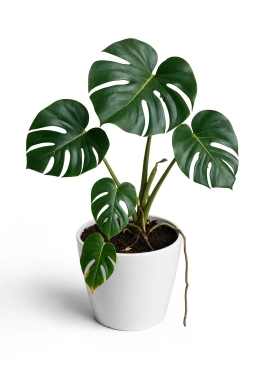
Interveinal Chlorosis — Iron or Magnesium Deficiency
Leaves develop a characteristic pattern of yellowing between the veins while the veins themselves remain distinctly green. In iron deficiency, this interveinal chlorosis appears on the youngest (newest) leaves first, as iron is not readily mobile in plants. Magnesium deficiency presents similarly but begins on older, lower leaves as magnesium is mobile and translocated to new growth. Affected leaves may eventually turn completely pale yellow or near-white.
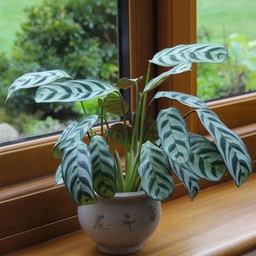
Stem & Crown Rot — Botrytis & Fusarium spp.
The stem near or at soil level turns dark brown to black, becomes soft and waterlogged, and collapses inward. The plant may wilt suddenly despite adequate soil moisture, as vascular transport is interrupted. In Botrytis infections, a grey-brown fuzzy sporulation may be visible on affected stems under humid conditions. Once the crown (growing point at the base) is affected, recovery becomes extremely difficult.
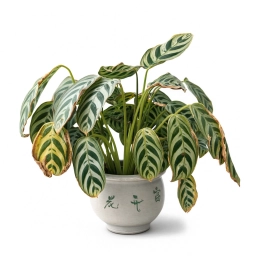
Sun Scorch & Leaf Bleaching — Photooxidative Damage
Irregular pale, bleached, or white patches develop on leaf surfaces exposed to direct sun. Affected areas become papery and dry, often with a sharp boundary between bleached and healthy tissue corresponding to shadow edges. In severe cases, the bleached zones turn brown and necrotic. Damage appears suddenly after a change in position or season — the plant's existing leaves have no photoprotective pigments calibrated for higher light intensity.
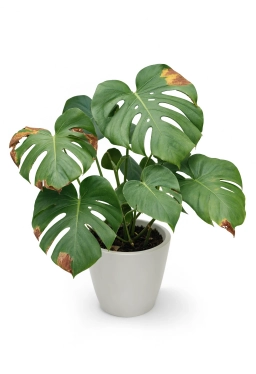
Thrips Infestation — Silvery Stippling & Black Frass
Leaves develop silvery-grey or bronze patches with a papery sheen as thrips rasp the surface and feed on the released cell sap. Tiny black specks of frass (excrement) dot the affected areas, and new growth emerges distorted, scarred, or curled. Thrips are slender, 1–2 mm insects that move rapidly when disturbed and hide along veins and within unfurling leaves.
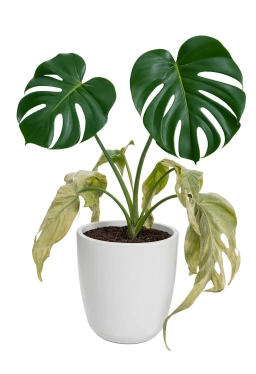
Mealybug Infestation — Pseudococcus spp.
White, cottony, waxy masses appear in leaf axils, along stems, and on the undersides of leaves near the veins. Affected plants show stunted growth and yellowing, and a sticky honeydew residue accumulates on lower leaves, often developing black sooty mould. Mealybugs are slow-moving, soft-bodied insects coated in a protective powdery wax that repels water and many contact sprays.
Aphid Colonies — Sap-Sucking on New Growth
Clusters of small, pear-shaped insects — green, black, or pale yellow — congregate on tender new growth, unfurling leaves, and flower spathes. Feeding causes curled, distorted, and stunted new leaves, and a glossy sticky honeydew coats lower foliage, attracting ants and fostering black sooty mould. Aphids reproduce explosively, with live young born ready to feed within days.
Armoured Scale — Diaspididae on Stems & Petioles
Small, hard, circular or oyster-shaped bumps — grey, brown, or tan — adhere tightly to stems, petioles, and leaf undersides along the midrib. Unlike soft scale, armoured scale produces little honeydew, so the first sign is often unexplained yellowing, weak growth, and the immovable scaly bumps themselves. Each shield protects the insect feeding beneath, making them highly resistant to contact sprays.
Soft Brown Scale & Honeydew
Flat to slightly domed, oval brown bumps appear along stems, petioles, and leaf veins, often in rows following the midrib. Unlike armoured scale, soft scale excretes abundant sticky honeydew, leaving leaves glossy and tacky and frequently coated in black sooty mould. Affected plants show gradual yellowing, leaf drop, and reduced vigour.
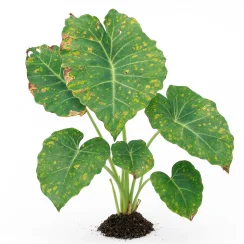
Fungus Gnats — Bradysia spp. Larvae in Substrate
Small, dark, mosquito-like flies hover around the soil surface and scatter when the plant is disturbed. The damaging stage is the larvae — tiny translucent maggots with black heads that live in the top few centimetres of moist substrate, feeding on fungi, organic matter, and fine feeder roots. Seedlings and freshly potted cuttings may stall or wilt as their delicate roots are grazed.
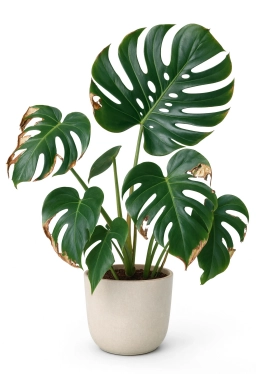
Broad Mites — Polyphagotarsonemus latus
New growth emerges severely distorted, hardened, downward-curled, and often bronzed or coppery, with a stunted, brittle texture. Unlike spider mites, broad mites produce no webbing and are invisible to the naked eye — diagnosis is made from the characteristic damage to emerging leaves. Affected growing points may abort entirely, and the plant appears chronically stunted despite good conditions.
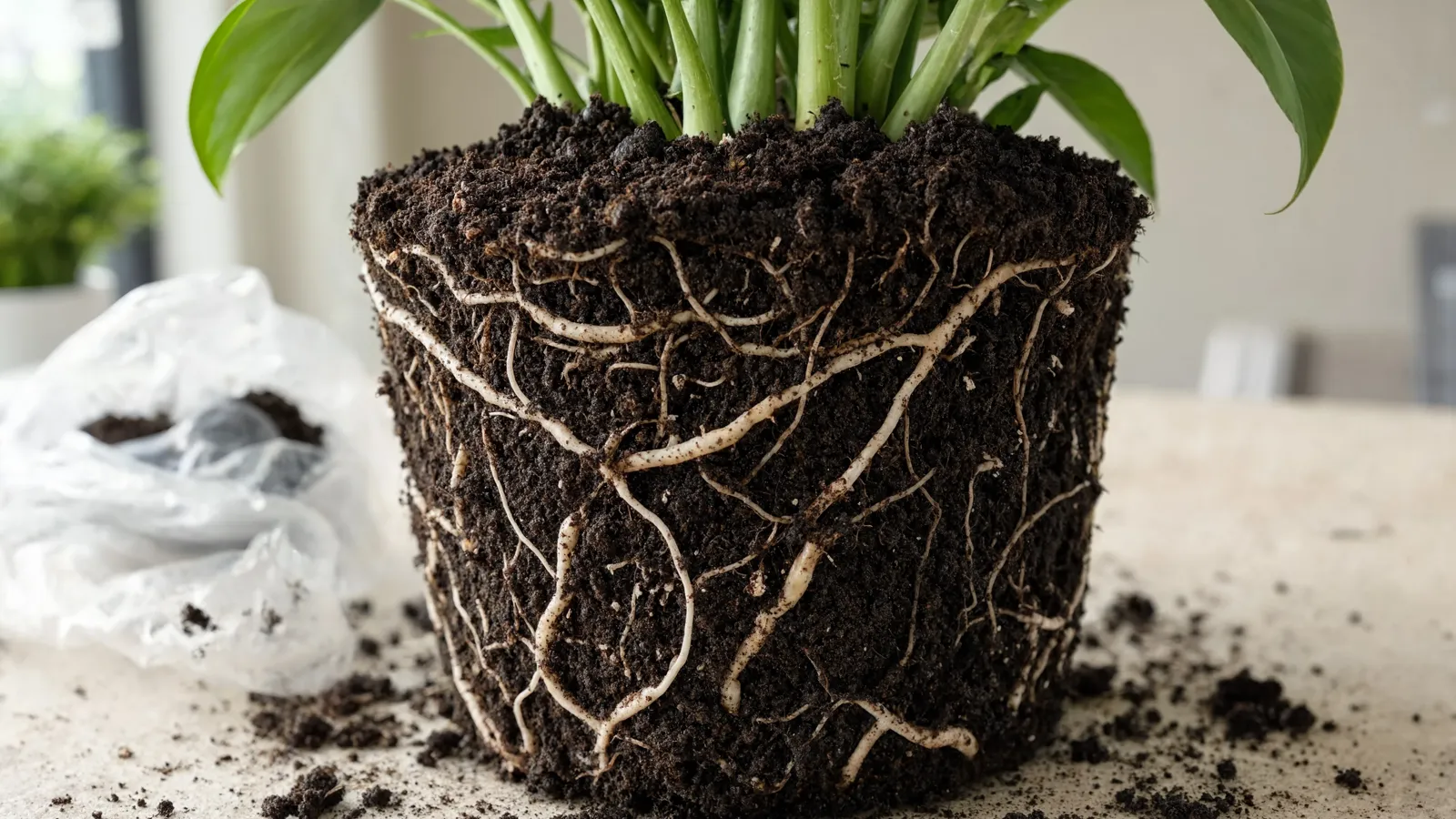
Root Mealybugs — Hidden Rhizoecus Infestation
The plant declines slowly — stunted growth, persistent wilting, and yellowing — despite correct watering and feeding, with no visible pest on the foliage. On unpotting, white, powdery, cottony deposits coat the roots and the inner pot walls, resembling mould or fertiliser residue. These below-ground mealybugs feed directly on root sap, crippling water and nutrient uptake.
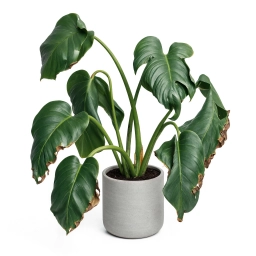
Whitefly — Trialeurodes Clouds on Undersides
Tiny white, moth-like insects rest on the undersides of leaves and rise in a fluttering cloud when the plant is disturbed. Their nymphs feed on sap from the underside, causing yellowing, mottling, and weakened growth, while honeydew excretion leaves leaves sticky and prone to sooty mould. Populations build quickly in warm, sheltered indoor conditions.
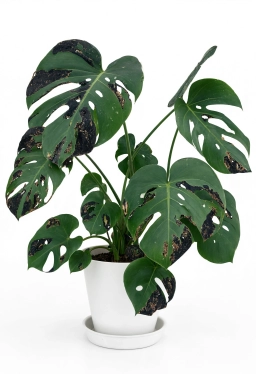
Root-Knot Nematodes — Meloidogyne Galls
The plant shows chronic stunting, wilting during warm periods despite moist soil, and poor response to feeding. On unpotting, the roots bear characteristic swollen knots and galls, are reduced in fine feeder roots, and may be discoloured. These microscopic soil-dwelling roundworms invade root tissue, forming galls that disrupt water and nutrient transport.
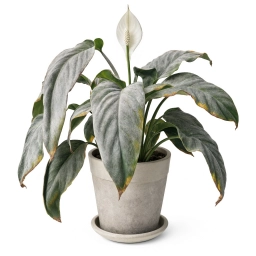
Springtails in Substrate — Collembola Bloom
Tiny white or grey specks, around 1 mm long, scatter and hop across the substrate surface and pooled water when disturbed. Springtails feed on decaying organic matter, algae, and fungi rather than living plant tissue, so they rarely cause direct harm — but a sudden population bloom is a clear indicator of a persistently wet, organic-rich substrate. In rare cases of very dense populations, they may graze tender seedling roots.
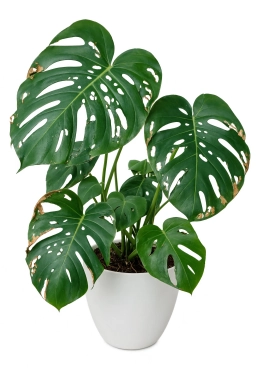
Chewing Damage — Caterpillars & Leaf-Eating Larvae
Irregular holes, ragged notches, and chewed margins appear in leaves, distinct from the natural fenestration of mature aroids. Dark pellets of frass collect on lower leaves or the soil surface, and a green or brown caterpillar may be found feeding on leaf undersides, often well camouflaged along a midrib. Damage typically appears overnight or progresses rapidly over a few days.
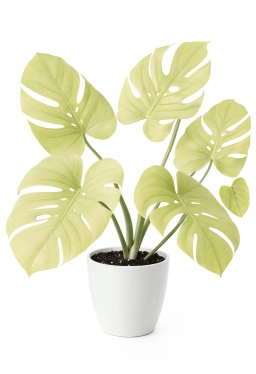
Anthracnose — Colletotrichum Leaf Blight
Dark brown to black sunken lesions develop on leaves, often beginning at the tip or margin and expanding inward in irregular patches. Under humid conditions, tiny salmon-pink to orange spore masses may be visible within the lesions. Affected tissue dries and turns papery, and severe infections can blight entire leaves and spread to petioles.
Fusarium Wilt — Vascular Browning & Collapse
Lower leaves yellow and wilt progressively, often on one side of the plant first, despite adequate soil moisture. The wilting is permanent and advances upward as the fungus colonises the vascular system. A diagnostic sign is brown to reddish streaking inside the stem when sliced open lengthwise, marking the blocked water-conducting tissue.