 ⚠ Moderate
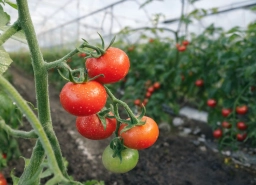
A cloud of tiny white insects disturbed from leaf undersides — whiteflies, which also spread tomato yellow leaf curl virus.
Whiteflies on Tomato Plants
Commonly affects: Solanum lycopersicum (Tomato)
Tiny white moth-like insects fly up in a cloud when the plant is disturbed, clustering on the underside of upper leaves. Sticky honeydew coats lower foliage, often followed by black sooty mould, and heavily infested plants weaken and yellow.
The short answer
A cloud of tiny white insects that flies up when you brush the plant, then settles again, is whitefly. The adults are what you see but the damage is done by nymphs on the leaf undersides, which barely move and look like flat pale scales. Yellow sticky traps plus repeated undersides-focused treatment over three weeks is what actually works; a single spray never does.
Confirm it before you treat it
- 1Shake the plant gently. A cloud that rises and resettles within seconds is diagnostic — nothing else behaves that way.
- 2Turn over a lower leaf. Adults rest underneath, and you should also find flat oval nymphs and small white eggs in circles.
- 3Look for stickiness and sooty mould on leaves below the infestation, both from honeydew.
- 4Put up a yellow sticky trap. Whitefly are strongly attracted to yellow, and the trap tells you whether numbers are rising or falling.
- 5Check whether leaves are mottled or yellowing between veins. Heavy feeding produces that pattern before the leaf drops.
Potential Causes
- 1Warm conditions, especially in greenhouses or protected growing environments
- 2Introduction from infected transplants or nearby host plants
- 3Whiteflies also acting as a vector for tomato yellow leaf curl virus
Solution Steps
- 1Use yellow sticky traps to monitor and reduce adult populations.
- 2Spray the underside of leaves thoroughly with insecticidal soap or neem oil weekly.
- 3Introduce Encarsia formosa parasitic wasps for biological control in greenhouse settings.
- 4Remove and destroy heavily infested lower leaves to reduce the population reservoir.
What else looks like this
| Could be | How to tell it apart |
|---|---|
| Fungus gnats | Dark rather than white, and they come up from the soil rather than off the leaves. Gnats do not settle back onto foliage. |
| Aphids | Stay put when disturbed and cluster on growing tips. Whitefly fly instantly and prefer mature lower leaves. |
| Mealybugs | Waxy, immobile and in leaf joints. Whitefly nymphs are flat against the leaf surface and adults are winged. |
| Thrips | Slim, dark and fast-moving on the leaf, leaving silver streaks. Whitefly leave mottling and honeydew instead. |
| Powdery mildew | A white film on the leaf surface with nothing that moves. Easy to distinguish by disturbing the plant. |
Recovery timeline
- Day 1Isolate, put up yellow traps, and treat leaf undersides thoroughly. Vacuuming the adults off first, gently, removes a surprising proportion.
- Days 4–5Trap numbers peak. Nymphs already on the leaves are maturing, so more adults is expected rather than a failure.
- Week 2Second and third treatments. The egg-to-adult cycle is about three weeks indoors, so consistency matters more than strength.
- Week 3Trap counts should be clearly falling. Check undersides for new egg circles — their absence is the real signal.
- Weeks 4–6Keep traps up. Whitefly rebound quickly from a few survivors, and the traps catch that before the plant shows it.
If you do nothing
Whitefly drain sap continuously and coat the plant in honeydew, which grows sooty mould and blocks light. Leaves mottle, yellow and drop, and yields on fruiting plants fall sharply. They are also efficient virus vectors, particularly of the tomato leaf curl viruses, which are incurable and force the destruction of the plant. Populations in a warm room can double in under two weeks.
Common mistakes
- Spraying the tops of leaves. Every life stage that matters is underneath.
- Treating once and judging by the absence of a cloud. Adults die easily; the nymphs and eggs that produce the next cloud do not.
- Skipping the traps. They are both a control and the only practical way to measure whether the population is actually falling.
- Treating in strong sunlight. Oil and soap sprays scorch leaves in direct sun — treat in the evening.
- Ignoring nearby plants. Adults fly, so an infestation is a room problem rather than a plant problem.
Prevention Tip
Inspect the underside of leaves on new transplants before introducing them to your growing area — whiteflies establish quickly and are much easier to prevent than eliminate.
Questions people actually ask
- Are they harmful to the plant or just annoying?
- Genuinely harmful. Beyond sap loss and sooty mould, they transmit viruses that cannot be treated.
- Do yellow sticky traps control them?
- They reduce adult numbers and monitor the population, but they cannot reach the nymphs, so they work alongside treatment rather than instead of it.
- Why do they keep coming back?
- The three-week life cycle outlasts most people's treatment routine. Stopping at two weeks leaves a generation to mature.
- Do they bite?
- No. They feed only on plant sap and cannot bite people or animals.
- Is it worth using Encarsia parasitic wasps?
- In a greenhouse, very much so — they are one of the most successful biological controls available. In an open room they disperse and achieve little.