


Plant Clinic · Category
Pest Infestations
Spider mites, aphids, mealybugs, thrips, scale, and other common houseplant pests.
Pest infestations are among the most challenging problems to deal with because populations can explode rapidly and many pests resist standard treatments. This guide covers 26 pest-related problems across our plant database — from early identification to integrated pest management strategies.
All Pest Infestations
 ⚠ Critical
Most indoor tropical foliage
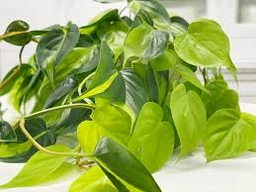
Spider Mite Infestation — Tetranychus urticae
Fine, stippled yellow or bronze speckling appears on upper leaf surfaces as mites pierce individual cells to feed. Infestations progress to visible webbing beneath leaves and between stems, giving a dusty, silken appearance. Severely affected leaves turn bronze-brown and desiccate. Spider mites thrive in hot, dry conditions and reproduce extremely rapidly — a single female can lay 300 eggs over her lifespan.
 ⚠ Critical
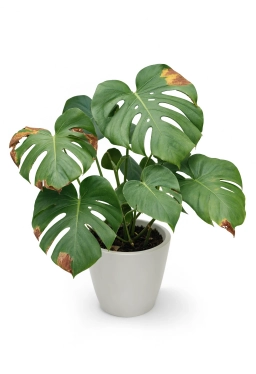
Monstera deliciosa
Thrips Infestation — Silvery Stippling & Black Frass
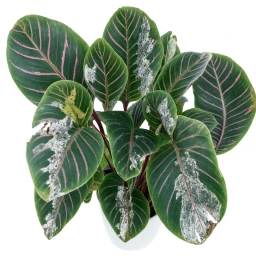
Leaves develop silvery-grey or bronze patches with a papery sheen as thrips rasp the surface and feed on the released cell sap. Tiny black specks of frass (excrement) dot the affected areas, and new growth emerges distorted, scarred, or curled. Thrips are slender, 1–2 mm insects that move rapidly when disturbed and hide along veins and within unfurling leaves.
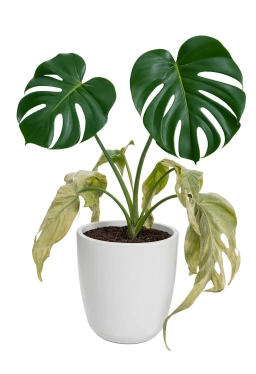 ⚠ Critical
Philodendron hederaceum
Mealybug Infestation — Pseudococcus spp.
White, cottony, waxy masses appear in leaf axils, along stems, and on the undersides of leaves near the veins. Affected plants show stunted growth and yellowing, and a sticky honeydew residue accumulates on lower leaves, often developing black sooty mould. Mealybugs are slow-moving, soft-bodied insects coated in a protective powdery wax that repels water and many contact sprays.
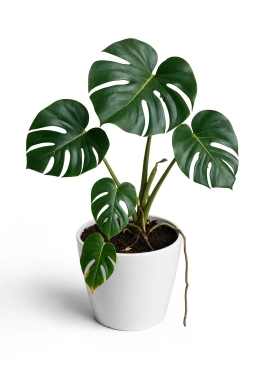 ⚠ Moderate
Syngonium podophyllum
Aphid Colonies — Sap-Sucking on New Growth
Clusters of small, pear-shaped insects — green, black, or pale yellow — congregate on tender new growth, unfurling leaves, and flower spathes. Feeding causes curled, distorted, and stunted new leaves, and a glossy sticky honeydew coats lower foliage, attracting ants and fostering black sooty mould. Aphids reproduce explosively, with live young born ready to feed within days.
⚠ CriticalMonstera deliciosa
Armoured Scale — Diaspididae on Stems & Petioles
Small, hard, circular or oyster-shaped bumps — grey, brown, or tan — adhere tightly to stems, petioles, and leaf undersides along the midrib. Unlike soft scale, armoured scale produces little honeydew, so the first sign is often unexplained yellowing, weak growth, and the immovable scaly bumps themselves. Each shield protects the insect feeding beneath, making them highly resistant to contact sprays.
⚠ ModeratePhilodendron erubescens
Soft Brown Scale & Honeydew
Flat to slightly domed, oval brown bumps appear along stems, petioles, and leaf veins, often in rows following the midrib. Unlike armoured scale, soft scale excretes abundant sticky honeydew, leaving leaves glossy and tacky and frequently coated in black sooty mould. Affected plants show gradual yellowing, leaf drop, and reduced vigour.
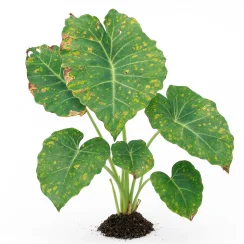 ⚠ Minor
Most aroids in moist substrate — Philodendron
Fungus Gnats — Bradysia spp. Larvae in Substrate
Small, dark, mosquito-like flies hover around the soil surface and scatter when the plant is disturbed. The damaging stage is the larvae — tiny translucent maggots with black heads that live in the top few centimetres of moist substrate, feeding on fungi, organic matter, and fine feeder roots. Seedlings and freshly potted cuttings may stall or wilt as their delicate roots are grazed.
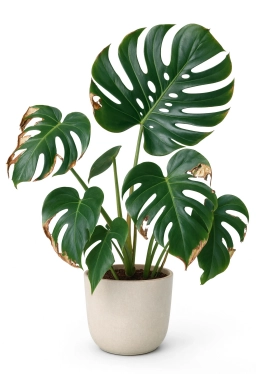 ⚠ Critical
Anthurium spp.
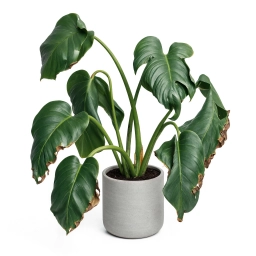
Broad Mites — Polyphagotarsonemus latus
New growth emerges severely distorted, hardened, downward-curled, and often bronzed or coppery, with a stunted, brittle texture. Unlike spider mites, broad mites produce no webbing and are invisible to the naked eye — diagnosis is made from the characteristic damage to emerging leaves. Affected growing points may abort entirely, and the plant appears chronically stunted despite good conditions.
 ⚠ Moderate
Syngonium podophyllum
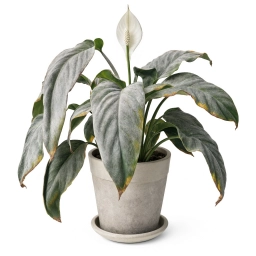
Whitefly — Trialeurodes Clouds on Undersides
Tiny white, moth-like insects rest on the undersides of leaves and rise in a fluttering cloud when the plant is disturbed. Their nymphs feed on sap from the underside, causing yellowing, mottling, and weakened growth, while honeydew excretion leaves leaves sticky and prone to sooty mould. Populations build quickly in warm, sheltered indoor conditions.
 ⚠ Minor
Most aroids in moist or terrarium conditions — Philodendron
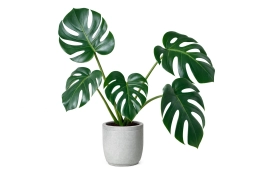
Springtails in Substrate — Collembola Bloom
Tiny white or grey specks, around 1 mm long, scatter and hop across the substrate surface and pooled water when disturbed. Springtails feed on decaying organic matter, algae, and fungi rather than living plant tissue, so they rarely cause direct harm — but a sudden population bloom is a clear indicator of a persistently wet, organic-rich substrate. In rare cases of very dense populations, they may graze tender seedling roots.
 ⚠ Moderate
Monstera deliciosa
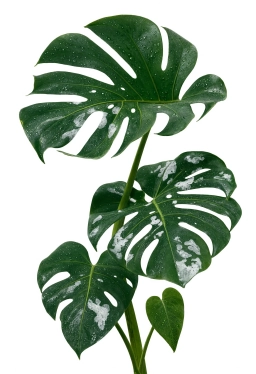
Leaf Miner Damage — Tunnelling Larvae Inside Leaf Tissue
Pale, winding, irregular tunnels or blotches appear within the leaf blade — visible when the leaf is held up to light. The damage is caused by fly or moth larvae that hatch from eggs laid between the upper and lower leaf surfaces and tunnel through the mesophyll tissue as they feed. Affected areas turn white, pale yellow, or tan as the tissue dies. The serpentine trail pattern is diagnostic — no other pest creates this specific winding track within the leaf.
 ⚠ Critical
Anthurium andraeanum
Eriophyid Mite Damage — Russet Mites & Microscopic Feeding Injury
New growth emerges stunted, corky, or with a rough, russeted texture. Leaves may be narrow, twisted, or cupped, and new growth fails to expand to normal size. Unlike spider mites, eriophyid mites are invisible to the naked eye (0.1–0.3 mm) and produce no webbing. The damage from their feeding on meristematic tissue (growing points) causes irreversible deformity in developing leaves — making early detection difficult and control challenging.
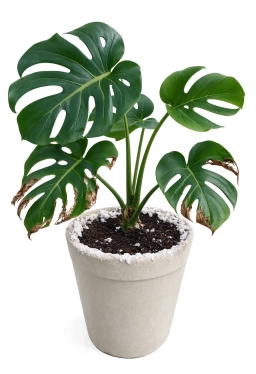 ⚠ Critical
Monstera deliciosa
Scale Insect Crawlers — Mobile Juvenile Stage & Colony Spread
Despite treating and removing visible adult scale, the plant re-infests within weeks. Small, flat, barely visible insects (0.3-0.5 mm) are found on new growth and under leaves — these are the crawler stage, the mobile juvenile scales that disperse from fixed adult colonies. Crawlers are nearly invisible and disperse by walking or air currents, and are the stage most susceptible to contact pesticides. Missing them is why scale infestations recur after apparent treatment success.
⚠ ModerateEpipremnum aureum — Pothos and closely related Scindapsus
Pothos Mealybugs — White Waxy Colonies in Leaf Axils & Node Crevices
White, cottony or waxy clusters appear in the angles where leaves meet stems (leaf axils), at nodes, and on the undersides of leaves near the midrib. Leaves become sticky from honeydew secretion, and black sooty mould develops on honeydew deposits within 1-2 weeks. Infested leaves yellow and distort. Mealybugs (Pseudococcidae) are soft-bodied, slow-moving insects that feed by piercing plant tissue and extracting phloem sap. Their waxy coating protects them from many contact insecticides, making early interception critical.
⚠ ModerateEpipremnum aureum — Pothos
Pothos Spider Mites — Fine Webbing and Stippled, Pale Leaves
Leaves develop a fine bronze or silver stippled pattern — thousands of tiny pale dots where mites have pierced the leaf cells. Fine silken webbing appears between leaves and stems, particularly at the growing tip. In heavy infestations the webbing may cover the entire plant. The plant's overall vigour declines rapidly. Spider mites (Tetranychus urticae and relatives) are not insects but arachnids — they are not killed by insecticides and require specific miticides or contact treatments. They thrive in hot, dry indoor conditions and can complete a full life cycle in 7 days at 30°C.
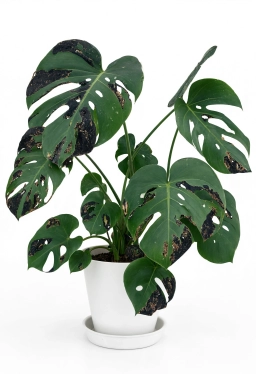 ⚠ Moderate
Epipremnum aureum — Pothos and most tropical aroids
Pothos Thrips — Silvery Leaf Scarring and Deformed New Growth
Leaves develop a characteristic silvery, shiny, or bronze stippled surface as thrips rasp and suck the contents of individual surface cells. New leaves emerge deformed, curled, or with brown streaks. Black thrips frass (excrement) dots appear on the underside of leaves. Thrips (order Thysanoptera) are slender, 1-2 mm insects barely visible to the naked eye. They are particularly damaging because they feed on developing tissue inside rolled new leaves before emergence, causing deformation that persists for the life of the leaf.
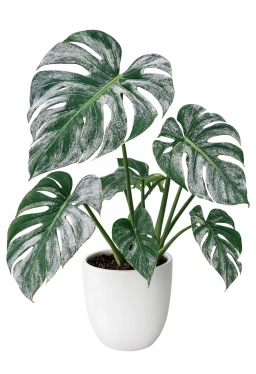 ⚠ Moderate
Epipremnum aureum — Pothos in moist
Pothos Fungus Gnats — Larval Root Damage from Bradysia spp.
Tiny black flies (2-4 mm) hover around the pot and fly up when the plant is disturbed or watered. The plant's new growth slows and leaves yellow despite seemingly adequate care. Larvae in the substrate are 4-6 mm long, white with a black head capsule, and feed on organic matter and young roots. In heavy infestations, larval root feeding mimics root rot — the plant wilts and yellows because the root system is physically damaged. Pothos in moist, peat-rich substrates are particularly susceptible.
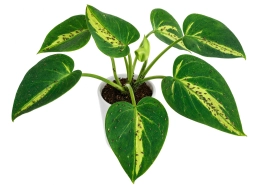 ⚠ Moderate
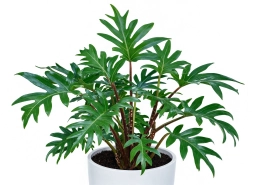
Ficus lyrata (Fiddle Leaf Fig) — and other Ficus species
Fiddle Leaf Fig Scale Insects — Brown Bumps on Stems & Leaf Undersides
Small, round or oval brown bumps (2-4 mm) appear along stems, at branch junctions, and on the underside of leaves near the midrib. The bumps are hard-shelled and do not move when touched. Leaves become sticky with honeydew and develop black sooty mould. The plant gradually declines with yellowing leaves and reduced vigour. Scale insects (Coccidae and Diaspididae families) are among the most difficult houseplant pests to treat because their waxy or armoured shells protect them from contact insecticides.
 ⚠ Moderate
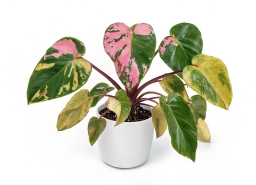
Ficus lyrata — and other Ficus species
Fiddle Leaf Fig Spider Mites — Pale Stippling and Webbing on Large Leaves
The large, textured leaves of Ficus lyrata develop a pale, bronzy stippled surface as spider mites pierce individual cells and extract their contents. Fine webbing becomes visible between leaf surfaces and stems when infestations are advanced. Because Ficus lyrata leaves are large and somewhat rough-textured, mite webbing can be missed in early stages — inspect the leaf undersides carefully. Spider mites in Ficus lyrata typically arrive from neighbouring plants or through open windows and establish quickly in warm, dry indoor conditions.
 ⚠ Moderate
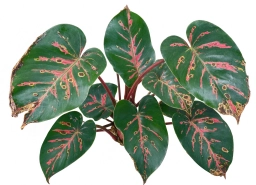
Ficus lyrata (Fiddle Leaf Fig)
Fiddle Leaf Fig Mealybugs — White Cottony Colonies at Stem Nodes
White cottony or waxy masses appear at stem nodes, in leaf axils, and along the midrib on the underside of leaves. Leaves become sticky with honeydew. Ficus lyrata is particularly susceptible to mealybug colonisation at the growing tip — infestations here distort new leaf emergence and can permanently damage the apical growing point if untreated. Mealybugs are protected by their waxy coating and reproduce rapidly in warm indoor conditions.
 ⚠ Moderate
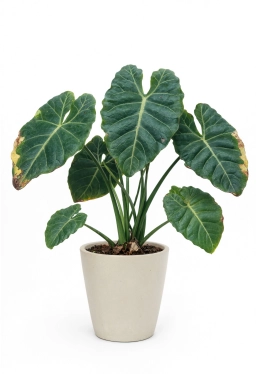
Ficus lyrata (Fiddle Leaf Fig)
Fiddle Leaf Fig Thrips — Silvery Scarring and Distorted New Leaves
The large leaves develop a silvery, shiny, scratched appearance as thrips rasp the surface cells. New leaves emerge from the growing tip already scarred, curled, or with brown streaks embedded in the tissue. Ficus lyrata is particularly vulnerable to thrips damage at the growing tip because the new leaves take weeks to unfurl, and thrips feeding during this period creates permanent deformities that persist for the life of the leaf. Black frass specks appear on leaf undersides.
 ⚠ Moderate
Sansevieria trifasciata / Dracaena trifasciata (Snake Plant)
Snake Plant Mealybugs — White Colonies at Leaf Bases & in Substrate
White cottony masses appear at the bases of leaves where they emerge from the substrate, and possibly in the substrate itself where rhizomes are present. Root mealybugs (Rhizoecus spp.) are particularly problematic in snake plants — they colonise the thick rhizomes underground and are invisible until the plant's health declines. Above-ground mealybugs appear as white cottony clusters at leaf sheaths and nodes. Both types cause yellowing, stunted growth, and progressive decline.
 ⚠ Minor
Sansevieria trifasciata / Dracaena trifasciata (Snake Plant)
Snake Plant Fungus Gnats — Infestation Despite Infrequent Watering
Small black flies hover around the snake plant's pot. Despite the snake plant's infrequent watering schedule, fungus gnats can still establish if the surface of organic substrate remains attractive to females. In a snake plant context, gnats are often a sign the substrate is too moisture-retentive (too much peat or coir relative to inorganic drainage material) and is remaining damp at the surface for extended periods after watering. Larval root feeding on the rhizomes is less common than in tropical aroids but can still occur in heavy infestations.
 ⚠ Moderate
Sansevieria trifasciata / Dracaena trifasciata (Snake Plant)
Snake Plant Spider Mites — Pale Stippling on Wide Leaf Surfaces
The broad, flat surfaces of snake plant leaves develop a pale, silvery or bronze stippled pattern — individual tiny dots where mites have pierced cells. The stippling progresses from faint to pronounced as the population grows. Fine silken webbing may appear at the base of leaf clusters in heavy infestations. Snake plants' smooth, waxy leaf surface actually makes early mite detection easier than in textured leaves — the stippling shows clearly against the dark green background.
 ⚠ Moderate
Sansevieria trifasciata / Dracaena trifasciata (Snake Plant)
Snake Plant Scale Insects — Hard Brown Bumps on Leaf Surfaces
Small, flat, round, or oval hard brown bumps (2-4 mm) appear on leaf surfaces, particularly along the central groove and at the base of the plant. Unlike soft soil debris or substrate particles, scale bumps cannot be easily wiped off with a dry cloth — they are anchored to the leaf by a feeding stylet. Leaves may become sticky from honeydew and develop dark sooty mould. Scale infestations in snake plants tend to be noticed late because of the plant's tolerance — it often continues looking healthy while the population builds.
 ⚠ Moderate
Sansevieria trifasciata / Dracaena trifasciata (Snake Plant)
Snake Plant Thrips — Silvery Streaks and Scarred Leaf Surfaces
The characteristic deep green colour of snake plant leaves is interrupted by silvery, metallic-looking streaks or patches where thrips have rasped the leaf surface and extracted cell contents. Black frass specks are visible with a magnifying lens. New growth from the centre of the rosette emerges scarred or with distorted edges. Snake plants' tight, upright leaf arrangement actually shelters thrips colonies in the gaps between leaves — making them particularly difficult to spray effectively without separating the leaf cluster.
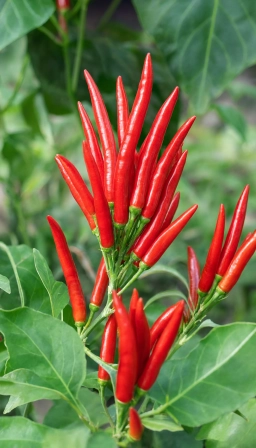 ⚠ Moderate
Capsicum annuum
Aphid Infestation on Chili Peppers
Clusters of small, soft-bodied insects gather on new growth, stem tips, and the underside of young leaves. Affected leaves may curl or become sticky with honeydew, sometimes followed by a black sooty mould growing on the residue.
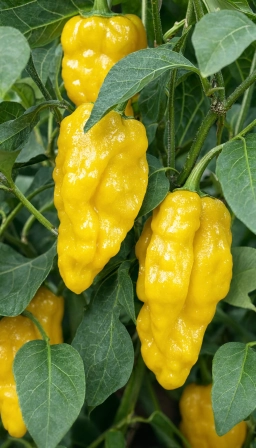 ⚠ Moderate
Capsicum annuum
Spider Mites on Pepper Plants
Fine, silvery stippling appears on the upper leaf surface, with tiny moving specks visible on the underside when checked closely. In advanced infestations, fine webbing appears between leaves and stems, and affected leaves may yellow and drop.
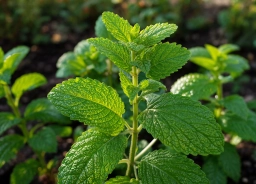 ⚠ Moderate
Mentha spicata
Spider Mites on Mint
Fine yellow or white stippling appears across leaf surfaces, with fine webbing visible between leaves and stems in more advanced infestations. Affected leaves can eventually dry out and drop.
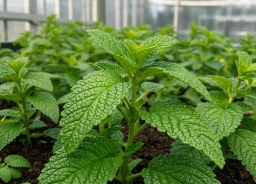 ⚠ Minor
Mentha spicata
Aphids on Mint Plants
Small clusters of soft-bodied insects gather on new shoot tips and the underside of young leaves, often accompanied by sticky honeydew residue and curling of affected foliage.
 ⚠ Minor
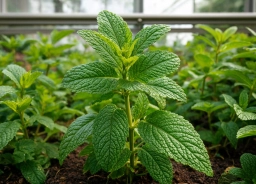
Mentha spicata
Flea Beetles on Mint Leaves
Numerous small, round holes appear scattered across leaves, giving them a distinctive 'shotgun' perforated appearance. Tiny, fast-moving dark beetles jump away when the plant is disturbed.
 ⚠ Minor
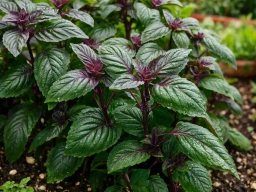
Ocimum basilicum (Basil)
Aphids on Basil Plants
Small clusters of soft-bodied insects gather on new growth and the underside of young leaves, often leaving behind sticky honeydew residue and causing mild curling of affected foliage.
 ⚠ Moderate
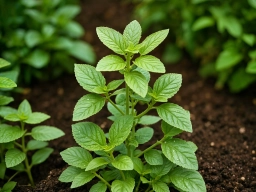
Ocimum basilicum (Basil)
Japanese Beetles Skeletonising Basil Leaves
Leaves develop a lace-like, skeletonised appearance as the soft tissue between veins is eaten away, leaving only the leaf's structural framework. Metallic green-and-copper beetles may be visible feeding directly on the plant.
 ⚠ Moderate
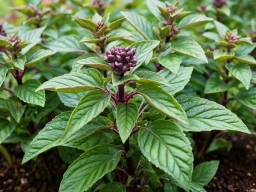
Ocimum basilicum (Basil)
Whiteflies on Basil
Tiny white, moth-like insects fly up in a small cloud when the plant is disturbed, and can be found clustered on the underside of leaves. Affected foliage may develop sticky honeydew residue and a general lack of vigour.
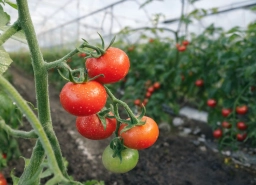 ⚠ Moderate
Solanum lycopersicum (Tomato)
Aphids on Tomato Plants
Clusters of small, soft-bodied insects gather on new growth, stem tips, and the underside of young leaves. Affected leaves may curl and become sticky with honeydew, sometimes followed by black sooty mould.
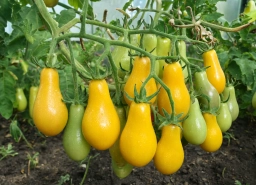 ⚠ Moderate
Solanum lycopersicum (Tomato)
Tomato Hornworms Defoliating Plants
Large sections of foliage disappear rapidly, sometimes overnight, along with dark green droppings on leaves below the feeding site. Large, well-camouflaged green caterpillars with a distinctive horn-like tail can be found on the plant once you look closely.
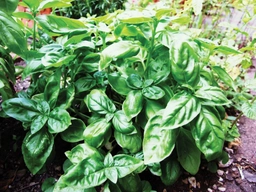 ⚠ Minor
Salvia rosmarinus (Rosemary)
Spider Mites on Rosemary
Fine stippling or a dusty, dull appearance develops on needle-like leaves, with fine webbing visible between stems in advanced infestations. Affected foliage can dry out and drop.
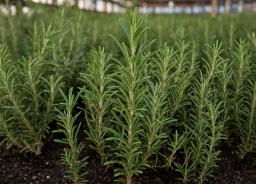 ⚠ Minor
Salvia rosmarinus (Rosemary)
Aphids on Rosemary New Growth
Small clusters of soft-bodied insects gather on tender new shoot tips, sometimes leaving sticky honeydew residue behind. Affected new growth may look slightly distorted.
⚠ ModerateSolanum lycopersicum (Tomato)
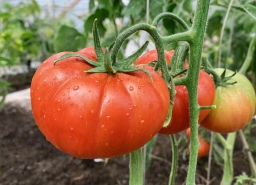
Whiteflies on Tomato Plants
Tiny white moth-like insects fly up in a cloud when the plant is disturbed, clustering on the underside of upper leaves. Sticky honeydew coats lower foliage, often followed by black sooty mould, and heavily infested plants weaken and yellow.
 ⚠ Moderate
Solanum lycopersicum (Tomato)
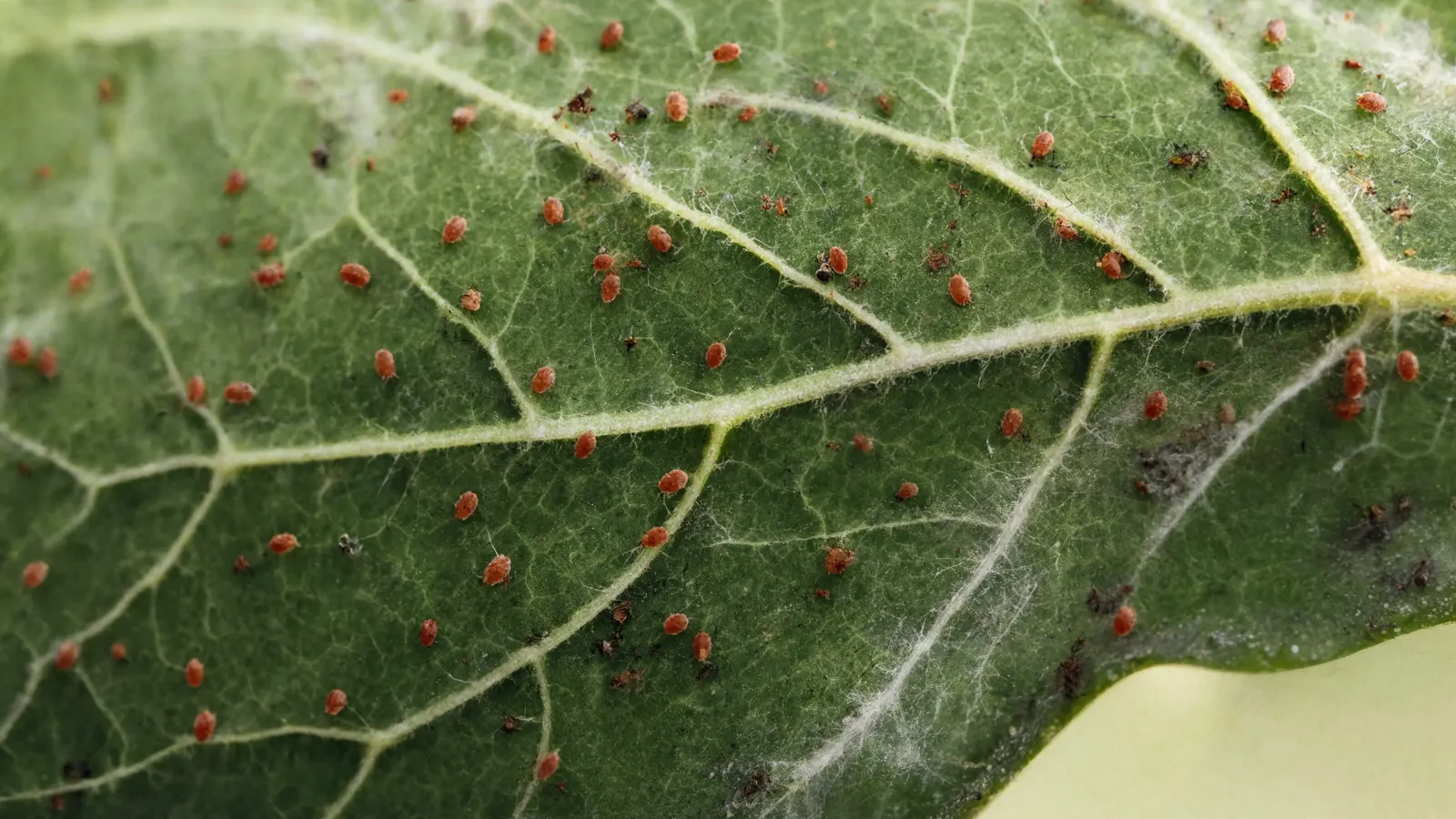
Spider Mites on Tomato Plants
Fine yellow stippling spreads across leaf surfaces, with fine webbing visible between leaves and stems in advanced infestations. Affected leaves eventually bronze, dry out, and drop, especially during hot, dry weather.
 ⚠ Critical
Cucurbita pepo
Squash Vine Borer Damage
A single vine wilts suddenly and severely while the rest of the plant looks fine, often with a small hole and sawdust-like frass visible near the base of the affected vine. Cutting the stem open reveals a fat white-cream larva tunnelling through the tissue.
⚠ CriticalCucurbita pepo
Cucumber Beetles on Pumpkin
Small yellow-and-black striped or spotted beetles feed on leaves, stems, and flowers, leaving ragged holes and scarring. Seedlings can be killed outright by heavy feeding, and beetles carry bacterial wilt between plants.
⚠ ModerateCucurbita pepo
Squash Bugs on Pumpkin Plants
Leaves develop yellow speckling that turns brown and crispy, sometimes wilting entirely on affected sections of vine. Clusters of bronze-coloured eggs are visible on the underside of leaves, and grey-brown adult bugs cluster at the base of plants.
⚠ MinorCucurbita pepo
Aphids on Pumpkin Vines
Clusters of small, soft-bodied insects gather on new growth and the underside of young leaves, often leaving sticky honeydew residue and causing curling of affected foliage.
⚠ ModerateCucurbita pepo
Spider Mites on Pumpkin Leaves
Fine yellow stippling spreads across leaves, with fine webbing visible on the underside and between leaves in heavier infestations. Affected leaves bronze, dry out, and drop, especially during hot, dry spells.
⚠ ModeratePassiflora edulis (Passion Fruit)
Aphids on Passion Fruit Vines
Clusters of small soft-bodied insects gather on new growth and flower buds, leaving sticky honeydew and sometimes transmitting woodiness virus.
⚠ ModeratePassiflora edulis (Passion Fruit)
Spider Mites on Passion Fruit Leaves
Fine yellow stippling spreads across leaves with webbing visible in heavy infestations, especially during hot, dry weather.
⚠ ModeratePassiflora edulis (Passion Fruit)
Mealybugs on Passion Fruit Vines
White, cottony masses cluster in leaf axils, along stems, and on fruit, secreting honeydew that leads to sooty mould growth.
⚠ MinorPassiflora edulis (Passion Fruit)
Scale Insects on Passion Fruit Vines
Small, immobile brown or grey bumps attach to stems and leaf undersides, secreting honeydew and weakening the vine over time.
⚠ ModeratePassiflora edulis (Passion Fruit)
Fruit Flies on Passion Fruit
Small flies hover around ripening fruit, laying eggs that hatch into larvae inside, causing the fruit to rot from within before or shortly after harvest.
⚠ CriticalMusa acuminata
Banana Aphids
Small dark aphids cluster on the underside of young leaves and around the base of the pseudostem, feeding on sap and potentially transmitting bunchy top virus.
⚠ ModerateMusa acuminata
Banana Weevil Borers
Adult weevils chew notches in the base of the pseudostem, while larvae tunnel through the corm and stem base, causing weakened plants that can topple in wind.
⚠ MinorMusa acuminata
Mealybugs on Banana Plants
White, cottony masses cluster in leaf axils and around the base of the pseudostem, secreting honeydew that leads to sooty mould.
⚠ ModerateMusa acuminata
Spider Mites on Banana Leaves
Fine yellow stippling spreads across leaves, with webbing visible in heavier infestations, especially in hot, dry indoor conditions.
⚠ MinorMusa acuminata
Thrips on Banana Plants
Silvery streaks and small dark specks (frass) appear on leaves and fruit skin, with fruit sometimes developing a rough, scarred surface.
⚠ MinorActinidia deliciosa
Leaf Roller Caterpillars on Kiwi Vines
Leaves are rolled or webbed together with caterpillars feeding inside, leaving ragged holes and sometimes damaging young fruit that touches rolled leaves.
⚠ MinorActinidia deliciosa
Scale Insects on Kiwi Vines
Small, immobile brown or grey bumps attach to canes and leaf undersides, secreting honeydew and weakening the vine over time.
⚠ MinorActinidia deliciosa
Aphids on Kiwi Vines
Clusters of small soft-bodied insects gather on new shoots and leaf undersides, leaving sticky honeydew and causing curling of affected foliage.
⚠ ModerateActinidia deliciosa
Spider Mites on Kiwi Leaves
Fine yellow stippling spreads across leaves, with webbing visible in heavier infestations during hot, dry weather.
⚠ CriticalVitis vinifera
Phylloxera on Grape Vine Roots
The vine declines gradually over several seasons with reduced vigour and smaller fruit clusters, while roots show small yellowish nodules or galls when examined.
⚠ ModerateVitis vinifera
Japanese Beetles on Grape Leaves
Leaves develop a lace-like, skeletonised appearance as the soft tissue between veins is eaten away, sometimes defoliating entire sections of vine during peak beetle activity.
⚠ ModerateVitis vinifera
Grape Berry Moth Damage
Small webbing appears on flower clusters and developing berries, with larvae tunnelling into fruit, causing premature colouring and rot around the entry hole.
⚠ MinorVitis vinifera
Leafhoppers on Grape Vines
Fine white-yellow stippling spreads across leaves, sometimes with small white insects visible flying up when the vine is disturbed.
⚠ ModerateVitis vinifera
Spider Mites on Grape Leaves
Fine yellow-bronze stippling spreads across leaves, with fine webbing visible in heavier infestations during hot, dry weather.
⚠ CriticalCucumis sativus (Cucumber)
Cucumber Beetles on Cucumber Plants
Small yellow-and-black striped or spotted beetles feed on leaves, stems, and flowers, and can kill young seedlings outright while spreading bacterial wilt between plants.
⚠ ModerateCucumis sativus (Cucumber)
Aphids on Cucumber Vines
Clusters of small soft-bodied insects gather on new growth and leaf undersides, leaving sticky honeydew and sometimes transmitting mosaic virus.
⚠ ModerateCucumis sativus (Cucumber)
Spider Mites on Cucumber Leaves
Fine yellow stippling spreads across leaves, with webbing visible in heavier infestations, especially during hot, dry weather.
⚠ ModerateCucumis sativus (Cucumber)
Whiteflies on Cucumber Plants
Tiny white insects fly up in a cloud when disturbed, clustering on leaf undersides and coating foliage with sticky honeydew.
⚠ MinorCucumis sativus (Cucumber)
Thrips on Cucumber Plants
Silvery streaks and small dark specks appear on leaves, with distorted new growth and sometimes scarred fruit skin in heavy infestations.
⚠ ModerateBrassica oleracea var. italica (Broccoli)
Cabbage Worms and Loopers on Broccoli
Ragged holes appear across leaves, with green caterpillars (well-camouflaged against the foliage) and dark droppings visible on close inspection.
⚠ ModerateBrassica oleracea var. italica (Broccoli)
Cabbage Aphids on Broccoli
Grey-green, waxy-coated aphids cluster densely on the underside of leaves and around developing heads, causing curling and stunted growth.
⚠ ModerateBrassica oleracea var. italica (Broccoli)
Flea Beetles on Broccoli Seedlings
Numerous small, round holes riddle young leaves, giving them a 'shotgun' perforated appearance, with tiny jumping beetles visible when disturbed.
⚠ ModerateBrassica oleracea var. italica (Broccoli)
Cabbage Root Maggot on Broccoli
The plant wilts and yellows for no obvious above-ground reason, and when pulled, roots show tunnelling damage and small white maggots.
⚠ MinorBrassica oleracea var. italica (Broccoli)
Slugs and Snails on Broccoli
Irregular holes with smooth edges appear in leaves, often accompanied by silvery slime trails, with damage typically worse after rain or in the evening.
⚠ ModerateBrassica oleracea var. italica (Broccoli)
Cutworms on Broccoli Seedlings
Young seedlings are severed at or just below the soil line overnight, often with the top of the plant left lying nearby, fully or partially eaten.
⚠ MinorBrassica oleracea var. italica (Broccoli)
Thrips on Broccoli Plants
Silvery streaks and small dark specks appear on leaves, with distorted new growth in heavier infestations, most noticeable in warm, dry weather.
⚠ ModerateCarica papaya (Papaya)
Papaya Mealybugs
White, cottony masses cluster on leaves, stems, and fruit, secreting honeydew that leads to sooty mould, and can cause significant fruit and leaf damage in heavy infestations.
⚠ ModerateCarica papaya (Papaya)
Spider Mites on Papaya Leaves
Fine yellow stippling spreads across leaves, with webbing visible in heavier infestations during hot, dry weather.
⚠ ModerateCarica papaya (Papaya)
Fruit Flies on Papaya
Small flies hover around ripening fruit, laying eggs that hatch into larvae inside, causing the fruit to rot from within before or shortly after harvest.
⚠ ModerateCarica papaya (Papaya)
Aphids on Papaya Plants
Clusters of small soft-bodied insects gather on new growth and the underside of young leaves, leaving sticky honeydew and potentially spreading ringspot virus.
⚠ ModerateFragaria × ananassa (Strawberry)
Slugs and Snails on Strawberry Fruit
Irregular holes with smooth edges appear in ripening fruit, often accompanied by silvery slime trails, with damage typically worse after rain.
⚠ ModerateFragaria × ananassa (Strawberry)
Aphids on Strawberry Plants
Clusters of small soft-bodied insects gather on new growth and the underside of leaves, leaving sticky honeydew and potentially spreading viral diseases.
⚠ ModerateFragaria × ananassa (Strawberry)
Spider Mites on Strawberry Leaves
Fine yellow-bronze stippling spreads across leaves, with webbing visible in heavier infestations during hot, dry weather.
⚠ MinorFragaria × ananassa (Strawberry)
Tarnished Plant Bug — Catfaced Strawberry Fruit
Fruit develops a deformed, seedy, bumpy area, often at the tip, where the achenes (seeds) cluster abnormally close together in a hardened, distorted patch.
⚠ ModeratePhalaenopsis spp. and other Orchidaceae (Orchid)
Scale Insects on Orchids
Small, immobile brown or tan bumps attach to leaves and stems, secreting honeydew and weakening the plant over time.
⚠ ModeratePhalaenopsis spp. and other Orchidaceae (Orchid)
Mealybugs on Orchids
White, cottony masses cluster in leaf axils, on flower spikes, and around the base of leaves, secreting honeydew and weakening the plant.
⚠ ModeratePhalaenopsis spp. and other Orchidaceae (Orchid)
Spider Mites on Orchid Leaves
Fine yellow stippling spreads across leaves, with fine webbing visible in heavier infestations, especially in dry indoor air.
⚠ MinorPhalaenopsis spp. and other Orchidaceae (Orchid)
Aphids on Orchid Flower Spikes
Small soft-bodied insects cluster on tender new flower spikes and buds, sometimes causing distorted bud development and sticky honeydew residue.
⚠ MinorPhalaenopsis spp. and other Orchidaceae (Orchid)
Fungus Gnats in Orchid Potting Mix
Small dark flies hover around the plant and potting medium, with larvae in the mix potentially feeding on fine root hairs in already-stressed plants.
⚠ MinorPhalaenopsis spp. and other Orchidaceae (Orchid)
Thrips on Orchid Flowers
Silvery streaks and small dark specks appear on flowers and leaves, with flowers sometimes showing distorted or discoloured patches.
⚠ ModerateCactaceae (Cactus)
Mealybugs on Cacti
White, cottony masses cluster in crevices, ribs, and around spines, secreting honeydew and weakening the plant over time.
⚠ ModerateCactaceae (Cactus)
Scale Insects on Cacti
Small, immobile brown or tan bumps attach to the cactus body, secreting honeydew and weakening the plant over time.
⚠ ModerateCactaceae (Cactus)
Spider Mites on Cacti
Fine, rusty-bronze stippling or discolouration develops on the cactus skin, sometimes with fine webbing visible in severe infestations.
⚠ MinorCactaceae (Cactus)
Fungus Gnats in Cactus Soil
Small dark flies hover around the plant and soil surface, thriving in consistently moist potting mix.
⚠ MinorCactaceae (Cactus)
Aphids on Cactus Flower Buds
Small soft-bodied insects cluster on developing flower buds, sometimes causing distorted bud development and sticky honeydew residue.
⚠ ModerateVarious succulents (Crassulaceae
Mealybugs on Succulents
White, cottony masses cluster in leaf axils and along stems, secreting honeydew and weakening the plant over time.
⚠ MinorVarious succulents (Crassulaceae
Aphids on Succulent Flower Stalks
Small soft-bodied insects cluster on the tender flower stalk as it develops, sometimes causing distorted bud development.
⚠ ModerateVarious succulents (Crassulaceae
Spider Mites on Succulents
Fine, rusty or yellow stippling develops on leaves, sometimes with fine webbing in heavier infestations, especially in hot, dry conditions.
⚠ MinorVarious succulents (Crassulaceae
Fungus Gnats in Succulent Soil
Small dark flies hover around the plant and soil surface, thriving in consistently moist potting mix.
⚠ ModerateVarious succulents (Crassulaceae
Scale Insects on Succulents
Small, immobile brown or tan bumps attach to leaves and stems, secreting honeydew and weakening the plant over time.
⚠ ModerateVarious succulents (Crassulaceae
Vine Weevil on Outdoor Succulents
The plant wilts and declines without an obvious above-ground cause, and adult weevils may be seen at night, with C-shaped white grubs visible in the soil when checked.
⚠ ModerateVarious ferns (Polypodiopsida)
Scale Insects on Ferns
Small, immobile brown or tan bumps attach to fronds and stems, secreting honeydew and weakening the plant — one of the most common fern pests.
⚠ ModerateVarious ferns (Polypodiopsida)
Spider Mites on Ferns
Fine yellow stippling spreads across fronds, with fine webbing visible in heavier infestations, especially in dry indoor conditions.
⚠ ModerateVarious ferns (Polypodiopsida)
Mealybugs on Ferns
White, cottony masses cluster where fronds meet the main stem or crown, secreting honeydew and weakening the plant.
⚠ MinorVarious ferns (Polypodiopsida)
Fungus Gnats in Fern Potting Mix
Small dark flies hover around the plant and soil surface, thriving in the consistently moist conditions ferns are typically kept in.
⚠ MinorVarious ferns (Polypodiopsida)
Thrips on Ferns
Silvery streaks and small dark specks appear on fronds, with rasped, discoloured patches developing over time.
⚠ ModerateVarious palms (Arecaceae)
Spider Mites on Indoor Palms
Fine yellow stippling spreads across fronds, with fine webbing visible on the underside in heavier infestations — extremely common on indoor palms.
⚠ ModerateVarious palms (Arecaceae)
Scale Insects on Palms
Small, immobile brown or tan bumps attach to fronds and stems, secreting honeydew and often causing sooty mould to develop on the honeydew residue.
⚠ ModerateVarious palms (Arecaceae)
Mealybugs on Palms
White, cottony masses cluster where fronds meet the trunk or along stems, secreting honeydew and weakening the plant.
⚠ MinorVarious palms (Arecaceae)
Thrips on Palm Fronds
Silvery streaks and small dark specks appear on fronds, with rasped, discoloured patches developing over time, especially on new growth.
⚠ ModerateColocasia esculenta (Taro / Elephant Ear)
Spider Mites on Colocasia
Fine yellow stippling spreads across leaves, with fine webbing visible on the underside in heavier infestations, especially in dry indoor conditions.
⚠ MinorColocasia esculenta (Taro / Elephant Ear)
Aphids on Colocasia
Small soft-bodied insects cluster on new, tender leaves and stems, sometimes causing distorted growth and sticky honeydew residue.
⚠ ModerateColocasia esculenta (Taro / Elephant Ear)
Mealybugs on Colocasia
White, cottony masses cluster where leaf stems meet the main plant, secreting honeydew and weakening the plant over time.
⚠ MinorColocasia esculenta (Taro / Elephant Ear)
Thrips on Colocasia
Silvery streaks and small dark specks appear on leaves, with rasped, discoloured patches developing over time, especially on new growth.
⚠ ModerateColocasia esculenta (Taro / Elephant Ear)
Whiteflies on Colocasia
Small white, moth-like insects fly up in a cloud when the plant is disturbed, with sticky honeydew residue and sometimes sooty mould developing on leaves.
⚠ MinorColocasia esculenta (Taro / Elephant Ear)
Snails and Slugs on Colocasia
Irregular holes appear in leaves, often with a silvery slime trail visible nearby, especially after rain or in consistently moist growing conditions.
⚠ ModerateAloe vera (Aloe Vera)
Mealybugs on Aloe Vera
White, cottony masses cluster in leaf axils and along the base of leaves, secreting honeydew and weakening the plant over time.
⚠ ModerateAloe vera (Aloe Vera)
Scale Insects on Aloe Vera
Small, immobile brown or tan bumps attach to leaves, secreting honeydew and weakening the plant over time.
⚠ MinorAloe vera (Aloe Vera)
Fungus Gnats in Aloe Vera Soil
Small dark flies hover around the plant and soil surface, thriving in consistently moist potting mix.
⚠ ModerateAloe vera (Aloe Vera)
Spider Mites on Aloe Vera
Fine, rusty or yellow stippling develops on leaves, sometimes with fine webbing in heavier infestations, especially in hot, dry conditions.
⚠ ModerateZamioculcas zamiifolia (ZZ Plant)
Mealybugs on ZZ Plant
White, cottony masses cluster where leaflets meet the stem, secreting honeydew and weakening the plant over time.
⚠ ModerateZamioculcas zamiifolia (ZZ Plant)
Scale Insects on ZZ Plant
Small, immobile brown or tan bumps attach to stems and leaflets, secreting honeydew and weakening the plant over time.
⚠ MinorZamioculcas zamiifolia (ZZ Plant)
Fungus Gnats in ZZ Plant Soil
Small dark flies hover around the plant and soil surface, thriving in consistently moist potting mix.
⚠ MinorZamioculcas zamiifolia (ZZ Plant)
Thrips on ZZ Plant
Silvery streaks and small dark specks appear on leaflets, with rasped, discoloured patches developing over time.
⚠ ModerateChlorophytum comosum (Spider Plant)
Mealybugs on Spider Plant
White, cottony masses cluster at the base of leaves and along stolons, secreting honeydew and weakening the plant over time.
⚠ ModerateChlorophytum comosum (Spider Plant)
Spider Mites on Spider Plant
Fine yellow stippling spreads across leaves, with fine webbing visible in heavier infestations, especially in dry indoor conditions — an ironic pest for a plant with 'spider' in its name.
⚠ MinorChlorophytum comosum (Spider Plant)
Fungus Gnats in Spider Plant Soil
Small dark flies hover around the plant and soil surface, thriving in consistently moist potting mix.
⚠ ModerateChlorophytum comosum (Spider Plant)
Scale Insects on Spider Plant
Small, immobile brown or tan bumps attach to leaves, secreting honeydew and weakening the plant over time.
⚠ MinorLavandula angustifolia / L. x intermedia (Lavender)
Aphids on Lavender
Small soft-bodied insects cluster on new growth and flower spikes, sometimes causing distorted growth and sticky honeydew residue.
⚠ MinorLavandula angustifolia / L. x intermedia (Lavender)
Spittlebugs (Froghoppers) on Lavender
A frothy, white, spit-like foam appears on stems, with a small greenish insect hiding inside — mostly a cosmetic nuisance rather than a serious threat.
⚠ ModerateLavandula angustifolia / L. x intermedia (Lavender)
Root Mealybugs on Lavender
The plant declines gradually with no obvious above-ground pest signs, and small white cottony masses are visible on the roots when the plant is checked.
⚠ MinorLavandula angustifolia / L. x intermedia (Lavender)
Whiteflies on Lavender
Small white, moth-like insects fly up in a cloud when the plant is disturbed, occasionally with sticky honeydew residue on nearby foliage.
⚠ MinorCapsicum annuum
Aphids on Bell Pepper Plants
Small soft-bodied insects cluster on new growth, flowers, and the undersides of leaves, sometimes causing distorted growth and sticky honeydew residue.
⚠ ModerateCapsicum annuum
Spider Mites on Bell Pepper
Fine yellow stippling spreads across leaves, with fine webbing visible on the underside in heavier infestations, especially in hot, dry conditions.
⚠ ModerateCapsicum annuum
Whiteflies on Bell Pepper
Small white, moth-like insects fly up in a cloud when the plant is disturbed, with sticky honeydew residue and sometimes sooty mould developing on leaves.
⚠ ModerateCapsicum annuum
Cutworms Cutting Down Young Bell Pepper Seedlings
Young transplants are found severed at or just below the soil line, sometimes toppled completely overnight, with the stem chewed through.
⚠ MinorCapsicum annuum
Thrips Scarring on Bell Pepper Fruit
Silvery streaks or a rough, corky, scarred texture develops on the fruit surface, distinct from sunscald or other environmental damage.
⚠ MinorCitrus limon (Lemon Tree)
Citrus Leaf Miner on Lemon Tree
Silvery, winding trails appear tunnelled through the leaf surface, with affected leaves sometimes curling or becoming distorted.
⚠ ModerateCitrus limon (Lemon Tree)
Scale Insects on Lemon Tree
Small, immobile brown or tan bumps attach to leaves and stems, secreting honeydew and often leading to sooty mould developing on the residue.
⚠ ModerateCitrus limon (Lemon Tree)
Spider Mites on Lemon Tree
Fine yellow stippling spreads across leaves, with fine webbing visible on the underside in heavier infestations, especially in hot, dry conditions.
⚠ ModerateCitrus limon (Lemon Tree)
Mealybugs on Lemon Tree
White, cottony masses cluster in leaf axils and along stems, secreting honeydew and weakening the tree over time.
⚠ ModerateCitrus limon (Lemon Tree)
Whiteflies on Lemon Tree
Small white, moth-like insects fly up in a cloud when the plant is disturbed, with sticky honeydew residue and often sooty mould developing on leaves.
⚠ MinorCitrus limon (Lemon Tree)
Aphids on Lemon Tree New Growth
Small soft-bodied insects cluster on tender new shoots and flower buds, causing distorted growth and sticky honeydew residue.
Plant-Specific Guides
.webp)
.webp)
Common Questions
What causes spider mite infestation — tetranychus urticae?
Fine, stippled yellow or bronze speckling appears on upper leaf surfaces as mites pierce individual cells to feed. Infestations progress to visible webbing bene… Full guide →
What causes thrips infestation — silvery stippling & black frass?
Leaves develop silvery-grey or bronze patches with a papery sheen as thrips rasp the surface and feed on the released cell sap. Tiny black specks of frass (excr… Full guide →
What causes mealybug infestation — pseudococcus spp.?
White, cottony, waxy masses appear in leaf axils, along stems, and on the undersides of leaves near the veins. Affected plants show stunted growth and yellowing… Full guide →
What causes aphid colonies — sap-sucking on new growth?
Clusters of small, pear-shaped insects — green, black, or pale yellow — congregate on tender new growth, unfurling leaves, and flower spathes. Feeding causes cu… Full guide →