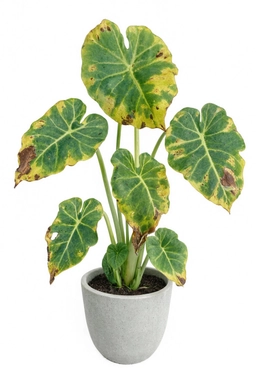
 ⚠ Moderate
Root tip damage during repotting is unavoidable but manageable — protecting newly transplanted plants from heat, drought, and nutrient stress for the first 4–6 weeks dramatically accelerates recovery.
Repotting Shock — Post-Transplant Wilting & Stress Response
Commonly affects: Monstera deliciosa, Philodendron spp., Spathiphyllum wallisii, Anthurium andraeanum, Alocasia spp., Calathea spp.
Following repotting, the plant wilts, droops, or shows yellowing in the days to weeks after transplanting, despite the substrate being correctly moist. New growth stalls or reverses. In severe cases, previously firm leaves become limp and fail to recover even after watering. Repotting shock occurs because root tip damage during transplanting temporarily reduces the plant's water uptake capacity while the substrate moisture level remains adequate.
Potential Causes
- 1Root tip damage from handling — fine root hairs that perform the majority of water absorption are fragile and easily torn during unpotting and repotting
- 2Transplanting to an oversized container where the ratio of root mass to substrate volume is too low, retaining excessive moisture around compromised roots
- 3Repotting during peak heat (summer) or dormancy (winter) when the plant has least metabolic capacity to recover
- 4Failing to water in thoroughly after repotting, leaving air pockets around disturbed roots that desiccate root tips
Solution Steps
- 1Place the repotted plant in a location with high humidity (60–70%) and bright but gentle indirect light — avoid direct sun and strong air currents for the first 2–3 weeks.
- 2Water in thoroughly immediately after repotting, ensuring water reaches all areas of the substrate including the centre and base of the new pot.
- 3Do not fertilise for 4–6 weeks after repotting — damaged roots cannot process nutrients and fertiliser salts will exacerbate root stress.
- 4If wilting is severe, create a makeshift humidity tent using a transparent plastic bag or clear bin liner over the plant to raise humidity to near 100% while roots recover. Leave a small gap for air exchange.
- 5Remove the humidity tent for 1–2 hours daily and remove it entirely after 1–2 weeks as the plant stabilises.
- 6Expect the plant to resume active growth within 3–6 weeks under correct conditions — premature fertilisation or environmental changes during this window extend the recovery period.
Prevention Tip
Reduce repotting shock by watering the plant thoroughly 24 hours before unpotting — well-hydrated roots are more flexible and less prone to snapping. Repot on a cloudy day or in the evening to minimise transpiration stress during the operation.
Related Issues to Explore

Root-Bound Stress — Impacted Root System
Root-bound conditions necessitate repotting — understanding what follows helps prepare the right recovery environment.
Read guide
Acclimation Shock — Transition Stress in Newly Acquired Plants
Repotting shock and acclimatisation shock share identical symptoms and recovery protocols — both resolve with high humidity, gentle light, and no fertilisation.
Read guideReal Monstera grow diaries
Growers on DailyGrowers log their plant week by week, one photo at a time. Here's how theirs are going.
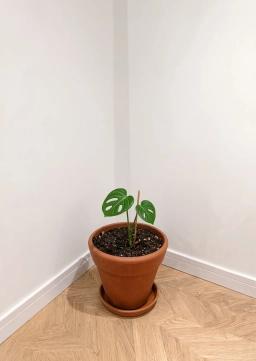
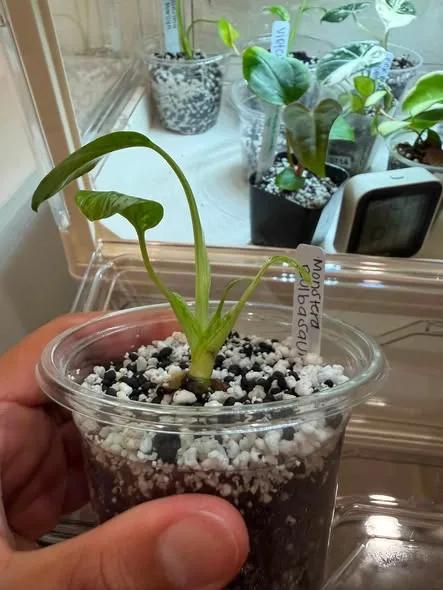
Growing Monstera too? Start your own diary. It's free and takes 2 minutes.
Start my Monstera diary →