 ⚠ Moderate
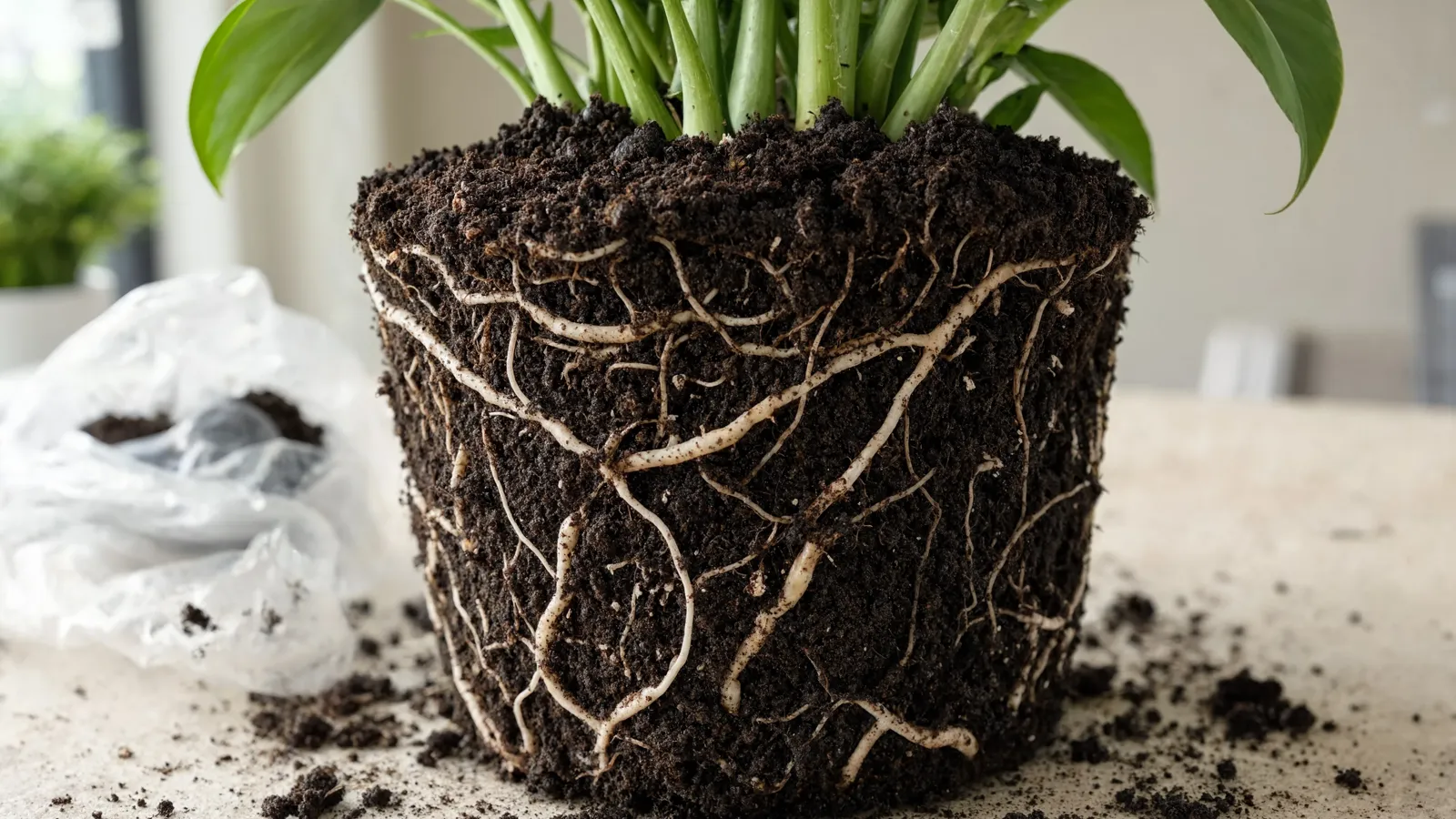
A severely root-bound plant extracted from its container: the root mass has formed a solid matrix matching the container's internal shape, leaving no space for substrate and severely limiting water and nutrient availability.
Root-Bound Stress — Impacted Root System in Undersized Pot
Commonly affects: Monstera deliciosa, Philodendron spp., Spathiphyllum wallisii, Anthurium andraeanum, Alocasia spp., Calathea spp.
Roots emerge from drainage holes or wrap visibly around the outer rim of the pot when the plant is removed. The substrate dries out extremely rapidly — sometimes within 24 hours of watering. Growth slows despite adequate fertilisation, and the plant may droop even immediately after watering as the dense root mass prevents adequate water retention. Some species produce smaller-than-usual new leaves as the root system cannot support normal leaf expansion.
Potential Causes
- 1Extended time in the same container without repotting — most tropical houseplants require repotting every 12–24 months
- 2Starting in a pot that is correctly sized but outgrowing it rapidly during a high-growth season
- 3Root-bound conditions from nursery production — plants sold in minimum-cost plastic nursery pots are frequently already at capacity
- 4Deliberately keeping the plant tight for aesthetic reasons, not accounting for the root-to-shoot balance requirements
Solution Steps
- 1Gently unpot the plant and assess the root ball — if roots form a dense circle or mat at the base and sides with minimal visible substrate, repotting is urgent.
- 2Select a new pot 4–6 cm larger in diameter than the current one. Avoid jumping more than one pot size at a time — excess substrate without roots retains moisture and increases rot risk.
- 3Gently loosen and detangle the outer root mass to encourage roots to grow outward into the new substrate rather than continuing to circle.
- 4Repot in a fresh, well-draining mix appropriate for the species. Water in thoroughly and place in a stable, indirect-light location for 2–4 weeks during acclimatisation.
- 5If the plant is very severely root-bound, root prune: trim up to one-third of the root mass with clean scissors before repotting to reduce the water demand while new roots establish.
- 6For aesthetic reasons, if you prefer not to repot, top-dress with fresh substrate and increase watering frequency to compensate for the reduced moisture-holding capacity.
Prevention Tip
Check for root-bound conditions annually in spring by gently tipping the plant slightly and lifting — if the root ball slides out as a solid, intact mass matching the pot shape, it is time to size up. Spring repotting maximises the growing season for new root establishment.
Related Issues to Explore

Repotting Shock — Post-Transplant Stress & Wilting
Correct root-bound conditions by repotting — then manage the transplant stress that commonly follows in the weeks afterward.
Read guide
Underwatering & Drought Stress — Wilting & Crispy Leaves
Root-bound plants dry out so rapidly they mimic chronic underwatering — the root cause is the container, not the watering frequency.
Read guideMore Root Problems Problems
See all →
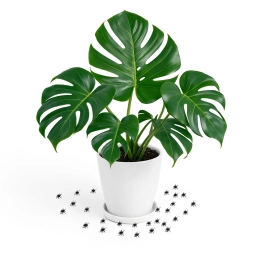
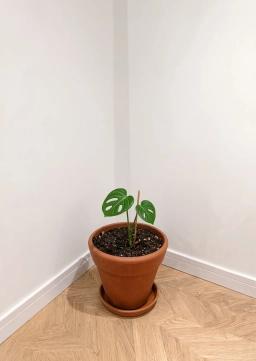
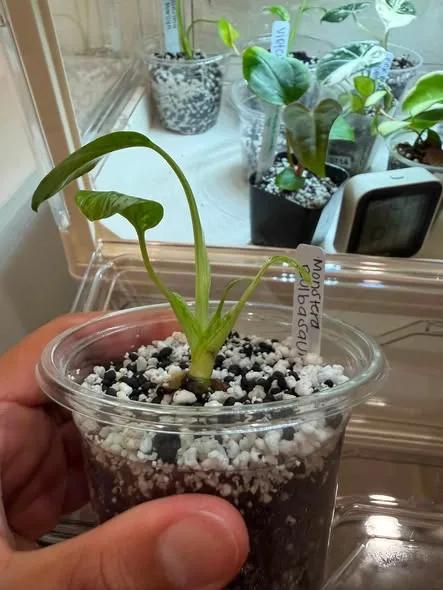
Real Monstera grow diaries
Growers on DailyGrowers log their plant week by week, one photo at a time. Here's how theirs are going.
Growing Monstera too? Start your own diary. It's free and takes 2 minutes.
Start my Monstera diary →