



Monstera Problems
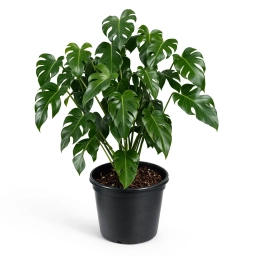
Monstera deliciosa
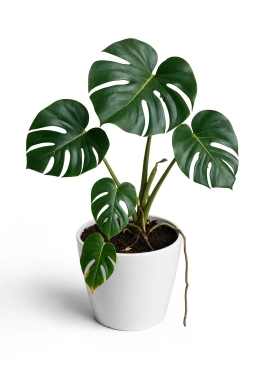
The most popular indoor tropical climber. Known for its dramatic split leaves, Monstera is resilient but prone to overwatering, pests, and light stress.
All Monstera Problems
 ⚠ Moderate
Monstera — Yellowing Leaves — Overwatering Stress
Leaves turn uniformly pale yellow or lime-green, progressing from older lower foliage upward. Unlike nutrient deficiency, the yellowing is diffuse — no distinct green veining remains. Affected leaves feel limp and soft rather than crisp, and the potting substrate stays wet or waterlogged for extended periods.
 ⚠ Critical
Monstera — Spider Mite Infestation — Tetranychus urticae
Fine, stippled yellow or bronze speckling appears on upper leaf surfaces as mites pierce individual cells to feed. Infestations progress to visible webbing beneath leaves and between stems, giving a dusty, silken appearance. Severely affected leaves turn bronze-brown and desiccate. Spider mites thrive in hot, dry conditions and reproduce extremely rapidly — a single female can lay 300 eggs over her lifespan.
 ⚠ Moderate
Monstera — Etiolation — Leggy, Weak Growth from Insufficient Light
New growth emerges pale, small, and widely spaced along elongated, thin stems. Leaves are significantly smaller than previous growth, may appear yellow-green, and internodal distances (the gaps between leaf nodes) are conspicuously long as the plant 'reaches' toward light. Variegated species may partially or fully revert to solid green as chlorophyll production increases to compensate.
 ⚠ Moderate
Monstera — Powdery Mildew — Erysiphe & Golovinomyces spp.
A white to grey powdery coating appears on leaf surfaces, stems, and occasionally flower buds. Unlike other fungal diseases, powdery mildew grows on the surface rather than inside plant tissue, giving it a dusted-flour appearance. Affected tissue may yellow beneath the coating. Unlike downy mildew, it occurs on the upper leaf surface and does not require standing water — in fact, it thrives in dry conditions with high humidity.
 ⚠ Moderate
Monstera — Interveinal Chlorosis — Iron or Magnesium Deficiency
Leaves develop a characteristic pattern of yellowing between the veins while the veins themselves remain distinctly green. In iron deficiency, this interveinal chlorosis appears on the youngest (newest) leaves first, as iron is not readily mobile in plants. Magnesium deficiency presents similarly but begins on older, lower leaves as magnesium is mobile and translocated to new growth. Affected leaves may eventually turn completely pale yellow or near-white.
 ⚠ Critical
Monstera — Thrips Infestation — Silvery Stippling & Black Frass
Leaves develop silvery-grey or bronze patches with a papery sheen as thrips rasp the surface and feed on the released cell sap. Tiny black specks of frass (excrement) dot the affected areas, and new growth emerges distorted, scarred, or curled. Thrips are slender, 1–2 mm insects that move rapidly when disturbed and hide along veins and within unfurling leaves.
 ⚠ Critical
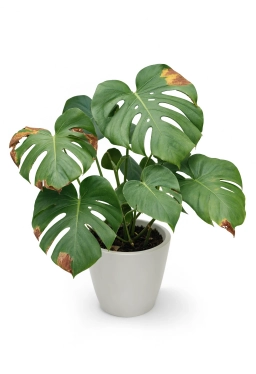
Monstera — Mealybug Infestation — Pseudococcus spp.
White, cottony, waxy masses appear in leaf axils, along stems, and on the undersides of leaves near the veins. Affected plants show stunted growth and yellowing, and a sticky honeydew residue accumulates on lower leaves, often developing black sooty mould. Mealybugs are slow-moving, soft-bodied insects coated in a protective powdery wax that repels water and many contact sprays.
 ⚠ Moderate
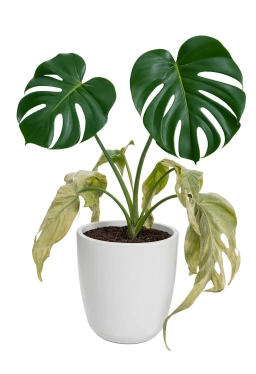
Monstera — Aphid Colonies — Sap-Sucking on New Growth
Clusters of small, pear-shaped insects — green, black, or pale yellow — congregate on tender new growth, unfurling leaves, and flower spathes. Feeding causes curled, distorted, and stunted new leaves, and a glossy sticky honeydew coats lower foliage, attracting ants and fostering black sooty mould. Aphids reproduce explosively, with live young born ready to feed within days.
 ⚠ Critical
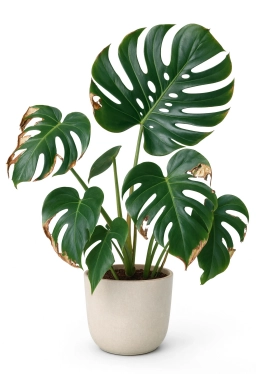
Monstera — Armoured Scale — Diaspididae on Stems & Petioles
Small, hard, circular or oyster-shaped bumps — grey, brown, or tan — adhere tightly to stems, petioles, and leaf undersides along the midrib. Unlike soft scale, armoured scale produces little honeydew, so the first sign is often unexplained yellowing, weak growth, and the immovable scaly bumps themselves. Each shield protects the insect feeding beneath, making them highly resistant to contact sprays.
 ⚠ Moderate
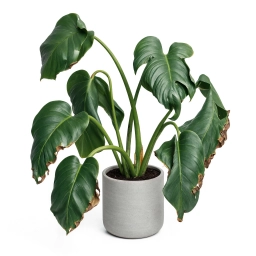
Monstera — Soft Brown Scale & Honeydew
Flat to slightly domed, oval brown bumps appear along stems, petioles, and leaf veins, often in rows following the midrib. Unlike armoured scale, soft scale excretes abundant sticky honeydew, leaving leaves glossy and tacky and frequently coated in black sooty mould. Affected plants show gradual yellowing, leaf drop, and reduced vigour.
 ⚠ Minor
Monstera — Fungus Gnats — Bradysia spp. Larvae in Substrate
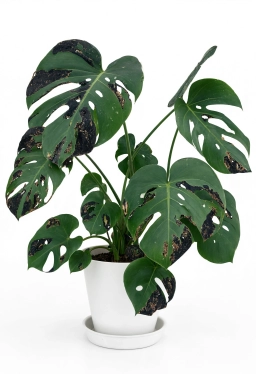
Small, dark, mosquito-like flies hover around the soil surface and scatter when the plant is disturbed. The damaging stage is the larvae — tiny translucent maggots with black heads that live in the top few centimetres of moist substrate, feeding on fungi, organic matter, and fine feeder roots. Seedlings and freshly potted cuttings may stall or wilt as their delicate roots are grazed.
 ⚠ Critical
Monstera — Broad Mites — Polyphagotarsonemus latus
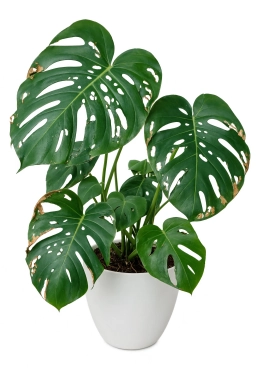
New growth emerges severely distorted, hardened, downward-curled, and often bronzed or coppery, with a stunted, brittle texture. Unlike spider mites, broad mites produce no webbing and are invisible to the naked eye — diagnosis is made from the characteristic damage to emerging leaves. Affected growing points may abort entirely, and the plant appears chronically stunted despite good conditions.
 ⚠ Moderate
Monstera — Whitefly — Trialeurodes Clouds on Undersides
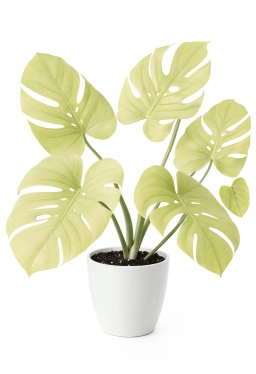
Tiny white, moth-like insects rest on the undersides of leaves and rise in a fluttering cloud when the plant is disturbed. Their nymphs feed on sap from the underside, causing yellowing, mottling, and weakened growth, while honeydew excretion leaves leaves sticky and prone to sooty mould. Populations build quickly in warm, sheltered indoor conditions.
 ⚠ Critical
Monstera — Root-Knot Nematodes — Meloidogyne Galls
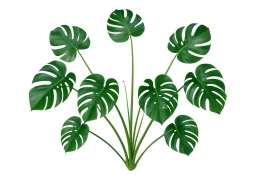
The plant shows chronic stunting, wilting during warm periods despite moist soil, and poor response to feeding. On unpotting, the roots bear characteristic swollen knots and galls, are reduced in fine feeder roots, and may be discoloured. These microscopic soil-dwelling roundworms invade root tissue, forming galls that disrupt water and nutrient transport.
 ⚠ Minor
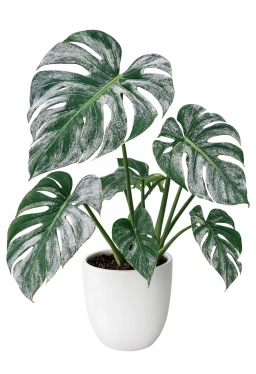
Monstera — Springtails in Substrate — Collembola Bloom
Tiny white or grey specks, around 1 mm long, scatter and hop across the substrate surface and pooled water when disturbed. Springtails feed on decaying organic matter, algae, and fungi rather than living plant tissue, so they rarely cause direct harm — but a sudden population bloom is a clear indicator of a persistently wet, organic-rich substrate. In rare cases of very dense populations, they may graze tender seedling roots.
 ⚠ Moderate
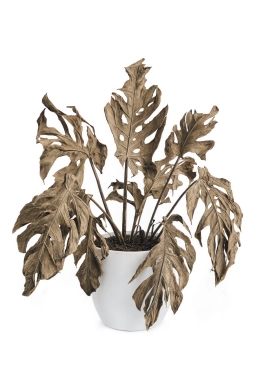
Monstera — Chewing Damage — Caterpillars & Leaf-Eating Larvae
Irregular holes, ragged notches, and chewed margins appear in leaves, distinct from the natural fenestration of mature aroids. Dark pellets of frass collect on lower leaves or the soil surface, and a green or brown caterpillar may be found feeding on leaf undersides, often well camouflaged along a midrib. Damage typically appears overnight or progresses rapidly over a few days.
 ⚠ Moderate
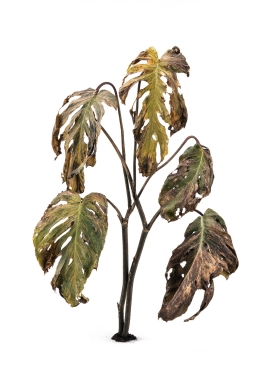
Monstera — Anthracnose — Colletotrichum Leaf Blight
Dark brown to black sunken lesions develop on leaves, often beginning at the tip or margin and expanding inward in irregular patches. Under humid conditions, tiny salmon-pink to orange spore masses may be visible within the lesions. Affected tissue dries and turns papery, and severe infections can blight entire leaves and spread to petioles.
 ⚠ Critical
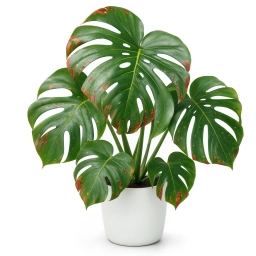
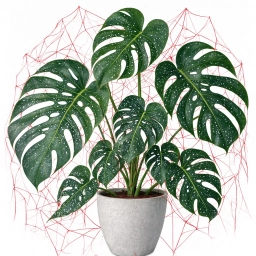
Monstera — Fusarium Wilt — Vascular Browning & Collapse
Lower leaves yellow and wilt progressively, often on one side of the plant first, despite adequate soil moisture. The wilting is permanent and advances upward as the fungus colonises the vascular system. A diagnostic sign is brown to reddish streaking inside the stem when sliced open lengthwise, marking the blocked water-conducting tissue.
 ⚠ Critical
Monstera — Rhizoctonia Damping-Off in Seedlings & Cuttings
Young seedlings and freshly potted cuttings collapse suddenly, with a dark, water-soaked, pinched lesion girdling the stem at the soil line. The tissue above the constriction topples over while still green, and fine brown fungal threads may be visible on the stem base or substrate. Germinating seeds may rot before emerging.
 ⚠ Moderate
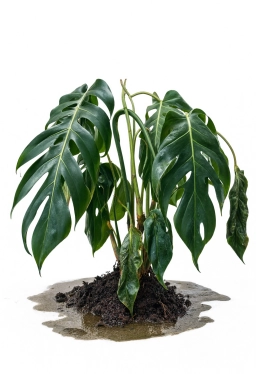
Monstera — Heat Stress & Leaf Curling
Leaves curl inward or downward, droop, and may develop dry, crisping margins during periods of excessive heat. The curling is a water-conservation response, reducing the exposed surface area as transpiration outpaces root uptake. Plants near heat sources or in hot, sunlit spots wilt despite moist soil and recover their posture as temperatures fall.
 ⚠ Minor
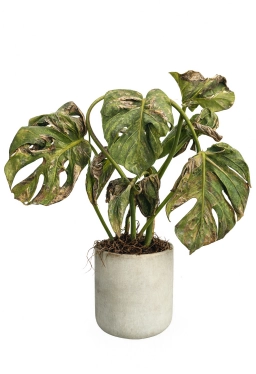
Monstera — Failure to Fenestrate — Immature, Holeless Leaves
A mature Monstera or split-leaf Philodendron produces only small, solid, heart-shaped leaves without the characteristic splits (fenestrations) or holes expected at that size. New leaves remain juvenile in form, and internodes may be elongated. This is a developmental rather than a disease symptom, driven primarily by insufficient light and immature growth conditions.
 ⚠ Minor
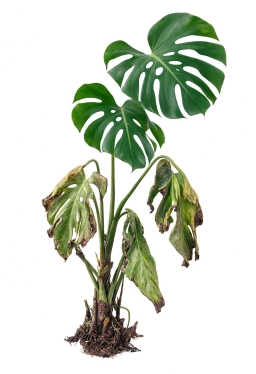
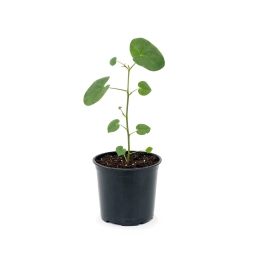
Monstera — Guttation — Sap Droplets on Leaf Margins
Clear, watery droplets form at the tips or margins of leaves, typically overnight or in the early morning, and may leave faint crusty mineral residue as they dry. This is a normal physiological process — root pressure forcing excess water out through specialised pores (hydathodes) — and is not a disease. It is most noticeable on Alocasia and Monstera when soil moisture is high and transpiration is low.
 ⚠ Minor
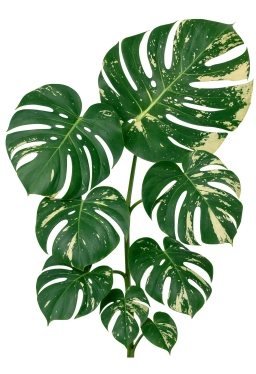
Monstera — Oedema — Corky Blisters from Water Imbalance
Small water-soaked bumps or blisters form on the undersides of leaves and along petioles, later hardening into raised, tan, corky, wart-like spots. The damage is caused by cells absorbing water faster than the leaf can transpire it, rupturing under the internal pressure. It is a physiological disorder, not contagious, and tends to appear during cool, damp, low-light spells.
 ⚠ Minor
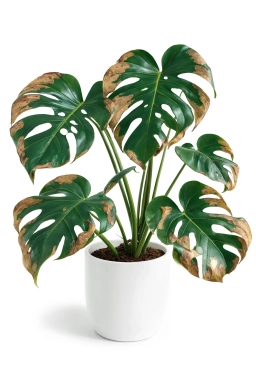
Monstera — Poor Airflow — Weak Stems & Disease Pressure
Plants grown in persistently still air develop weak, soft, elongated stems that struggle to support their own leaves, and a recurring cycle of fungal and bacterial problems. Moisture lingers on foliage and at the soil surface, and the boundary layer of stagnant humid air around the leaves favours mould, mildew, and rot. Growth is generally less sturdy and more disease-prone than in well-ventilated conditions.
 ⚠ Moderate
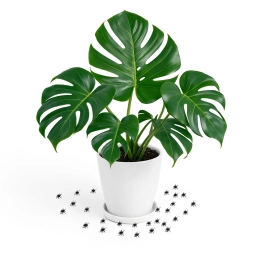
Monstera — Transplant & Acclimation Shock
A recently purchased, repotted, or relocated plant drops leaves, yellows, or stalls within days to weeks despite reasonable care. The change in light, humidity, temperature, or substrate disrupts the plant's established balance, and Alocasia in particular may shed several leaves while adjusting. The decline is transient if conditions are stable, with new growth resuming once the plant adapts.
 ⚠ Moderate
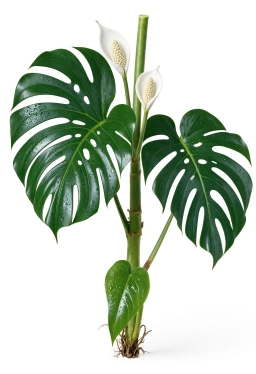
Monstera — Variegation Reversion Under Low Light
A variegated aroid begins producing leaves with progressively less white or yellow variegation, reverting toward solid green. New growth may be entirely green, and the plant often grows more vigorously as it does so. This is the plant favouring chlorophyll-rich tissue to compensate for inadequate light, not a disease — but reversion is largely irreversible in the leaves already produced.
 ⚠ Minor
Monstera — Winter Growth Stall & Dormancy Stress
Growth slows dramatically or stops over winter, with some plants — Alocasia and Caladium especially — shedding leaves and appearing to die back to the tuber. Lower light, cooler temperatures, and shorter days reduce the plant's metabolism, and the usual watering and feeding regime becomes excessive for the slowed plant. This is a natural seasonal response rather than a disease.
 ⚠ Moderate
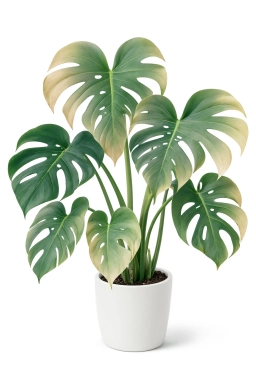
Monstera — Nitrogen Deficiency — Uniform Pale Older Leaves
The oldest, lowest leaves turn uniformly pale green to yellow first, while newer growth stays greener, and overall growth slows and appears thin. Because nitrogen is mobile, the plant relocates it from old leaves to new ones, so yellowing climbs from the bottom up. The yellowing is even across the whole leaf, without the vein contrast of iron or magnesium deficiency.
 ⚠ Moderate
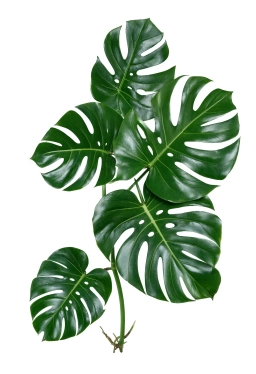
Monstera — Potassium Deficiency — Marginal Scorch
Older leaves develop yellowing and browning along their margins and tips while the centre stays green, the scorched edges progressing inward and often curling. Because potassium is mobile, symptoms appear on the oldest leaves first. The pattern — a scorched margin around a green interior — distinguishes it from the uniform yellowing of nitrogen deficiency.
 ⚠ Moderate
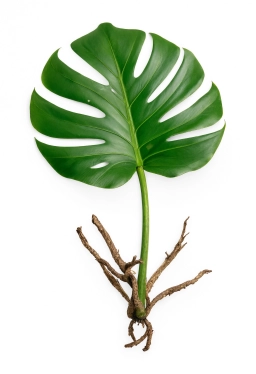
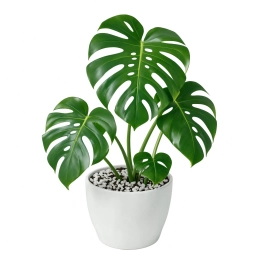
Monstera — Calcium Deficiency — Deformed New Leaves
New leaves emerge distorted, hooked, or with dead, brown patches and necrotic margins, and growing tips may die back. Because calcium is immobile and cannot be relocated within the plant, symptoms appear specifically on the newest growth while older leaves remain normal. Affected leaves are often crinkled or fail to expand evenly.
 ⚠ Moderate
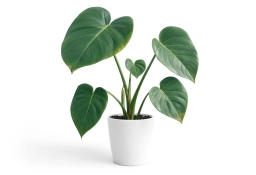
Monstera — Fertiliser Burn — Nutrient Toxicity
Leaf tips and margins turn brown and crispy, often quite suddenly after feeding, and a white crust of fertiliser salts may appear on the substrate surface or pot rim. Roots can be chemically scorched, leading to wilting despite moist soil. The damage results from an excessive concentration of dissolved salts drawing water out of the roots — the opposite of the deficiency it is sometimes mistaken for.
 ⚠ Moderate
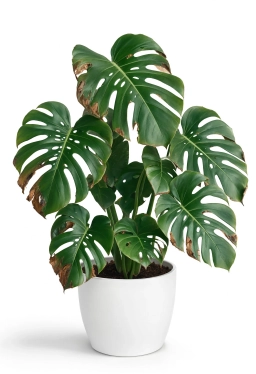
Monstera — Salt Crust & EC Build-Up in Substrate
A white or yellowish crust accumulates on the substrate surface, pot rim, and drainage holes, accompanied by browning leaf tips and margins and a general loss of vigour. The build-up comes from dissolved minerals in tap water and fertiliser residue concentrating over time as water evaporates. High substrate salinity (electrical conductivity) impairs the roots' ability to take up water.
 ⚠ Moderate
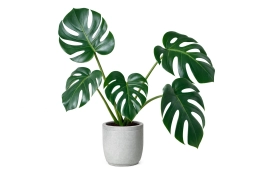
Monstera — Underwatering & Chronic Drought Stress
Leaves wilt, droop, and develop dry, crispy brown edges, and the whole plant may look limp and dull. The substrate is bone-dry, often pulling away from the sides of the pot, and feels very light when lifted. Unlike overwatering, the leaves are crisp rather than soft, and the plant typically perks up within hours of thorough watering.
 ⚠ Moderate
Monstera — Hydrophobic Substrate — Water Channeling
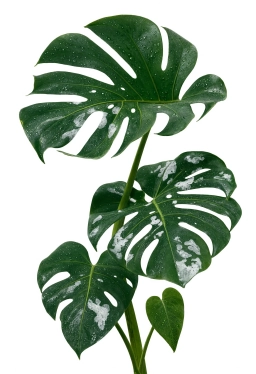
Water poured onto the substrate runs straight down the sides of the pot and out the drainage holes within seconds, leaving the root ball dry inside. The plant shows drought symptoms despite apparently being watered, and the substrate surface may look dry and dusty or have shrunk away from the pot wall. Peat- and coir-based mixes that have dried out completely become water-repellent.
 ⚠ Moderate
Monstera — Compacted, Anaerobic Substrate
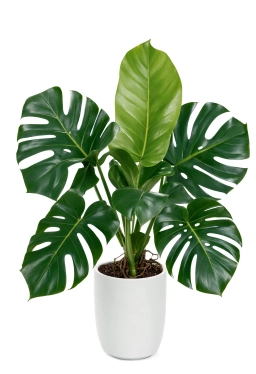
An old, broken-down mix becomes dense and airless, staying wet for a long time and starving roots of oxygen. The plant declines slowly — yellowing, stunted growth, and a soil surface that crusts or stays soggy. On unpotting, the substrate is fine, muddy, and tightly packed, with few healthy white roots and a sour smell from anaerobic conditions.
 ⚠ Moderate
Monstera — Substrate pH Lock-Out
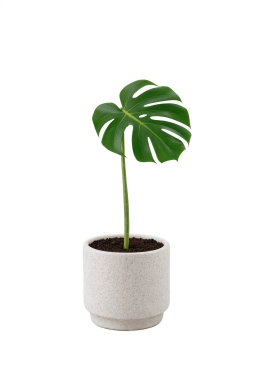
The plant shows nutrient-deficiency symptoms — yellowing, interveinal chlorosis, pale or stunted growth — despite a regular and adequate feeding program. The cause is a substrate pH outside the optimal range, which chemically locks nutrients into forms the roots cannot absorb. Adding more fertiliser fails to help because the nutrients are present but unavailable.
 ⚠ Minor
Monstera — Mechanical Leaf Tears & Handling Damage
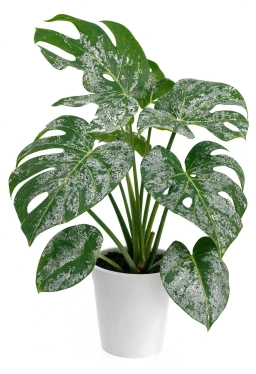
Leaves show clean tears, splits, creased lines, bruised patches, or snapped tips that do not match any disease pattern. The damage is localised, often along a fold or at a point of contact, and does not spread or progress. Large, thin aroid leaves are particularly prone to tearing during handling, moving, or from contact with nearby objects and pets.
 ⚠ Moderate
Monstera — Snapped Petioles & Top-Heavy Collapse
A leaf suddenly droops or hangs after its petiole (leaf stalk) bends, creases, or snaps near the base or a weak point. Large-leaved and long-stemmed aroids become top-heavy and the petioles cannot support the leaf, especially when reaching toward light. The break is a clean physical injury rather than the soft collapse of rot.
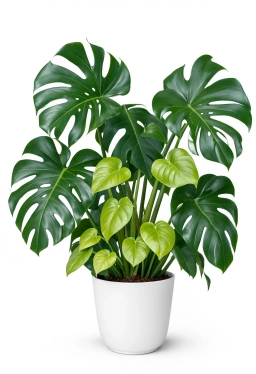 ⚠ Minor
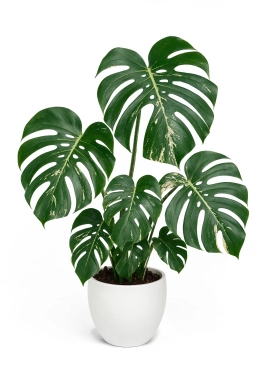
Monstera — Aerial Roots & Lack of Climbing Support
A climbing aroid produces long aerial roots that wave in the air or sprawl across the floor with nothing to attach to, while the plant grows leggy, sideways, or downward. Leaves may stay small and fail to mature without the vertical orientation climbing species need. The aerial roots are healthy and seeking a surface to anchor to — the issue is the absence of a support.
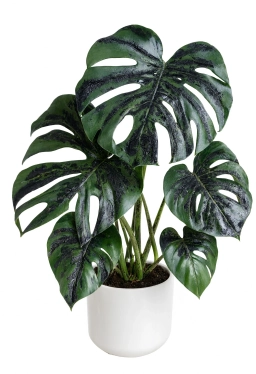
 ⚠ Moderate
Monstera — Propagation Failure — Cuttings Rotting or Stalling
A stem or node cutting placed to root softens, browns, and mushes at the cut end instead of producing roots, or simply stalls indefinitely without rooting. The node may blacken and the cutting eventually collapses. Failures cluster around overly wet, contaminated, or poorly chosen cuttings rather than any single disease.
 ⚠ Moderate
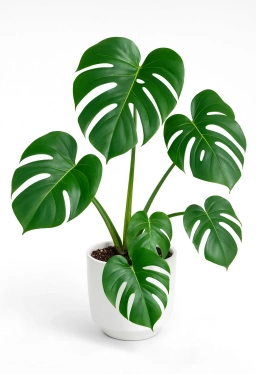
Monstera — Weak Water-Propagated Roots Failing to Transition
A cutting roots well in water but then declines after being potted into substrate — wilting, yellowing, or stalling as the water-formed roots fail to function in soil. Water roots are structurally different from soil roots and often cannot absorb efficiently or survive the change. The plant may sit for weeks without establishing or may rot at the transition.
 ⚠ Moderate
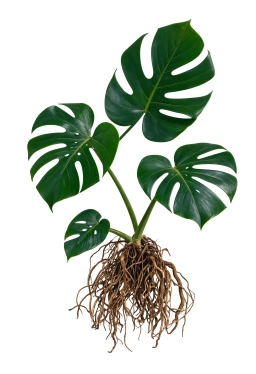
Monstera — Phosphorus Deficiency — Purple-Tinted Leaves & Stunted Growth
Leaves develop a distinct purple or reddish-purple discolouration on their undersides, sometimes extending to the upper leaf surface in severe cases. Growth slows dramatically. Older lower leaves are affected first, as phosphorus is mobile and translocated to actively growing tissue. The purple tint results from anthocyanin accumulation — a stress pigment the plant produces when phosphorus-dependent energy transfer (ATP) pathways are disrupted.
 ⚠ Moderate
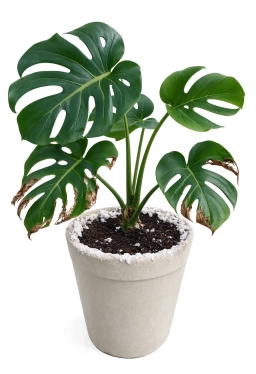
Monstera — Zinc Deficiency — Small, Distorted New Leaves & Shortened Internodes
New leaves emerge unusually small, often half the size expected for the variety, with short, compacted internodal distances creating a rosette-like cluster. Leaves may be slightly misshapen or wrinkled. Zinc is essential for the production of auxin (the primary growth hormone) and for enzyme activation in chlorophyll synthesis — its deficiency causes a distinctive 'little leaf' syndrome that is easily confused with the effects of insufficient light.
 ⚠ Moderate
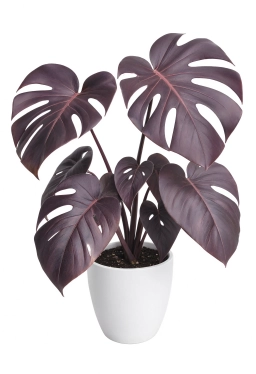
Monstera — LED Grow Light Burn — Bleaching & Necrosis from Artificial Light
Leaves directly beneath or closest to the LED grow light develop bleached, pale, or white patches — often with brown necrotic zones in the most severely exposed areas. The damage pattern reflects the light distribution of the lamp: typically a central circular zone of maximum bleaching surrounded by a gradient of lesser damage. Unlike sun scorch, grow light burn can occur at any time of year regardless of season and is often gradual rather than sudden.
 ⚠ Moderate
Monstera — Root-Bound Stress — Impacted Root System in Undersized Pot
Roots emerge from drainage holes or wrap visibly around the outer rim of the pot when the plant is removed. The substrate dries out extremely rapidly — sometimes within 24 hours of watering. Growth slows despite adequate fertilisation, and the plant may droop even immediately after watering as the dense root mass prevents adequate water retention. Some species produce smaller-than-usual new leaves as the root system cannot support normal leaf expansion.
⚠ ModerateMonstera — Repotting Shock — Post-Transplant Wilting & Stress Response
Following repotting, the plant wilts, droops, or shows yellowing in the days to weeks after transplanting, despite the substrate being correctly moist. New growth stalls or reverses. In severe cases, previously firm leaves become limp and fail to recover even after watering. Repotting shock occurs because root tip damage during transplanting temporarily reduces the plant's water uptake capacity while the substrate moisture level remains adequate.
⚠ ModerateMonstera — Leaf Miner Damage — Tunnelling Larvae Inside Leaf Tissue
Pale, winding, irregular tunnels or blotches appear within the leaf blade — visible when the leaf is held up to light. The damage is caused by fly or moth larvae that hatch from eggs laid between the upper and lower leaf surfaces and tunnel through the mesophyll tissue as they feed. Affected areas turn white, pale yellow, or tan as the tissue dies. The serpentine trail pattern is diagnostic — no other pest creates this specific winding track within the leaf.
⚠ CriticalMonstera — Eriophyid Mite Damage — Russet Mites & Microscopic Feeding Injury
New growth emerges stunted, corky, or with a rough, russeted texture. Leaves may be narrow, twisted, or cupped, and new growth fails to expand to normal size. Unlike spider mites, eriophyid mites are invisible to the naked eye (0.1–0.3 mm) and produce no webbing. The damage from their feeding on meristematic tissue (growing points) causes irreversible deformity in developing leaves — making early detection difficult and control challenging.
⚠ ModerateMonstera — Manganese Deficiency — Young Leaf Interveinal Chlorosis & Pale New Growth
New, young leaves emerge pale yellow or light green, with a distinct interveinal chlorosis pattern where the tissue between veins loses green colour while the vein network remains visible. This mirrors iron deficiency but appears exclusively on the youngest growth — manganese is not mobile in plants and cannot be redirected from older leaves. As deficiency progresses, necrotic brown spots develop within the chlorotic zones.
⚠ CriticalMonstera — No Drainage Hole — Root Rot from Standing Water Accumulation
The plant wilts despite being recently watered, with the substrate appearing moist on the surface but waterlogged at the base. Leaves yellow progressively from the lower growth upward. A sour smell may be detectable from the substrate. These are the classic presentation of root rot in a pot without drainage — excess water that cannot escape accumulates at the base and creates an anaerobic zone where Pythium, Phytophthora, and Fusarium establish rapidly.
⚠ ModerateMonstera — Oversized Pot — Root Rot Risk from Excess Substrate Volume
A plant in a pot much larger than its root ball shows persistent slow growth, yellowing lower leaves, or develops root rot despite appearing to be watered correctly. The excess substrate volume around the root system retains far more moisture than the root ball can absorb — creating chronic wet conditions that are invisible at the surface. The substrate surface dries normally, masking the waterlogged base where root rot develops.
⚠ ModerateMonstera — Leaf Shine Product Damage — Clogged Stomata & Waxy Residue Burns
Leaves develop a greasy, uneven sheen with brown or bronze patches, or show small necrotic spots at regular intervals corresponding to stomata openings. The plant's transpiration is visibly reduced — leaves may feel warmer than uncoated leaves at the same temperature. Over time, photosynthetic efficiency decreases and new growth may emerge smaller. Commercial leaf shine products (oils, waxes, silicone sprays) that are not formulated for plants block the microscopic stomata through which gas exchange occurs.
⚠ ModerateMonstera — Winter Overwatering — Seasonal Watering Frequency Mismatch
Tropical houseplants show yellowing, mushy stems, or root rot symptoms in autumn and winter despite an apparently correct watering schedule maintained from the summer period. The cause is seasonal: as day length shortens and temperature drops, plant metabolism, photosynthesis, and water uptake all decline significantly — but the grower continues watering at the same summer frequency. Water that was absorbed in days during active summer growth now sits in the substrate for weeks.
⚠ ModerateMonstera — Boron Deficiency — Deformed New Growth & Hollow Petioles
Emerging new leaves are stunted, thickened, or brittle — they may fail to unfurl fully, tear easily along the midrib, or develop a corky, water-soaked texture at the base. Leaf margins may be cupped or recurved. In severe cases, the growing tip aborts entirely. Boron is essential for cell wall formation, pollen viability, and the transport of sugars through phloem — its deficiency disrupts cell division in the most actively growing tissues first.
⚠ MinorMonstera — White Mineral Deposits on Leaves — Hard Water Calcium & Magnesium Residue
White, chalky, or powdery deposits appear on the upper surface of leaves, typically after misting, overhead watering, or in hard-water areas with high calcium and magnesium content. The deposits are not mould or a disease — they are mineral salts left behind when water droplets evaporate. While not directly harmful to leaf tissue, heavy mineral deposits reduce photosynthetic efficiency by blocking light penetration and can cause physical leaf damage when rubbed abrasively to remove them.
⚠ MinorMonstera — Humidity Tray Mould — Stagnant Water Breeding Fungus Gnats & Mould
White or grey mould grows on the pebbles or water surface of a humidity tray placed beneath the plant. Fungus gnat populations increase near the plant. A musty smell develops. While humidity trays can be effective tools for raising local RH, the standing water becomes a breeding site for fungus gnats (Bradysia spp.) and supports the growth of various moulds that can spread to the substrate surface and cause soil-level issues.
⚠ ModerateMonstera — Water Propagation Algae & Rot — Green Water & Cutting Stem Decay
Cuttings being propagated in water develop green or brown algae in the vessel, and the stem section submerged in water turns brown, mushy, or slimy. Roots may fail to develop or emerge briefly before dying. The combination of light, nutrients from cut tissue, and warm water creates ideal conditions for algae and bacteria to establish, progressively fouling the water and causing stem rot before rooting is complete.
⚠ CriticalMonstera — Scale Insect Crawlers — Mobile Juvenile Stage & Colony Spread
Despite treating and removing visible adult scale, the plant re-infests within weeks. Small, flat, barely visible insects (0.3-0.5 mm) are found on new growth and under leaves — these are the crawler stage, the mobile juvenile scales that disperse from fixed adult colonies. Crawlers are nearly invisible and disperse by walking or air currents, and are the stage most susceptible to contact pesticides. Missing them is why scale infestations recur after apparent treatment success.
⚠ ModerateMonstera — Pothos Spider Mites — Fine Webbing and Stippled, Pale Leaves
Leaves develop a fine bronze or silver stippled pattern — thousands of tiny pale dots where mites have pierced the leaf cells. Fine silken webbing appears between leaves and stems, particularly at the growing tip. In heavy infestations the webbing may cover the entire plant. The plant's overall vigour declines rapidly. Spider mites (Tetranychus urticae and relatives) are not insects but arachnids — they are not killed by insecticides and require specific miticides or contact treatments. They thrive in hot, dry indoor conditions and can complete a full life cycle in 7 days at 30°C.
⚠ ModerateMonstera — Pothos Thrips — Silvery Leaf Scarring and Deformed New Growth
Leaves develop a characteristic silvery, shiny, or bronze stippled surface as thrips rasp and suck the contents of individual surface cells. New leaves emerge deformed, curled, or with brown streaks. Black thrips frass (excrement) dots appear on the underside of leaves. Thrips (order Thysanoptera) are slender, 1-2 mm insects barely visible to the naked eye. They are particularly damaging because they feed on developing tissue inside rolled new leaves before emergence, causing deformation that persists for the life of the leaf.
⚠ ModerateMonstera — Pothos Cutting Stem Rot — Node Decay in Water & Substrate Propagation
Stem cuttings placed in water or moist substrate turn soft, brown, and slimy at the submerged cut end, progressing upward toward the node and ultimately killing the cutting before roots form. The water in the propagation vessel turns green or cloudy. Pothos is one of the easiest plants to propagate, but improper technique — particularly submerging too much stem tissue, using stagnant warm water, or propagating damaged cuttings — creates ideal conditions for the bacteria and water moulds that cause stem rot before adventitious roots form.
⚠ ModerateMonstera — Pothos Fungus Gnats — Larval Root Damage from Bradysia spp.
Tiny black flies (2-4 mm) hover around the pot and fly up when the plant is disturbed or watered. The plant's new growth slows and leaves yellow despite seemingly adequate care. Larvae in the substrate are 4-6 mm long, white with a black head capsule, and feed on organic matter and young roots. In heavy infestations, larval root feeding mimics root rot — the plant wilts and yellows because the root system is physically damaged. Pothos in moist, peat-rich substrates are particularly susceptible.
Monstera Care Guide
Light, watering, humidity, fertilising, repotting and propagation — everything you need to keep your Monstera thriving.
Full care guide →Real Monstera grow diaries
Growers on DailyGrowers log their plant week by week, one photo at a time. Here's how theirs are going.
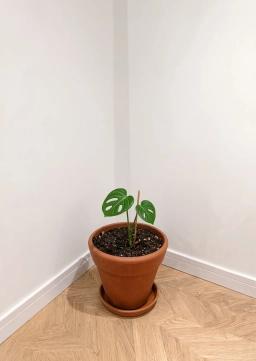
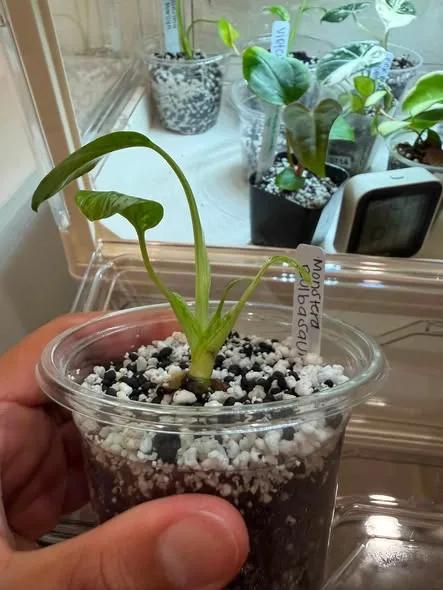
Growing Monstera too? Start your own diary. It's free and takes 2 minutes.
Start my Monstera diary →See how growers fixed these problems
Browse real Monstera grow diaries from the community — treatments, timelines, and results.
Browse community diaries →Common Monstera Questions
Why are my Monstera leaves turning yellow?
Leaves turn uniformly pale yellow or lime-green, progressing from older lower foliage upward. Unlike nutrient deficiency, the yellowing is diffuse — no distinct green veining remai… Read the full guide →
Why is my Monstera not growing new leaves?
Fine, stippled yellow or bronze speckling appears on upper leaf surfaces as mites pierce individual cells to feed. Infestations progress to visible webbing beneath leaves and betwe… Read the full guide →
How do I get rid of spider mites on Monstera?
New growth emerges pale, small, and widely spaced along elongated, thin stems. Leaves are significantly smaller than previous growth, may appear yellow-green, and internodal distan… Read the full guide →
Why are my Monstera leaves turning brown?
A white to grey powdery coating appears on leaf surfaces, stems, and occasionally flower buds. Unlike other fungal diseases, powdery mildew grows on the surface rather than inside … Read the full guide →