 ⚠ Critical
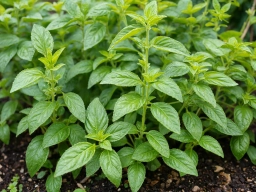
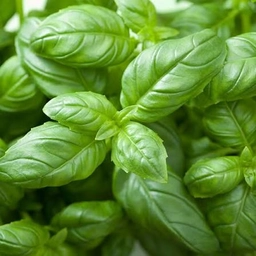
Yellow, vein-following patches on top of the leaf with fuzzy grey mould underneath � the hallmark of basil downy mildew.
Downy Mildew on Basil
Commonly affects: Ocimum basilicum (Basil)
Yellow, angular patches appear on the upper surface of leaves, following the leaf veins, while a fuzzy grey-purple mould develops on the underside directly beneath the yellowed area. Affected leaves eventually turn brown and collapse.
The short answer
Yellowing between the veins on the top of a basil leaf, with a grey-purple fuzz on the underside, is downy mildew. Turn the leaf over — the fuzz is what distinguishes it from a nutrient problem, and people miss it because they only look at the top. It spreads fast in humid still air, there is no home cure, and the practical response is to harvest what is clean immediately and improve airflow.
Confirm it before you treat it
- 1Turn the leaf over. Grey to purple downy growth on the underside is diagnostic and rules out every nutrient explanation.
- 2Look at the yellowing pattern on top. Downy mildew yellows in blocks bounded by the veins, giving an angular look rather than a smooth fade.
- 3Check the lower and inner leaves first. It starts where humidity is highest and light is lowest.
- 4Think about the conditions. Warm, humid, still air — a crowded windowsill or a closed greenhouse — is what it needs.
- 5Note how fast it moved. Downy mildew can take a plant in under a week, which nutrient problems never do.
Potential Causes
- 1Peronospora belbahrii, an airborne water mould that spreads via wind-blown spores
- 2High humidity and extended leaf wetness, especially overnight
- 3Poor air circulation in dense plantings or greenhouse conditions
- 4Infected seed, a common source of the pathogen in commercial basil seed
Solution Steps
- 1Remove and destroy infected leaves and, in severe cases, entire plants, as soon as symptoms appear.
- 2Improve air circulation by spacing plants further apart and avoiding overhead watering.
- 3Apply a copper-based fungicide preventively if downy mildew is a recurring problem in your area.
- 4Buy resistant basil varieties bred specifically for downy mildew tolerance if the disease returns each season.
What else looks like this
| Could be | How to tell it apart |
|---|---|
| Nitrogen deficiency | Smooth even yellowing with no angular blocks and, crucially, nothing on the underside. |
| Powdery mildew | White powder on the UPPER surface that rubs off. Downy mildew is on the underside and does not rub away cleanly. |
| Sun scald | Bleached pale patches on the most exposed leaves, dry and papery, with no growth on the underside. |
| Spider mites | Fine stippling and webbing on the underside rather than a soft downy layer. Both are underside problems, so look at the texture. |
| Cold damage | Blackened or translucent patches after a cold night, appearing all at once rather than spreading over days. |
Recovery timeline
- Day 1Harvest every clean leaf now — this is the last chance to get a usable crop. Remove and bin affected foliage.
- Days 1–3Separate the plants, increase airflow, and stop any overhead watering. Do not mist.
- Week 1Expect it to continue on affected plants. Realistically you are slowing it, not stopping it.
- Weeks 1–2Badly affected plants should be removed entirely to protect any remaining clean ones.
- Next sowingChoose a resistant variety, sow thinly, and give each plant real space. Prevention is the whole strategy with this one.
If you do nothing
It moves through a crop quickly. Leaves yellow, then brown, then collapse, and the spores travel on air and water to every basil plant nearby — a windowsill row can go from one spotted leaf to total loss in about a week. The crop is not merely disfigured but unusable, since affected leaves taste poor and break down rapidly after picking. Seed can carry the pathogen, so an infected plant that is allowed to set seed passes it on.
Common mistakes
- Only looking at the top of the leaf and concluding it needs feeding. Fertiliser does nothing and the week you lose is the week the crop dies.
- Misting to help a struggling plant. Humidity is the trigger; misting actively accelerates it.
- Watering overhead in the evening. Wet foliage overnight is ideal conditions for spread.
- Keeping badly affected plants near clean ones out of optimism. One plant infects the row.
- Sowing thickly. Crowded seedlings create exactly the still humid microclimate this needs, and thin sowing is the cheapest prevention there is.
Prevention Tip
Downy mildew spreads through humid, still air overnight � water at the base in the morning rather than evening, and choose resistant varieties if the disease has affected your basil before.
Questions people actually ask
- Can I eat leaves from an affected plant?
- Clean, unaffected leaves are fine — harvest them straight away. Discard leaves with yellowing or any growth on the underside.
- Is there a spray that works?
- Not effectively for home growers. Airflow, spacing and resistant varieties do far more than any product available to you.
- How is it different from powdery mildew?
- Powdery mildew is white powder on top that rubs off; downy mildew is grey-purple fuzz underneath that does not. They are unrelated organisms.
- Can I save seed from an affected plant?
- No. The pathogen is seed-borne, so saving seed carries it into next year's sowing.
- Does it affect other herbs?
- This particular one is essentially specific to basil. Nearby mint or parsley is not at risk from it.