 ⚠ Critical
Alocasia Corm Rot — Overwatering During Dormancy
Commonly affects: Alocasia spp., Alocasia amazonica, Alocasia odora
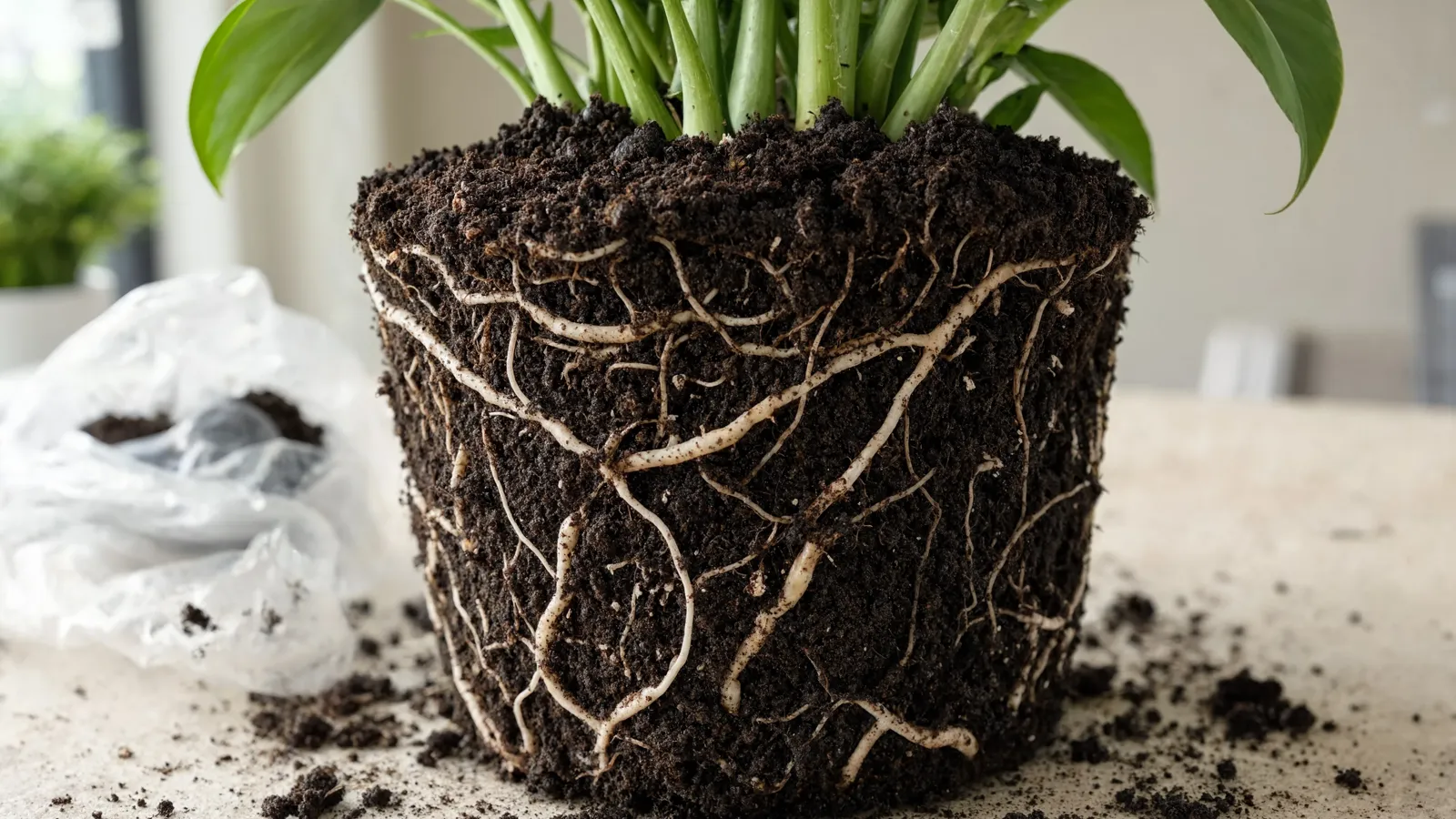
The underground corm (bulb-like storage organ at the base of the plant) becomes soft, mushy, and discoloured — ranging from light brown to near-black. In healthy Alocasia, the corm is firm, pale beige, and dry. Rotted corms have a distinctly sour or fermented smell. When the corm rots, the plant loses its anchor and energy storage, typically causing sudden total collapse of all stems and leaves.
The short answer
If the base of an alocasia is soft when squeezed, or a stem pulls away from the soil with no resistance, the corm is rotting. This is the fatal counterpart to normal dormancy and the two look identical from above. Unpot immediately, cut away all soft tissue back to firm white flesh, and repot the remainder into fresh dry mix. Delay is what makes it unrecoverable.
Confirm it before you treat it
- 1Squeeze the base at soil level. Any give at all is significant — a healthy corm is hard, like a potato.
- 2Tug a stem gently. If it detaches with no resistance, the tissue holding it has already broken down.
- 3Smell the soil. A sour or fermented smell is a strong indicator of rot and does not occur in dormancy.
- 4Unpot and look at the corm. Rot shows as brown or black soft areas, often starting at the base where drainage is worst.
- 5Recall the watering. Corm rot almost always follows watering on a dormancy schedule that suited an actively growing plant.
Potential Causes
- 1Continued regular watering during dormancy, when the plant's metabolic rate is too low to consume soil moisture before rot pathogens colonise
- 2Cold, wet substrate creating anaerobic conditions that favour Pythium and Fusarium — Alocasia corms are particularly vulnerable below 15°C
- 3Corm damage from physical handling during repotting creating entry points for fungal infection
- 4Planting the corm too deep or burying it in dense, water-retentive substrate without adequate drainage
Solution Steps
- 1Unpot the plant immediately and remove all substrate from around the corm. Inspect under good lighting — soft, discoloured sections indicate active rot.
- 2Use a clean, sharp knife or scalpel to cut away all rotted corm tissue, working back to firm, pale flesh. Sterilise the blade with alcohol between cuts.
- 3Dust all cut surfaces with powdered sulfur or activated charcoal and allow the corm to air-dry in a warm, bright location for 24–48 hours to form a callus.
- 4Treat the remaining healthy corm with a dilute fungicide solution (thiophanate-methyl) for 15 minutes as a soak before replanting.
- 5Repot in a very well-draining mix (equal parts perlite, orchid bark, and a small amount of potting soil) in a pot only marginally larger than the corm.
- 6Do not water for 7–10 days after repotting — allow the callused tissue to stabilise before exposing the root zone to moisture again.
What else looks like this
| Could be | How to tell it apart |
|---|---|
| Normal dormancy | Leaves drop, but the corm stays hard and there is no smell. This distinction decides whether you intervene or leave it alone. |
| Root rot without corm involvement | Brown mushy roots but a firm corm. Considerably more recoverable — repot into fresh mix and the plant usually returns. |
| Underwatering | The corm shrivels and goes wrinkly and hard rather than soft. Dry and firm is a different problem from wet and soft. |
| Bacterial soft rot | Very fast, wet, foul-smelling collapse spreading within days. Treated the same way but with less chance of saving anything. |
| Cold damage | Sudden collapse after exposure to cold, affecting the exposed side, often without a smell. |
Recovery timeline
- Day 1Unpot immediately and remove all soil. Cut every soft or discoloured area back with a clean blade until only firm white tissue remains.
- Days 1–2Let the cut surfaces dry and callus in open air for 24 hours. Repotting a fresh wet cut re-invites the rot.
- Day 2–3Repot into fresh, very well-draining mix in a clean pot. Do not water for several days.
- Weeks 1–4No visible growth. This is expected — the plant has no leaves and is rebuilding. Water very sparingly.
- Weeks 4–12A new shoot means the corm survived. Nothing by three months with a corm that has gone soft again means it is finished.
If you do nothing
Rot spreads through the corm in days, not weeks, and once it reaches the growing point there is nothing left to regrow from. The window between a corm that is partly soft and a corm that is entirely gone is often under a week. Because the symptoms above ground are indistinguishable from ordinary dormancy, the usual outcome is that nobody looks until the plant fails to return in spring — by which point the corm is hollow.
Common mistakes
- Assuming leaf drop is dormancy without checking the corm. The check takes five seconds and decides the plant's survival.
- Watering a leafless alocasia on the normal schedule. With no leaves there is no transpiration, so the soil stays wet for weeks.
- Cutting away only the obviously black tissue. Rot extends past the visible margin — cut back until the surface is uniformly firm and white.
- Repotting immediately after cutting. Fresh cuts need a day to callus, or the rot simply resumes.
- Using a moisture-retentive mix afterwards. A recovering corm needs a gritty, fast-draining substrate.
Prevention Tip
When Alocasia enters dormancy (typically in autumn/winter, signalled by leaves yellowing and dying back), reduce watering to once every 2–3 weeks — just enough to prevent the corm from desiccating completely. Never water on a fixed schedule during dormancy.
Questions people actually ask
- How do I tell rot from dormancy?
- Squeeze the base. Firm means dormancy and you should leave it alone; soft means rot and you should act today.
- Can a partly rotted corm be saved?
- Yes, if any firm tissue with a growing point remains. Cut back to clean white flesh, let it callus, and repot dry.
- Why does it happen in winter?
- Because the plant stops using water while the owner keeps watering. That mismatch is the cause in most cases.
- Should I use a fungicide?
- Cutting away the affected tissue and repotting dry does most of the work. A rooting powder with fungicide on the cut surface can help, but it is not the main measure.
- How long before I know if it worked?
- Up to three months. Check the corm periodically — if it stays firm, it is still viable even with nothing showing above soil.
Related Issues to Explore

Root Rot — Pythium & Phytophthora Infection
Pythium and Phytophthora are the primary agents of corm rot — the same fungicidal and substrate protocols that treat root rot apply to corm recovery.
Read guide
Winter Dormancy Stall — Alocasia's Seasonal Growth Pause
Understanding the dormancy cycle that triggers reduced growth is essential for correct corm care — watering during dormancy as during active growth is the primary cause of corm rot.
Read guideMore Root Problems Problems
See all →
Real Alocasia grow diaries
Growers on DailyGrowers log their plant week by week, one photo at a time. Here's how theirs are going.
 2 weeks
alocasia dragon scale
@yoyo
 1 week
Конь Регал
@nataligroy
 1 week
Alocasia Frydek
@alocasias4life
 1 week
Alocasia Sarian Albo
@alocasias4life
 1 week
Моя будущая дракониха
@nataligroy
 1 week
Блэк
@nataligroy
Growing Alocasia too? Start your own diary. It's free and takes 2 minutes.
Start my Alocasia diary →