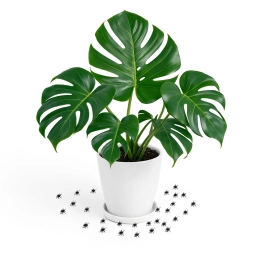
 ⚠ Moderate
An old mix that has broken down into dense, airless particles stays wet and starves roots of oxygen — a chunky, well-aerated aroid mix at repotting restores root health.
Compacted, Anaerobic Substrate
Commonly affects: Long-unrepotted aroids — Monstera, Philodendron, Anthurium, Alocasia
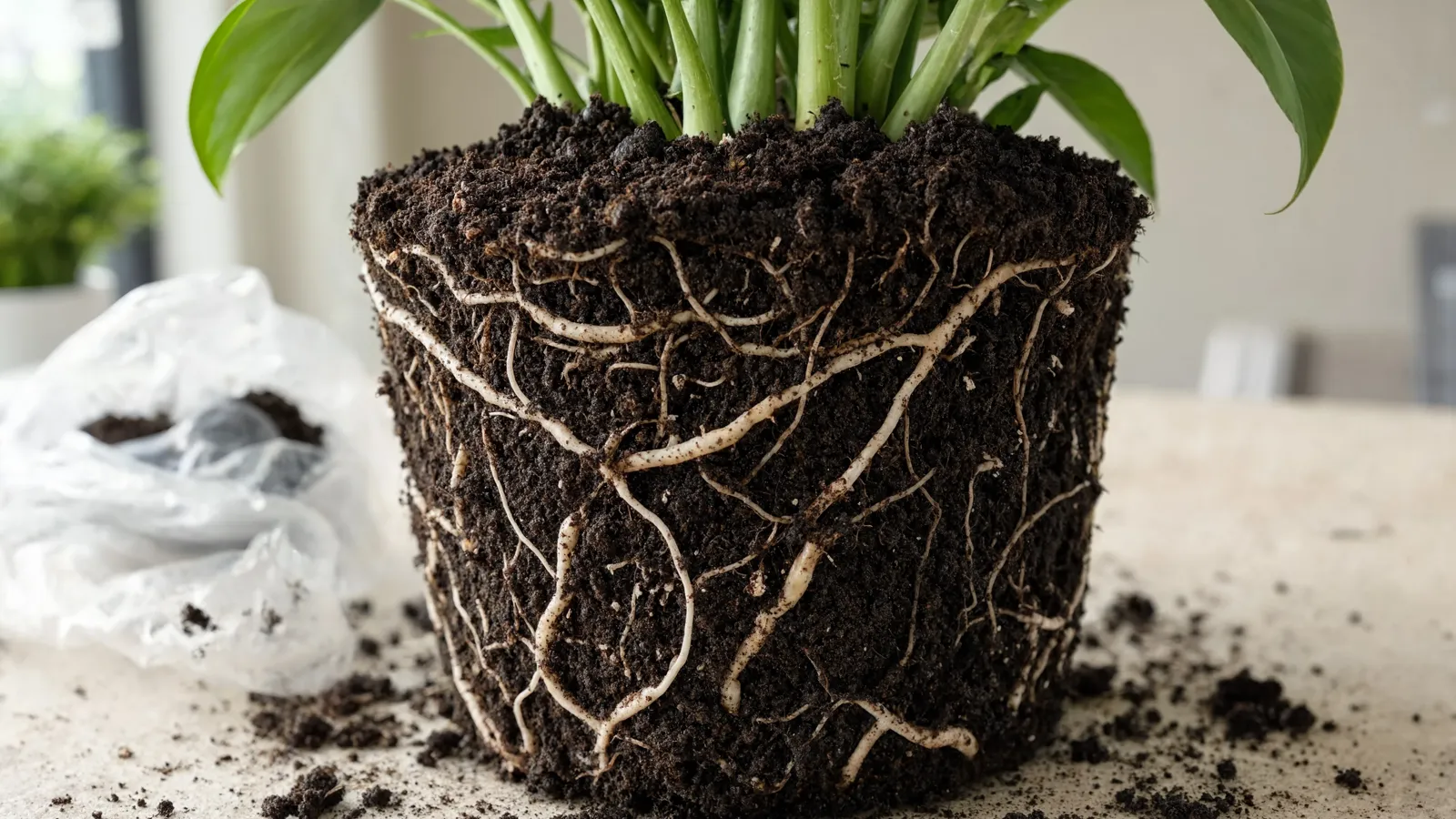
An old, broken-down mix becomes dense and airless, staying wet for a long time and starving roots of oxygen. The plant declines slowly — yellowing, stunted growth, and a soil surface that crusts or stays soggy. On unpotting, the substrate is fine, muddy, and tightly packed, with few healthy white roots and a sour smell from anaerobic conditions.
Potential Causes
- 1Organic substrate breaking down over time into fine, airless particles
- 2Long intervals between repotting allowing structure to collapse
- 3Fine, peat-heavy mixes lacking chunky aeration components
- 4Repeated watering compacting the mix and expelling air pockets
Solution Steps
- 1Unpot the plant and gently remove the old, broken-down substrate from the root ball.
- 2Inspect and trim any dead, mushy roots, keeping healthy white roots intact.
- 3Repot into a fresh, chunky, well-aerated aroid mix with bark, perlite, and coarse components.
- 4Choose a pot size appropriate to the root system, with ample drainage.
- 5Water in thoroughly, then allow the new, airier mix to dry appropriately between waterings.
- 6Repot every 12–24 months, or when the mix has visibly broken down, to maintain structure.
Prevention Tip
Aroids are epiphytic or semi-epiphytic and need a chunky, airy root environment — a dense, fine mix suffocates them. Refresh the substrate every year or two with a bark-and-perlite-rich aroid mix to keep roots oxygenated.
Related Issues to Explore

Root Rot — Pythium & Phytophthora Infection
Compacted, airless substrate creates the anaerobic conditions that lead directly to root rot — repotting into an airy mix prevents it.
Read guide
Yellowing Leaves — Overwatering Stress
A compacted mix holds water far too long, producing overwatering symptoms even on a normal schedule — substrate structure is the underlying issue.
Read guide
Hydrophobic Substrate — Water Channeling
Both are substrate-structure failures with opposite symptoms — compacted mix stays soggy, hydrophobic mix repels water; fresh substrate fixes each.
Read guideMore Root Problems Problems
See all →
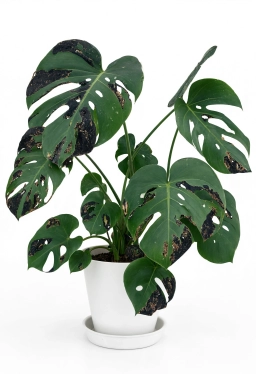
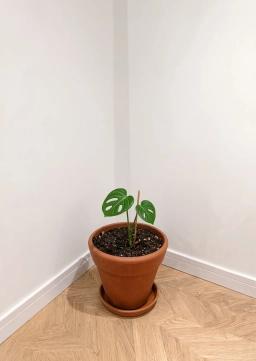
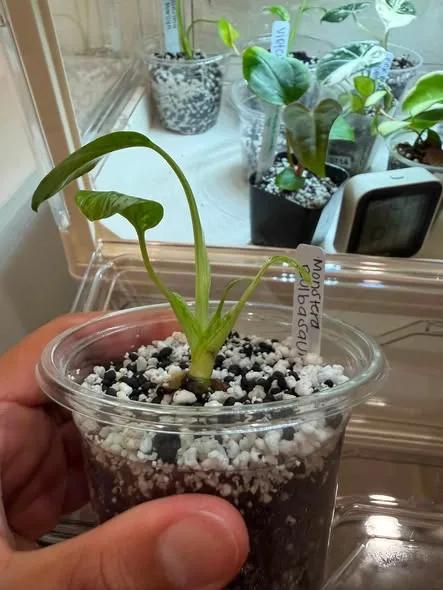
Real Monstera grow diaries
Growers on DailyGrowers log their plant week by week, one photo at a time. Here's how theirs are going.
Growing Monstera too? Start your own diary. It's free and takes 2 minutes.
Start my Monstera diary →