




Plant Clinic · Category
Root Problems
Root rot, overwatering damage, root-bound plants, and substrate health issues.
Root problems are often invisible until a plant is in serious decline — by the time symptoms appear above the substrate, significant root damage may have already occurred. Root rot (typically caused by Phytophthora or Pythium) and compaction from being root-bound are the two most common causes of houseplant death.
All Root Problems
 ⚠ Critical
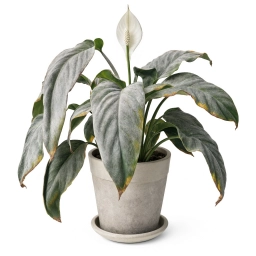
Spathiphyllum wallisii (Peace Lily)
Root Rot — Pythium & Phytophthora Infection
The plant wilts consistently even when the soil is moist or wet. Lower leaves yellow and drop rapidly, and stems near the soil surface may turn dark brown or black and feel hollow. On inspection, roots are black, slimy, and emit a distinctive fetid odour caused by anaerobic decomposition.
 ⚠ Critical
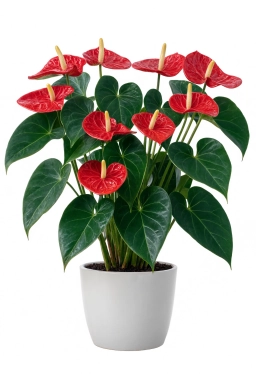
Anthurium spp.
Root Mealybugs — Hidden Rhizoecus Infestation
The plant declines slowly — stunted growth, persistent wilting, and yellowing — despite correct watering and feeding, with no visible pest on the foliage. On unpotting, white, powdery, cottony deposits coat the roots and the inner pot walls, resembling mould or fertiliser residue. These below-ground mealybugs feed directly on root sap, crippling water and nutrient uptake.
 ⚠ Critical
Anthurium andraeanum
Root-Knot Nematodes — Meloidogyne Galls
The plant shows chronic stunting, wilting during warm periods despite moist soil, and poor response to feeding. On unpotting, the roots bear characteristic swollen knots and galls, are reduced in fine feeder roots, and may be discoloured. These microscopic soil-dwelling roundworms invade root tissue, forming galls that disrupt water and nutrient transport.
 ⚠ Moderate
Long-unrepotted aroids — Monstera
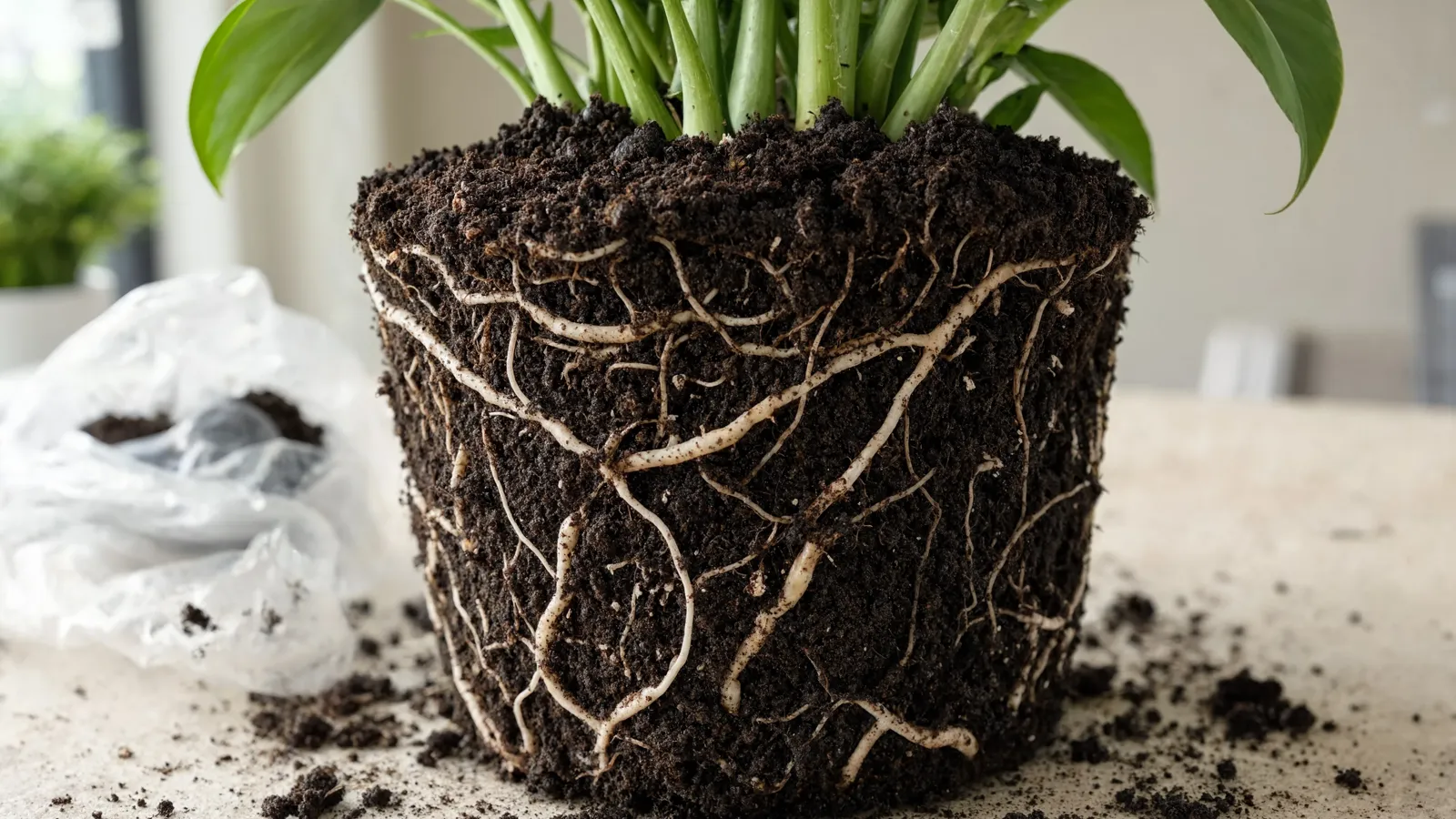
Compacted, Anaerobic Substrate
An old, broken-down mix becomes dense and airless, staying wet for a long time and starving roots of oxygen. The plant declines slowly — yellowing, stunted growth, and a soil surface that crusts or stays soggy. On unpotting, the substrate is fine, muddy, and tightly packed, with few healthy white roots and a sour smell from anaerobic conditions.
⚠ ModerateWater-rooted cuttings — Monstera
Weak Water-Propagated Roots Failing to Transition
A cutting roots well in water but then declines after being potted into substrate — wilting, yellowing, or stalling as the water-formed roots fail to function in soil. Water roots are structurally different from soil roots and often cannot absorb efficiently or survive the change. The plant may sit for weeks without establishing or may rot at the transition.
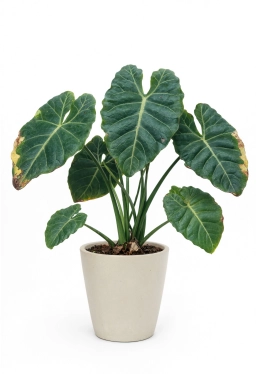
⚠ CriticalAlocasia spp.
Alocasia Corm Rot — Overwatering During Dormancy
The underground corm (bulb-like storage organ at the base of the plant) becomes soft, mushy, and discoloured — ranging from light brown to near-black. In healthy Alocasia, the corm is firm, pale beige, and dry. Rotted corms have a distinctly sour or fermented smell. When the corm rots, the plant loses its anchor and energy storage, typically causing sudden total collapse of all stems and leaves.
 ⚠ Moderate
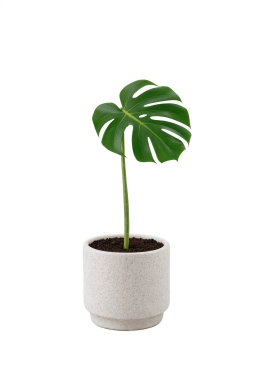
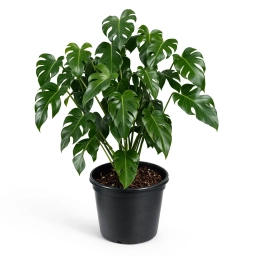
Monstera deliciosa
Root-Bound Stress — Impacted Root System in Undersized Pot
Roots emerge from drainage holes or wrap visibly around the outer rim of the pot when the plant is removed. The substrate dries out extremely rapidly — sometimes within 24 hours of watering. Growth slows despite adequate fertilisation, and the plant may droop even immediately after watering as the dense root mass prevents adequate water retention. Some species produce smaller-than-usual new leaves as the root system cannot support normal leaf expansion.
 ⚠ Critical
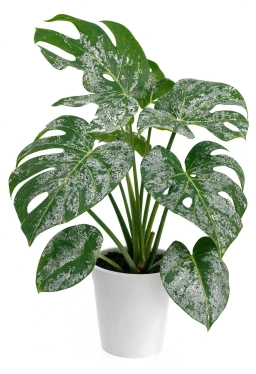
Monstera deliciosa
No Drainage Hole — Root Rot from Standing Water Accumulation
The plant wilts despite being recently watered, with the substrate appearing moist on the surface but waterlogged at the base. Leaves yellow progressively from the lower growth upward. A sour smell may be detectable from the substrate. These are the classic presentation of root rot in a pot without drainage — excess water that cannot escape accumulates at the base and creates an anaerobic zone where Pythium, Phytophthora, and Fusarium establish rapidly.
 ⚠ Moderate
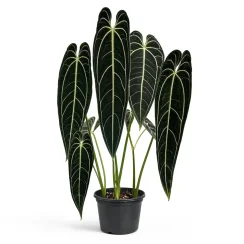
Monstera deliciosa
Oversized Pot — Root Rot Risk from Excess Substrate Volume
A plant in a pot much larger than its root ball shows persistent slow growth, yellowing lower leaves, or develops root rot despite appearing to be watered correctly. The excess substrate volume around the root system retains far more moisture than the root ball can absorb — creating chronic wet conditions that are invisible at the surface. The substrate surface dries normally, masking the waterlogged base where root rot develops.
 ⚠ Critical
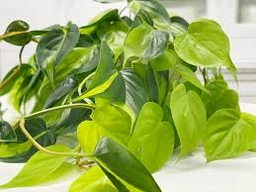
Epipremnum aureum — all Pothos cultivars
Pothos Root Rot — Pythium & Phytophthora in Waterlogged Substrate
The plant wilts even when the substrate is moist, leaves yellow and collapse, and a foul odour rises from the pot when watered. Removing the plant from the substrate reveals brown-black, slimy roots that fall apart on handling. Healthy Pothos roots are white to cream and firm. Root rot in Pothos is caused by water moulds (Pythium spp., Phytophthora spp.) that colonise waterlogged root zones, breaking down root tissue and cutting off water and nutrient uptake entirely. The plant effectively dies of thirst while sitting in water.
 ⚠ Critical
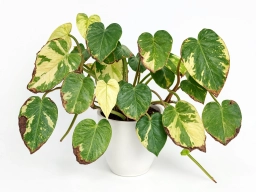
Ficus lyrata (Fiddle Leaf Fig)
Fiddle Leaf Fig Brown Spots from Root Rot — Dark Blotches Spreading from Leaf Base
Large, irregular dark-brown to rust-coloured spots appear on the lower leaves first, typically spreading from the base or edges of the leaf inward. The spots have a water-soaked appearance initially before turning dry and papery. Multiple leaves on the lower portion of the plant are affected simultaneously. This is the most common and most destructive Ficus lyrata problem: root rot from overwatering. The spots appear on leaves because the damaged root system can no longer supply adequate water and nutrients, and Phytophthora-produced toxins travel upward in the vascular system.
 ⚠ Critical
Ficus lyrata (Fiddle Leaf Fig)
Fiddle Leaf Fig Root Rot — Overwatering in Dense Substrate
The plant droops and wilts despite moist substrate, lower leaves yellow and fall, and a musty smell rises from the pot when watered. The substrate remains wet for more than 10-14 days after watering. Fiddle Leaf Figs have a naturally shallow, spreading root system adapted to the well-drained forest floor of their native West Africa. In dense potting mix without adequate drainage, roots sit in waterlogged conditions and are rapidly colonised by Pythium and Phytophthora water moulds that destroy root tissue.
⚠ CriticalSansevieria trifasciata / Dracaena trifasciata (Snake Plant)
Snake Plant Root Rot — Pythium in Waterlogged Substrate
The plant leans or tips to one side, leaves pull free from the base with little resistance, and roots are brown, slimy, and smell of decay. The substrate has been consistently moist. Root rot in snake plants progresses faster than in most houseplants because the roots are relatively few and thick — once a significant portion are compromised, the plant loses structural integrity rapidly. The characteristic symptom is leaves that wobble or fall over even without physical disturbance.
 ⚠ Critical
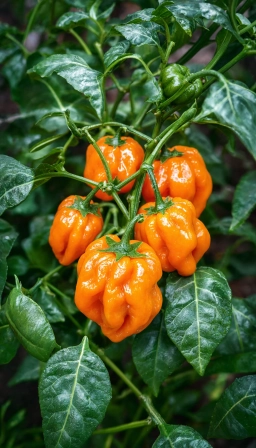
Capsicum annuum
Root Rot in Container-Grown Peppers
The plant wilts despite moist soil, with lower leaves yellowing and dropping. When checked, roots appear brown, soft, and mushy rather than firm and white, sometimes accompanied by a sour smell from the soil.
 ⚠ Critical
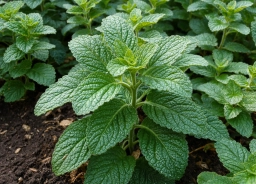
Mentha spicata
Root Rot in Container-Grown Mint
The plant wilts and looks generally unhealthy despite consistently moist soil. When checked, roots and the base of stems appear brown, soft, and mushy rather than firm and white.
 ⚠ Critical
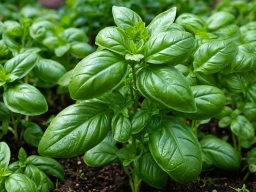
Ocimum basilicum (Basil)
Root Rot and Wilting in Container Basil
The plant wilts and looks unwell despite consistently moist or wet soil. Roots, when checked, are brown, soft, and mushy rather than firm and pale, sometimes with a sour smell from the potting mix.
 ⚠ Critical
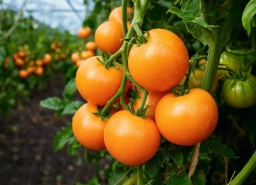
Solanum lycopersicum (Tomato)
Root Rot in Container-Grown Tomatoes
The plant wilts despite moist soil, with lower leaves yellowing and dropping. Roots, when checked, are brown, soft, and mushy rather than firm and white, sometimes with a sour smell from the soil.
 ⚠ Critical
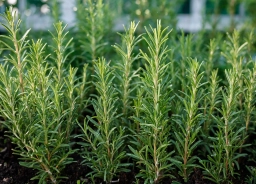
Salvia rosmarinus (Rosemary)
Root Rot in Rosemary
The plant wilts, browns, and eventually dies despite what looks like adequate watering. Roots, when checked, are brown, soft, and mushy rather than firm and pale, often with a sour or musty smell.
⚠ CriticalCucurbita pepo
Root Rot in Pumpkin Plants
The vine wilts and declines despite seemingly adequate soil moisture. When checked, roots appear brown, soft, and mushy rather than firm and white, sometimes with a sour smell from the soil.
⚠ CriticalPassiflora edulis (Passion Fruit)
Root Rot in Passion Fruit Vines
The vine wilts and declines despite moist soil, with roots appearing brown and mushy rather than firm and white when checked.
⚠ ModeratePassiflora edulis (Passion Fruit)
Root-Knot Nematodes on Passion Fruit
The vine shows general decline, stunted growth, and wilting in hot weather despite adequate water. Roots, when dug up, show small knotted galls along their length.
⚠ ModerateMusa acuminata
Burrowing Nematodes on Banana Roots
The plant shows stunted growth, poor fruit bunches, and increased susceptibility to toppling in wind. Roots show reddish-black lesions and reduced root mass when examined.
⚠ CriticalMusa acuminata
Root Rot in Banana Plants
The plant wilts and declines despite consistently moist soil, with roots and corm tissue appearing soft, brown, and mushy when checked.
⚠ CriticalActinidia deliciosa
Root Rot in Kiwi Vines
The vine wilts and declines despite adequate watering, with roots appearing brown, soft, and mushy rather than firm and white when checked.
⚠ ModerateActinidia deliciosa
Root-Knot Nematodes on Kiwi Vines
The vine shows general decline and reduced vigour despite adequate care. Roots, when examined, show small knotted galls along their length.
⚠ CriticalVitis vinifera
Root Rot in Grape Vines
The vine declines and wilts despite adequate rainfall or irrigation, with roots appearing brown and mushy rather than firm when examined.
⚠ CriticalCucumis sativus (Cucumber)
Root Rot in Cucumber Plants
The vine wilts despite moist soil, with roots appearing brown, soft, and mushy rather than firm and white when checked.
⚠ CriticalBrassica oleracea var. italica (Broccoli)
Damping Off in Broccoli Seedlings
Seedlings collapse suddenly at the soil line shortly after germination, with a thin, water-soaked, pinched section visible at the base of the stem.
⚠ CriticalCarica papaya (Papaya)
Phytophthora Root and Stem Rot on Papaya
The tree wilts and declines rapidly, sometimes with a water-soaked lesion visible at the base of the trunk, and can collapse entirely within weeks.
⚠ ModerateCarica papaya (Papaya)
Root-Knot Nematodes on Papaya
The tree shows general decline, yellowing, and stunted growth despite adequate care. Roots show small knotted galls along their length when examined.
⚠ CriticalFragaria × ananassa (Strawberry)
Red Stele Root Rot on Strawberries
Plants wilt and appear stunted, with a bluish-green cast to the foliage before wilting; roots show a reddish core (stele) when cut lengthwise.
⚠ CriticalFragaria × ananassa (Strawberry)
Root Rot and Crown Rot in Strawberries
The plant wilts and declines despite adequate watering, with roots and the crown appearing brown, soft, and discoloured rather than firm and white.
⚠ ModerateFragaria × ananassa (Strawberry)
Nematodes on Strawberry Roots
Plants show general decline, stunted growth, and reduced vigour despite adequate care, with roots showing lesions or stunted, stubby growth when examined.
⚠ CriticalPhalaenopsis spp. and other Orchidaceae (Orchid)
Root Rot in Orchids
Roots turn brown, mushy, and hollow rather than firm and plump, often with a foul smell, and the plant may wobble loosely in its pot.
⚠ CriticalPhalaenopsis spp. and other Orchidaceae (Orchid)
Crown Rot in Orchids
The centre of the plant (the crown, where leaves emerge) turns black, soft, and mushy, and can kill the entire plant if not caught early.
⚠ MinorPhalaenopsis spp. and other Orchidaceae (Orchid)
Stress and Decline After Repotting an Orchid
The plant looks wilted, drops leaves, or generally struggles for several weeks after being repotted, even though the repotting itself seemed to go well.
⚠ MinorPhalaenopsis spp. and other Orchidaceae (Orchid)
Orchid Growing Roots Outside the Pot
Thick, silvery-green roots emerge from the potting medium and grow outward into open air, sometimes extending well beyond the pot's rim.
⚠ CriticalCactaceae (Cactus)
Root and Basal Rot in Cacti
The base of the cactus turns soft, dark, and mushy, sometimes with a foul smell, and the plant may topple or feel loose in its pot.
⚠ ModerateCactaceae (Cactus)
Root Mealybugs on Cacti
The plant declines gradually with no obvious above-ground pest signs, and when unpotted, small white cottony masses are visible on the roots themselves.
⚠ CriticalVarious succulents (Crassulaceae
Root Rot in Succulents
The plant wilts, feels loose in its pot, and shows blackened, mushy roots when checked, despite the soil appearing adequately or overly moist.
⚠ MinorVarious succulents (Crassulaceae
Pot-Bound Succulents With Restricted Growth
Growth slows or stalls, and roots may be visible circling at the pot's drainage holes or pushing the plant upward out of the soil.
⚠ CriticalVarious ferns (Polypodiopsida)
Root Rot in Ferns
The plant wilts despite moist soil, and roots appear brown, mushy, and hollow rather than firm and white when checked.
⚠ CriticalVarious ferns (Polypodiopsida)
Rhizome Rot in Ferns
The central rhizome (the thick, often visible stem-like structure from which fronds emerge) turns soft and dark, and fronds may wilt or die back as a result.
⚠ MinorVarious ferns (Polypodiopsida)
Transplant Shock After Repotting a Fern
The plant wilts, drops fronds, or generally struggles for a period after being repotted or divided.
⚠ CriticalVarious palms (Arecaceae)
Root Rot in Palms
The plant declines with yellowing or wilting fronds despite adequate watering, and roots appear brown, mushy, or hollow when checked.
⚠ MinorVarious palms (Arecaceae)
Pot-Bound Roots Restricting Palm Growth
Growth slows or stalls, and roots may be visible circling at the pot's drainage holes or growing out of the soil surface.
⚠ CriticalColocasia esculenta (Taro / Elephant Ear)
Root Rot in Colocasia
The plant wilts or yellows despite consistently moist soil, and roots or the corm appear brown, mushy, and foul-smelling when checked.
⚠ CriticalColocasia esculenta (Taro / Elephant Ear)
Corm Rot in Colocasia
The underground corm turns soft, discoloured, and foul-smelling, with the plant showing poor growth or sudden collapse above ground as a result.
⚠ CriticalAloe vera (Aloe Vera)
Root Rot in Aloe Vera
The plant feels loose in its pot, leaves turn mushy at the base, and roots appear brown, black, or hollow rather than firm and white when checked.
⚠ MinorAloe vera (Aloe Vera)
Transplant Shock After Repotting Aloe Vera
The plant looks slightly wilted or its leaves feel softer than usual for a period after being repotted, even though the repotting itself seemed to go well.
⚠ CriticalZamioculcas zamiifolia (ZZ Plant)
Rhizome Rot in ZZ Plant
Stems become soft and mushy at the base, sometimes detaching easily from the rhizome, and the underground rhizome itself appears brown, soft, and foul-smelling when checked.
⚠ MinorZamioculcas zamiifolia (ZZ Plant)
Pot-Bound Roots and Rhizomes in ZZ Plant
Growth stalls, and the swollen rhizome may be visibly pushing against or cracking the pot, or roots circle visibly at drainage holes.
⚠ MinorZamioculcas zamiifolia (ZZ Plant)
Stress After Repotting a ZZ Plant
The plant looks slightly wilted or drops a few leaflets for a period after being repotted, even though the repotting itself seemed to go well.
⚠ CriticalChlorophytum comosum (Spider Plant)
Root Rot in Spider Plant
The plant wilts despite moist soil, and roots — including the plant's characteristic thick, water-storing tuberous roots — appear brown, mushy, or hollow when checked.
⚠ MinorChlorophytum comosum (Spider Plant)
Stress After Repotting Spider Plant
The plant looks slightly wilted or drops a few leaves for a period after being repotted or divided.
⚠ MinorChlorophytum comosum (Spider Plant)
Overcrowded, Root-Bound Spider Plant
The plant pushes itself up and out of the pot, with thick roots visible circling at the surface or pushing through drainage holes.
⚠ CriticalLavandula angustifolia / L. x intermedia (Lavender)
Root Rot in Lavender
The plant wilts, foliage yellows or browns, and roots appear brown, mushy, and foul-smelling when checked, often the underlying cause of an otherwise unexplained decline.
⚠ ModerateLavandula angustifolia / L. x intermedia (Lavender)
Lavender Struggling in Clay or Heavy Soil
The plant fails to thrive, grows slowly, or declines over time despite seemingly adequate light and watering, in soil that stays visibly wet or compacted after rain.
⚠ ModerateLavandula angustifolia / L. x intermedia (Lavender)
Lavender Declining in Containers
A container-grown lavender grows poorly, yellows, or fails to thrive despite apparently reasonable care, in contrast to how easily it typically grows in the ground.
⚠ CriticalCapsicum annuum
Root Rot in Bell Pepper Plants
The plant wilts despite moist soil, and roots appear brown, mushy, and hollow when checked, often in poorly-draining containers or waterlogged garden beds.
⚠ CriticalCitrus limon (Lemon Tree)
Root Rot in Lemon Tree
The tree wilts or yellows despite adequate watering, and roots appear brown, mushy, or hollow when checked, often in poorly-draining containers.
⚠ ModerateCitrus limon (Lemon Tree)
Lemon Tree Declining in a Too-Small Container
Growth slows, leaves may yellow, and the tree generally looks stressed after being in the same pot for an extended period, with roots visibly circling or emerging from drainage holes.
Plant-Specific Guides
.webp)
.webp)
Common Questions
What causes root rot — pythium & phytophthora infection?
The plant wilts consistently even when the soil is moist or wet. Lower leaves yellow and drop rapidly, and stems near the soil surface may turn dark brown or bl… Full guide →
What causes root mealybugs — hidden rhizoecus infestation?
The plant declines slowly — stunted growth, persistent wilting, and yellowing — despite correct watering and feeding, with no visible pest on the foliage. On un… Full guide →
What causes root-knot nematodes — meloidogyne galls?
The plant shows chronic stunting, wilting during warm periods despite moist soil, and poor response to feeding. On unpotting, the roots bear characteristic swol… Full guide →
What causes compacted, anaerobic substrate?
An old, broken-down mix becomes dense and airless, staying wet for a long time and starving roots of oxygen. The plant declines slowly — yellowing, stunted grow… Full guide →