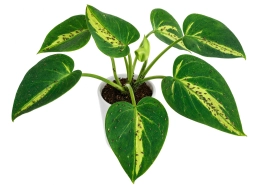
 ⚠ Moderate
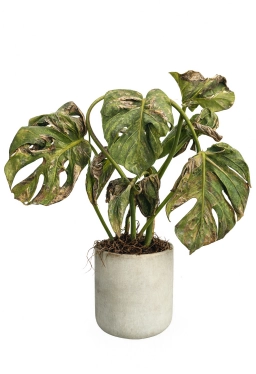
Dasheen mosaic virus produces a feathery, patterned mosaic of light and dark green with vein-banding — systemic, incurable, and spread by aphids and infected propagation.
Dasheen Mosaic Virus — DsMV in Aroids
Commonly affects: Philodendron spp., Caladium, Colocasia esculenta, Xanthosoma, Alocasia
Leaves display a feathery, irregular mosaic of light and dark green, with chlorotic streaking, blotching, and vein-banding patterns. New growth may emerge distorted, narrowed, or puckered, and overall vigour declines over time. The mottling is patterned and persistent across new leaves, distinguishing it from the uniform yellowing of nutrient or water stress.
Potential Causes
- 1Dasheen mosaic potyvirus transmitted by aphids feeding from infected to healthy plants
- 2Propagation (division or cuttings) taken from an infected parent, carrying the virus systemically
- 3Mechanical transmission via contaminated cutting tools
- 4Acquisition of already-infected plants, as the virus is systemic and incurable
Solution Steps
- 1Understand that plant viruses are incurable — the goal is to limit spread, not cure the plant.
- 2Isolate the affected plant from the rest of the collection to reduce transmission risk.
- 3Control aphids rigorously, as they are the primary vector moving the virus between plants.
- 4Never propagate from an infected plant — cuttings and divisions will carry the virus.
- 5Sterilise tools with bleach between every plant to prevent mechanical transmission.
- 6Decide whether to keep the plant in permanent isolation or discard it to protect valued specimens.
Prevention Tip
Because viral infection cannot be cured, prevention rests on buying clean stock, controlling aphids, and sanitising tools between plants. Never take cuttings from a mottled, suspect plant — propagation is the fastest way to multiply a virus through a collection.
Related Issues to Explore

Cucumber Mosaic Virus — Mottling & Distortion
Another aphid-borne mosaic virus with overlapping symptoms — both are incurable and managed identically through vector control and sanitation.
Read guide
Aphid Colonies — Sap-Sucking on New Growth
Aphids are the main vector spreading mosaic viruses — controlling them is the single most important step in limiting viral transmission.
Read guide
Variegation Reversion Under Low Light
Patterned leaf colour can be genetic variegation or viral mosaic — viral patterns are irregular and accompany distortion and decline, unlike stable variegation.
Read guideMore Colour Changes Problems
See all →
Real Philodendron grow diaries
Growers on DailyGrowers log their plant week by week, one photo at a time. Here's how theirs are going.
 1 week
Philodendron propagation
@thepepperguy
 1 week
my Philodendron ordatum growth🪴🪴🪴
@spongyboby
 1 week
Propagation of Philodendron florida beauty
@tahibonursery
Growing Philodendron too? Start your own diary. It's free and takes 2 minutes.
Start my Philodendron diary →