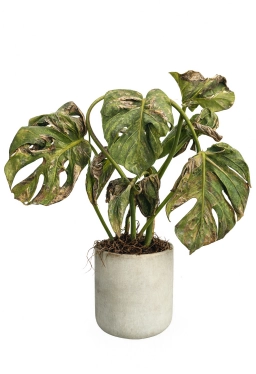
 ⚠ Moderate
Nitrogen deficiency yellows the oldest leaves uniformly from the bottom up as the plant relocates this mobile nutrient to new growth — without the vein contrast of micronutrient deficiency.
Nitrogen Deficiency — Uniform Pale Older Leaves
Commonly affects: Monstera deliciosa, Philodendron hederaceum, Epipremnum aureum, Syngonium
The oldest, lowest leaves turn uniformly pale green to yellow first, while newer growth stays greener, and overall growth slows and appears thin. Because nitrogen is mobile, the plant relocates it from old leaves to new ones, so yellowing climbs from the bottom up. The yellowing is even across the whole leaf, without the vein contrast of iron or magnesium deficiency.
The short answer
Even yellowing that starts on the oldest, lowest leaves and moves upward, with the soil dry rather than soggy, is nitrogen deficiency. Nitrogen is mobile inside the plant, so it strips old leaves to feed new growth — that bottom-up pattern is the diagnosis. A balanced liquid feed shows a response within one to two weeks, and repotting into fresh mix fixes it for longer.
Confirm it before you treat it
- 1Check the direction. Nitrogen deficiency always starts at the bottom and climbs. Anything that starts at the top or in new growth is a different nutrient entirely.
- 2Feel the soil. Nitrogen deficiency usually comes with dry or exhausted mix. Yellowing with wet soil is overwatering, and no amount of feeding will help.
- 3Feel the leaf. Nitrogen-deficient leaves stay firm and dry, and often thin. Overwatered leaves go limp and soft.
- 4Look at the veins. Nitrogen yellowing is uniform across the whole leaf. Yellowing between green veins is iron or magnesium, not nitrogen.
- 5Work out how long the plant has been in that mix. Potting compost is largely exhausted after about a year, and most deficiency cases are simply plants that were never repotted or fed.
Potential Causes
- 1Depleted nitrogen in old or unfertilised substrate, especially in long-unrepotted plants
- 2Heavy leaching from frequent watering washing mobile nitrogen out of the mix
- 3A growth flush outpacing the available nitrogen supply
- 4Inert or bark-heavy substrates holding little nutrient reserve
Solution Steps
- 1Apply a balanced, nitrogen-containing fertiliser at the recommended dilution during active growth.
- 2Switch to a complete NPK feed with a sensible nitrogen level rather than a bloom-focused formula.
- 3Repot into fresh, nutrient-holding substrate if the mix is old and exhausted.
- 4Resume a regular feeding schedule through the growing season to prevent recurrence.
- 5Avoid over-correcting — excess nitrogen produces weak, pest-prone growth.
- 6Expect new growth to green up; the oldest yellowed leaves may not fully recover.
What else looks like this
| Could be | How to tell it apart |
|---|---|
| Overwatering | Same bottom-up yellowing, but the soil is damp and the leaves feel soft and limp. The soil moisture is the deciding factor and it takes two seconds to check. |
| Iron deficiency | Yellow between bright green veins, and it appears on NEW growth first. Nitrogen affects old leaves and yellows the whole leaf evenly. |
| Magnesium deficiency | Also on older leaves, but as a V-shaped or marbled pattern with the veins staying green. Nitrogen yellowing has no pattern. |
| Natural leaf ageing | One or two of the very oldest leaves yellow over months while everything else grows well. Deficiency affects several leaves at once and slows new growth too. |
| Root-bound stress | Yellowing plus water running straight through the pot and roots circling the base. Feeding helps briefly; only repotting fixes it. |
Recovery timeline
- Days 1–3Feed with a balanced liquid fertiliser at label strength. Do not double the dose — excess nitrogen burns roots and produces the same yellowing you are trying to fix.
- Week 1New growth deepens in colour first. Existing yellow leaves do not recover; nitrogen already withdrawn from them is gone.
- Weeks 2–3Yellowing stops progressing up the plant. That halt is the signal the treatment worked.
- Weeks 4–6Noticeably stronger growth and larger leaves. If nothing has changed by now, the problem is root function rather than nutrient supply.
- OngoingFeed through the growing season and repot into fresh mix annually. Most recurrences are simply the same exhausted compost a year later.
If you do nothing
The plant keeps cannibalising older leaves to supply new growth, so it sheds foliage from the bottom while new leaves emerge progressively smaller and paler. Growth slows and then stops. A plant in this state has few reserves and becomes markedly more vulnerable to pests — spider mites and thrips both establish faster on nutrient-starved plants. On edibles, yield falls sharply well before the yellowing looks dramatic.
Common mistakes
- Feeding a plant with wet soil and yellow leaves. That is overwatering, and adding fertiliser salts to damaged roots makes it considerably worse.
- Doubling the dose to speed things up. Excess nitrogen scorches roots and produces yellowing and brown tips of its own.
- Feeding in winter. A dormant plant cannot use it, and the salts simply accumulate in the mix.
- Expecting the yellow leaves to turn green. They cannot. Judge success on new growth and on the yellowing stopping.
- Feeding instead of repotting. Liquid feed is a short-term correction; exhausted compost also lacks structure and drainage, which feeding does nothing about.
Prevention Tip
Feed regularly but moderately through the growing season and refresh the substrate periodically — most nitrogen deficiency in houseplants is simply an exhausted, long-unfertilised mix. Ease off in winter, when slowed growth needs little nitrogen.
Questions people actually ask
- How do I tell this from overwatering?
- Touch the soil. Both yellow from the bottom up, but nitrogen deficiency comes with dry, tired mix and firm leaves, while overwatering comes with damp mix and limp leaves.
- Which fertiliser should I use?
- A balanced liquid feed at label strength is right for almost every houseplant. High-nitrogen formulas are only worth it for leafy plants in active growth.
- How often should I feed?
- Roughly every two to four weeks during spring and summer, and not at all in winter for most species.
- Are coffee grounds or eggshells useful?
- Not really. Coffee grounds release very little nitrogen and can compact the surface; eggshells break down far too slowly to affect a potted plant.
- Should I remove the yellow leaves?
- Only once they are fully yellow or brown. A partly green leaf is still producing energy and still returning nutrients to the plant.
Related Issues to Explore

Interveinal Chlorosis — Iron or Magnesium Deficiency
Both cause yellowing, but nitrogen deficiency is uniform on old leaves, while iron/magnesium deficiency leaves the veins green.
Read guide
Potassium Deficiency — Marginal Scorch
Another mobile-nutrient deficiency affecting older leaves first — potassium shows marginal scorch rather than uniform yellowing.
Read guide
Yellowing Leaves — Overwatering Stress
Overwatering yellowing mimics nitrogen deficiency — check substrate moisture and roots before assuming the cause is purely nutritional.
Read guideMore Colour Changes Problems
See all →
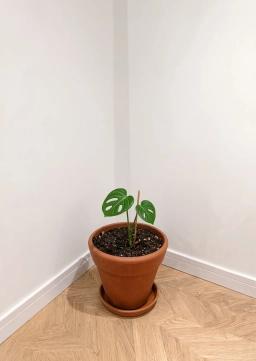
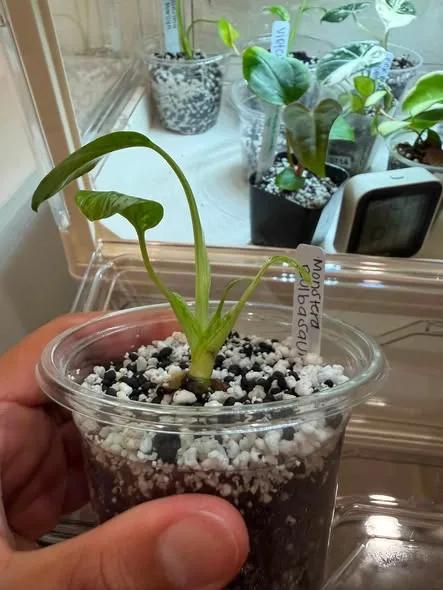
Real Monstera grow diaries
Growers on DailyGrowers log their plant week by week, one photo at a time. Here's how theirs are going.
Growing Monstera too? Start your own diary. It's free and takes 2 minutes.
Start my Monstera diary →More rare plants and collector grows every day on Facebook: follow Exotics plants