


Plant Clinic · Category
Colour Changes
Yellowing, browning, blackening, pale or bleached leaves, and variegation loss.
Colour changes are often the first visible symptom of a problem but can have many different underlying causes — nutrient deficiency, overwatering, underwatering, light issues, pest feeding, or disease. This guide helps you match the specific colour change pattern (yellow with green veins, brown tips, black spots, etc.) to its most likely cause.
All Colour Changes
 ⚠ Moderate
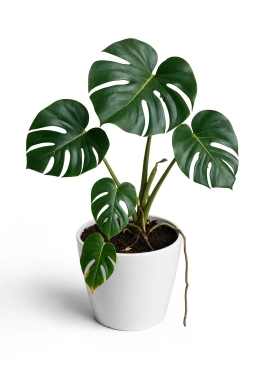
Calathea makoyana
Interveinal Chlorosis — Iron or Magnesium Deficiency
Leaves develop a characteristic pattern of yellowing between the veins while the veins themselves remain distinctly green. In iron deficiency, this interveinal chlorosis appears on the youngest (newest) leaves first, as iron is not readily mobile in plants. Magnesium deficiency presents similarly but begins on older, lower leaves as magnesium is mobile and translocated to new growth. Affected leaves may eventually turn completely pale yellow or near-white.
 ⚠ Moderate
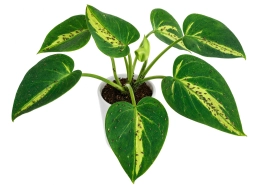
Philodendron spp.
Dasheen Mosaic Virus — DsMV in Aroids
Leaves display a feathery, irregular mosaic of light and dark green, with chlorotic streaking, blotching, and vein-banding patterns. New growth may emerge distorted, narrowed, or puckered, and overall vigour declines over time. The mottling is patterned and persistent across new leaves, distinguishing it from the uniform yellowing of nutrient or water stress.
 ⚠ Moderate
Philodendron spp.
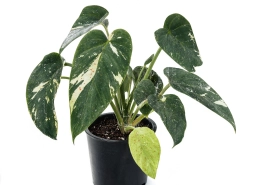
Cucumber Mosaic Virus — Mottling & Distortion
Leaves show a patchy mosaic of yellow and green, sometimes with ring patterns, line patterns, or puckering and distortion of the leaf blade. Affected plants are often stunted, with reduced leaf size and diminished vigour. The mottling is irregular and persists in every new leaf, separating it from transient nutrient deficiencies.
 ⚠ Moderate
Variegated Monstera deliciosa
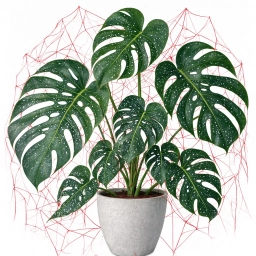
Variegation Reversion Under Low Light
A variegated aroid begins producing leaves with progressively less white or yellow variegation, reverting toward solid green. New growth may be entirely green, and the plant often grows more vigorously as it does so. This is the plant favouring chlorophyll-rich tissue to compensate for inadequate light, not a disease — but reversion is largely irreversible in the leaves already produced.
 ⚠ Moderate
Monstera deliciosa
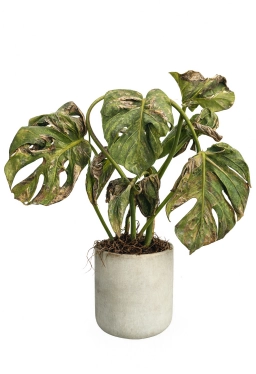
Nitrogen Deficiency — Uniform Pale Older Leaves
The oldest, lowest leaves turn uniformly pale green to yellow first, while newer growth stays greener, and overall growth slows and appears thin. Because nitrogen is mobile, the plant relocates it from old leaves to new ones, so yellowing climbs from the bottom up. The yellowing is even across the whole leaf, without the vein contrast of iron or magnesium deficiency.
 ⚠ Moderate
Monstera deliciosa
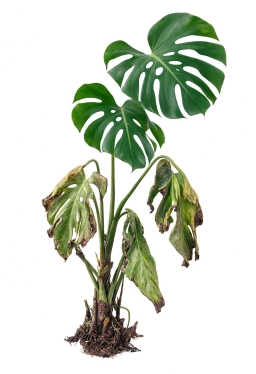
Potassium Deficiency — Marginal Scorch
Older leaves develop yellowing and browning along their margins and tips while the centre stays green, the scorched edges progressing inward and often curling. Because potassium is mobile, symptoms appear on the oldest leaves first. The pattern — a scorched margin around a green interior — distinguishes it from the uniform yellowing of nitrogen deficiency.
 ⚠ Moderate
Most aroids — Monstera
Substrate pH Lock-Out
The plant shows nutrient-deficiency symptoms — yellowing, interveinal chlorosis, pale or stunted growth — despite a regular and adequate feeding program. The cause is a substrate pH outside the optimal range, which chemically locks nutrients into forms the roots cannot absorb. Adding more fertiliser fails to help because the nutrients are present but unavailable.
 ⚠ Minor
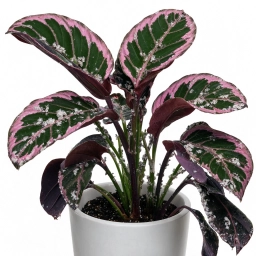
Calathea ornata
Calathea Fading Leaf Pattern — Light Bleaching & Pigment Loss
The distinctive silver, cream, or contrasting markings on Calathea leaves become muted, washed out, or uniformly pale green. New leaves emerge without the pattern definition seen in healthy specimens. The ornamental pigment cells (chromatophores) in Calathea are photosensitive — excessive light bleaches the accessory pigments that create the pattern, while insufficient light causes general chlorophyll dilution.
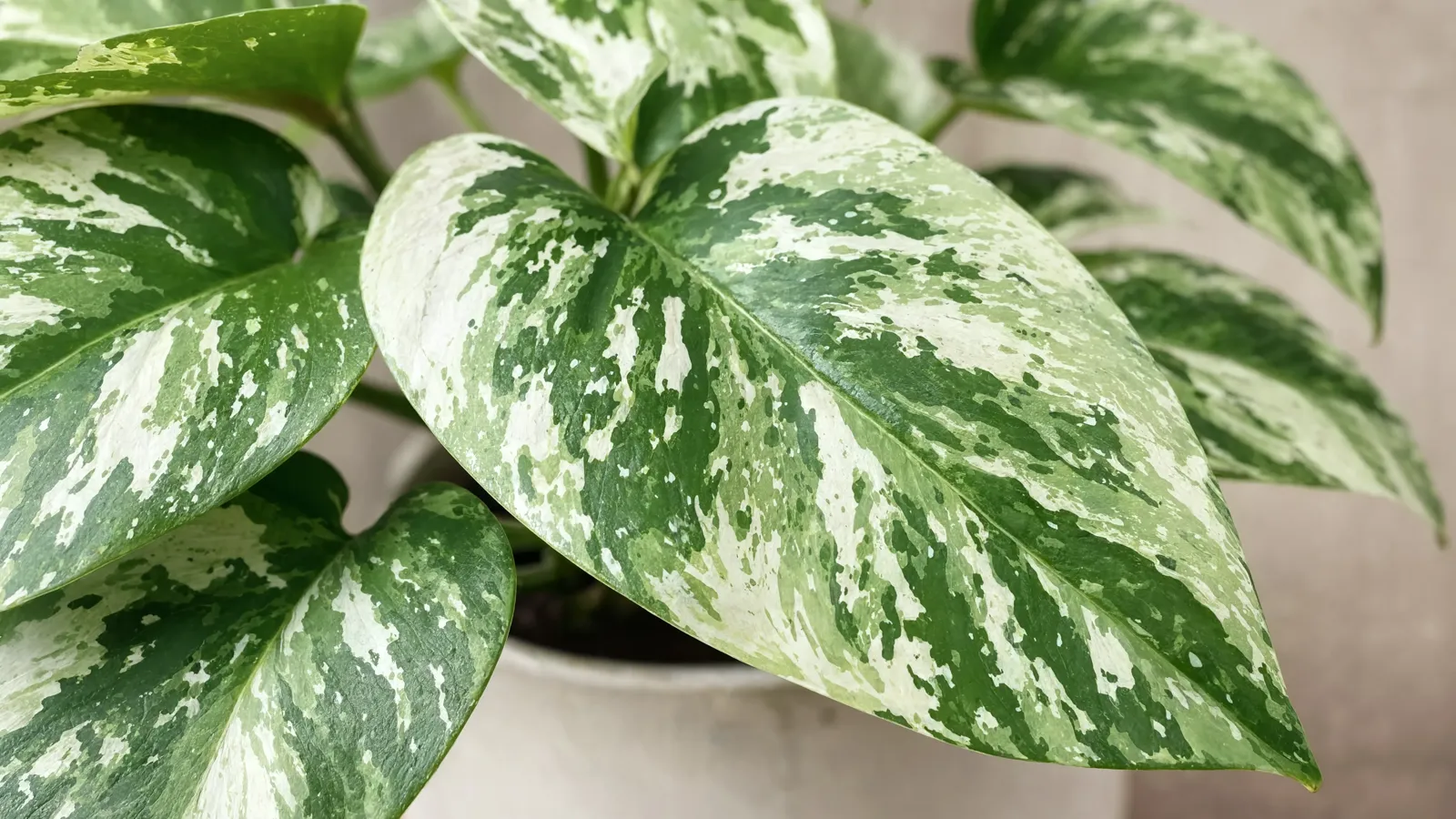
⚠ MinorEpipremnum aureum — Marble Queen
Pothos Variegation Loss — Reversion to Green in Low Light
New leaves emerge entirely green without the characteristic white, cream, or yellow variegation of the cultivar. Existing variegated leaves are not affected, but all new growth lacks colour. In some cases, a highly variegated stem reverts gradually over several leaf cycles until growth is entirely plain green. Variegation in Pothos results from sectors of cells lacking chloroplasts — these white sectors cannot photosynthesise. In low light, the plant selectively produces all-green shoots that photosynthesise more efficiently for survival, at the cost of ornamental appearance.
 ⚠ Minor
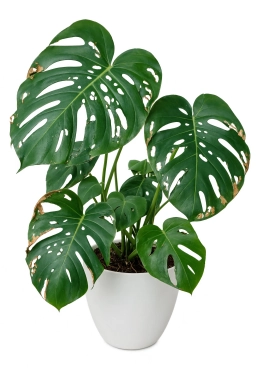
Epipremnum aureum — all Pothos cultivars in long-term cultivation
Pothos Nutrient Deficiency — Interveinal Yellowing & Stunted Growth
Leaves yellow between the veins while the veins themselves remain green (interveinal chlorosis) — the classic pattern of iron, manganese, or magnesium deficiency. Or leaves uniformly pale with slowed growth — indicating general nitrogen depletion. Pothos growing in the same substrate for more than 12-18 months without fertilisation will eventually exhaust the available nutrients, displaying these symptoms. Unlike yellowing from overwatering (which affects whole leaves uniformly), nutrient deficiency produces patterned chlorosis specific to which element is lacking.
 ⚠ Moderate
Ficus lyrata (Fiddle Leaf Fig)
Fiddle Leaf Fig Yellow Leaves — Overwatering, Nutrient Deficiency & Stress
One or more leaves turn solid yellow, beginning at the older lower leaves (overwatering/nutrient depletion) or affecting newer growth (acute stress or nutrient lockout). Unlike brown spots from root rot, yellowing is a whole-leaf colour change rather than localised lesions. Yellow leaves on Ficus lyrata almost always indicate a care issue that has been ongoing for weeks — the plant has significant leaf reserves and typically does not yellow quickly in response to short-term problems.
Plant-Specific Guides
.webp)
.webp)
Common Questions
What causes interveinal chlorosis — iron or magnesium deficiency?
Leaves develop a characteristic pattern of yellowing between the veins while the veins themselves remain distinctly green. In iron deficiency, this interveinal … Full guide →
What causes dasheen mosaic virus — dsmv in aroids?
Leaves display a feathery, irregular mosaic of light and dark green, with chlorotic streaking, blotching, and vein-banding patterns. New growth may emerge disto… Full guide →
What causes cucumber mosaic virus — mottling & distortion?
Leaves show a patchy mosaic of yellow and green, sometimes with ring patterns, line patterns, or puckering and distortion of the leaf blade. Affected plants are… Full guide →
What causes variegation reversion under low light?
A variegated aroid begins producing leaves with progressively less white or yellow variegation, reverting toward solid green. New growth may be entirely green, … Full guide →