 ⚠ Moderate
Auxin-driven internode elongation under sub-threshold PAR: the plant's phototropic response to inadequate light produces thin, widely spaced stems and undersized, chlorophyll-deficient leaves.
Etiolation — Leggy, Weak Growth from Insufficient Light
Commonly affects: Monstera deliciosa, Epipremnum aureum, Ficus elastica, Tradescantia
New growth emerges pale, small, and widely spaced along elongated, thin stems. Leaves are significantly smaller than previous growth, may appear yellow-green, and internodal distances (the gaps between leaf nodes) are conspicuously long as the plant 'reaches' toward light. Variegated species may partially or fully revert to solid green as chlorophyll production increases to compensate.
The short answer
Long bare stretches of stem between leaves, with the plant leaning toward the window, is etiolation — the plant reaching for light it cannot find. Nothing you do reverses stretched growth; those internodes stay long permanently. The fix is more light going forward, and for most plants, cutting back to force compact new growth from the base.
Confirm it before you treat it
- 1Measure the gap between leaves on new growth against older growth lower down. Etiolation shows as progressively longer internodes over time, not uniformly long ones.
- 2Note the direction. Etiolated plants lean toward the light source, and turning the pot makes them bend back within days.
- 3Compare leaf size. Stretched growth usually produces smaller, paler leaves alongside the longer stems.
- 4Check what actually reaches the plant. A metre back from a window is a small fraction of the light at the glass, and rooms read far brighter to the eye than they are to a plant.
- 5Consider the season. Growth that stretched over winter and tightened again in spring is a light problem; growth that stretches year-round in the same spot is a placement problem.
Potential Causes
- 1Insufficient photosynthetically active radiation (PAR) — typically less than 50–100 µmol/m²/s for tropical foliage
- 2Seasonal reduction in light as the sun's angle lowers in autumn and winter
- 3Plant positioned too far from the light source — light intensity follows the inverse square law, dropping sharply with distance
- 4Grimy or low-transmission window glass filtering out a significant proportion of visible spectrum
Solution Steps
- 1Move the plant to within 60–90 cm of the brightest available window, ideally north-facing in southern hemisphere or south-facing in the northern hemisphere for indirect bright light.
- 2Clean window glass with a streak-free cleaner — dirty glass can reduce light transmission by 15–25%.
- 3Supplement with a full-spectrum LED grow light (5000–6500K colour temperature) on a 12–14 hour photoperiod placed 20–40 cm above the canopy.
- 4Rotate the plant 90° every 2 weeks to promote even growth on all sides.
- 5Prune etiolated stems back to a healthy node — new growth will emerge compact and correctly sized under improved lighting.
- 6Avoid fertilising until light conditions improve — nutrients fuel growth, but growth under low light remains etiolated.
What else looks like this
| Could be | How to tell it apart |
|---|---|
| Natural vining habit | Pothos, philodendron and similar plants produce long internodes by design. Compare against how the plant looked when bought, not against a bushy ideal. |
| Nitrogen excess | Soft, fast, lush growth that is large and deep green rather than pale and small. Both stretch, but over-fed growth looks vigorous while etiolated growth looks thin. |
| Heat stress | Stretching alongside curling or cupping leaves, typically near a radiator or a hot window in summer. Light-starved plants do not curl. |
| Reaching around an obstruction | Only the shaded side stretches while the exposed side stays compact — this is normal phototropism and resolves by rotating the plant. |
| Ageing lower stem | Old leaves shed naturally from the base leaving bare stem, while new growth stays compact. Etiolation affects the NEW growth, which is what to judge by. |
Recovery timeline
- Day 1Move the plant to brighter light, or add a grow light. Do not move a low-light plant straight into direct sun — acclimatise over a week or it will scorch.
- Weeks 1–2No visible change. Existing stretched growth stays stretched permanently; you are only affecting what comes next.
- Weeks 3–6New growth emerges with noticeably shorter gaps between leaves. Comparing new growth to old is how you confirm the light is now sufficient.
- Months 2–3If you cut back, new shoots break from below the cut and grow compact. This is the only way to restore a bushy shape.
- SeasonallyExpect some stretching each winter in temperate climates. Slight etiolation from November to February is normal and not a failure.
If you do nothing
Stretched stems are structurally weak and eventually cannot support their own weight, so the plant flops and the lower leaves shade each other out. Photosynthesis falls further, growth slows, and the plant becomes progressively more susceptible to pests and root problems because it has no energy reserves. Succulents and seedlings are worst affected — a badly etiolated seedling rarely produces a good plant and is usually better restarted.
Common mistakes
- Waiting for the stretched sections to shorten. They cannot. Cutting back is the only way to regain a compact plant.
- Adding fertiliser. The plant is short of light, not nutrients, and feeding a light-starved plant produces more weak growth rather than better growth.
- Moving straight into full sun. Leaves grown in low light have no protection and scorch within a day or two — increase light over about a week.
- Assuming a bright room is bright enough. Light falls off sharply with distance from a window; what looks bright to a person can be deep shade to a plant.
- Cutting everything back at once on a weak plant. Take it in stages so the plant retains enough leaf area to fuel the regrowth.
Prevention Tip
Use a simple light meter app on your phone (or a PAR meter for accuracy) to measure lux at the plant's location. Most tropical foliage plants thrive at 2,000–10,000 lux. Readings below 1,000 lux will cause etiolation within weeks.
Questions people actually ask
- Can I fix the stretched part?
- No. Internode length is set as the stem forms and never changes. The stretched section either stays or gets cut off.
- Can I propagate the cut piece?
- Usually yes, and it is the best use for it. A stretched cutting roots normally and, given proper light, grows compactly from the start.
- How much light does it actually need?
- Highly species-dependent, but as a rule most 'bright indirect' houseplants want to see a good patch of open sky from where they sit. If the plant cannot see the sky, it is probably in low light.
- Will a grow light do?
- Yes, and for a room without a good window it is the only real answer. Distance matters more than wattage — most are far too far from the plant to help.
- Is etiolation harmful or just ugly?
- Both. It is primarily cosmetic at first, but stretched growth is weak, carries less chlorophyll, and leaves the plant with fewer reserves to handle any other stress.
Related Issues to Explore

Sun Scorch & Leaf Bleaching — Photooxidative Damage
Moving an etiolated plant abruptly into bright light triggers photooxidative scorch — always acclimatise plants gradually when improving light conditions.
Read guide
Brown, Crispy Leaf Tips — Low Humidity & Salt Stress
Low-light environments often coincide with dry indoor air — addressing both light and humidity together accelerates recovery in humidity-sensitive species.
Read guide
Yellowing Leaves — Overwatering Stress
Low-light plants absorb water far more slowly, making overwatering the most common secondary problem when correcting light deficiency.
Read guideMore Growth Issues Problems
See all →
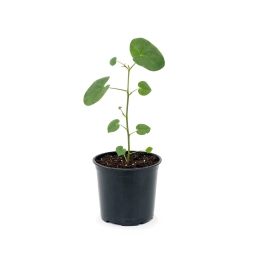
Real Monstera grow diaries
Growers on DailyGrowers log their plant week by week, one photo at a time. Here's how theirs are going.
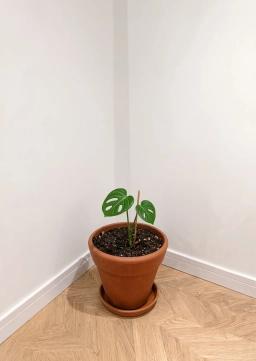
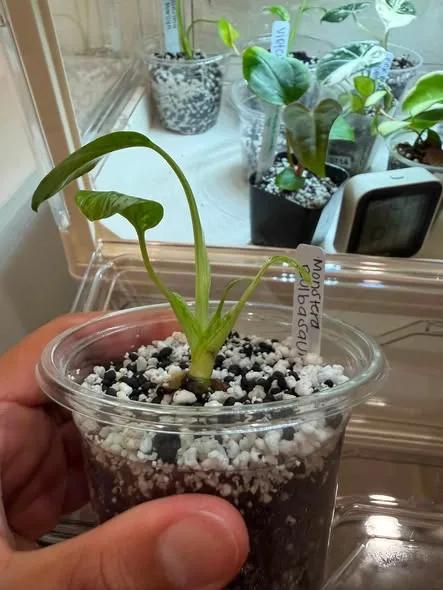
Growing Monstera too? Start your own diary. It's free and takes 2 minutes.
Start my Monstera diary →