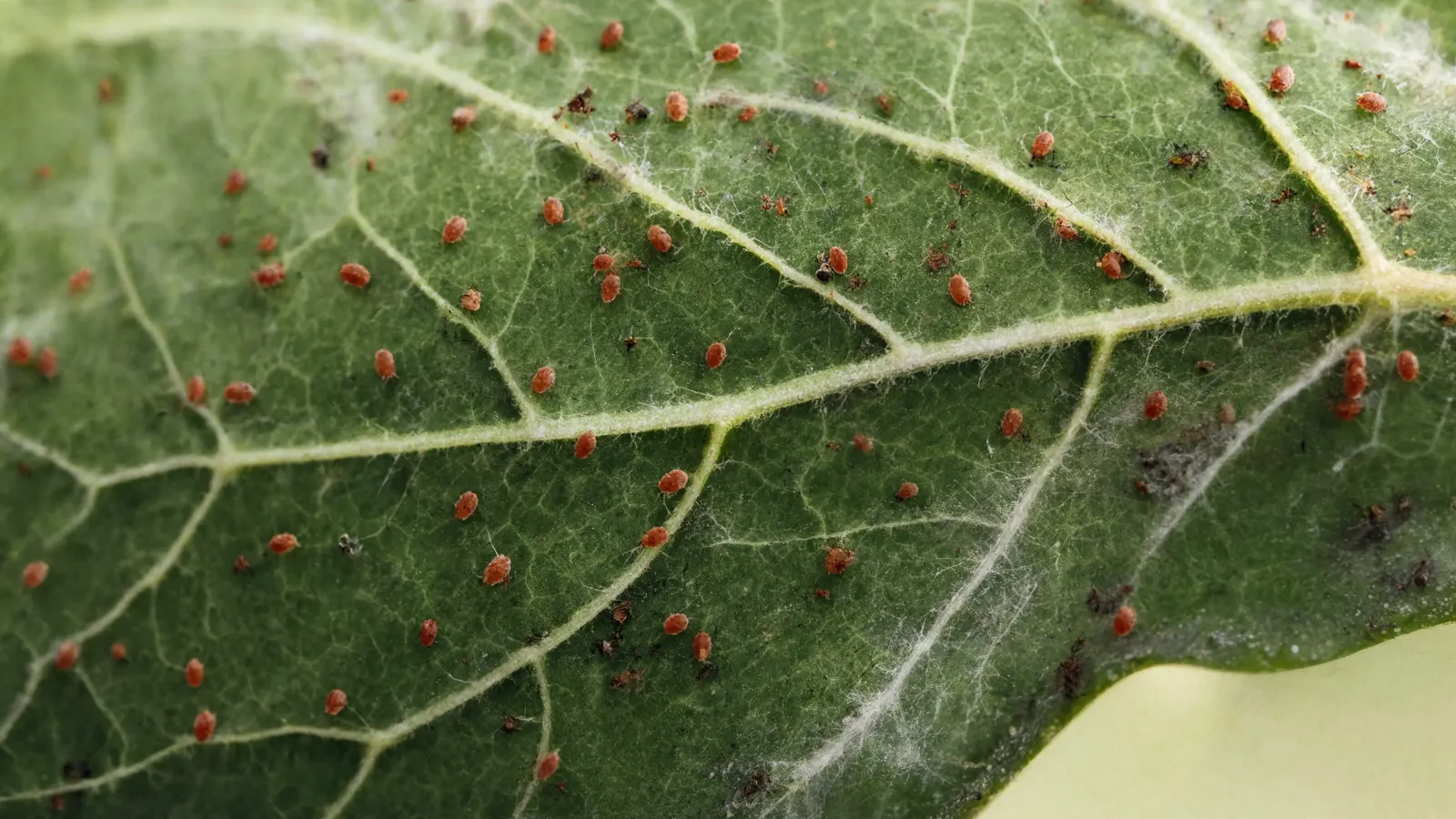
 ⚠ Moderate
Scale Insects on Lemon Tree
Commonly affects: Citrus limon (Lemon Tree)
Small, immobile brown or tan bumps attach to leaves and stems, secreting honeydew and often leading to sooty mould developing on the residue.
The short answer
Small hard brown or tan bumps stuck to stems and the undersides of leaves, which do not brush off, are scale insects. Adults sit under a waxy shell that shrugs off most sprays, so the shell has to be removed physically — scrape or wipe them off first, then treat to catch the mobile crawlers. Expect six weeks, because crawlers keep hatching after the adults are gone.
Confirm it before you treat it
- 1Try to brush one off with a fingernail. Scale is fixed in place and needs scraping; dirt, mealybugs and most other things come away easily.
- 2Look along stems and leaf veins, not leaf faces. Scale settles where it can tap into sap flow and stays there for life.
- 3Check for sticky honeydew and black sooty mould below the infestation. Soft scale produces both heavily; armoured scale produces none, which makes it far easier to miss.
- 4Turn a shell over with a fingernail. A live scale is soft and moist underneath; an empty shell from a past infestation is dry and hollow.
- 5Inspect thoroughly under the pot rim and along the main stem. Crawlers settle in sheltered spots first, and those are the ones that restart an infestation.
Potential Causes
- 1Scale insects establishing on leaf undersides and stems
- 2Introduction from a nearby infested plant
- 3Stressed trees being more susceptible to significant infestation
Solution Steps
- 1Scrape off visible scale by hand or with a soft brush for light infestations
- 2Apply horticultural oil, ensuring thorough coverage of leaf undersides and stems
- 3Wipe away sooty mould once the underlying scale is controlled
- 4Repeat treatment over several weeks for full control, since scale's protective coating resists a single application
What else looks like this
| Could be | How to tell it apart |
|---|---|
| Mealybug | Soft, white and cottony, and it moves. Scale is hard, flat and fixed. |
| Natural leaf nodes or lenticels | Part of the plant's own structure — evenly spaced, same colour as the stem, and impossible to scrape off without damaging bark. |
| Fungal leaf spot | Flat marks in the leaf tissue rather than raised bumps sitting on top of it. |
| Whitefly pupae | Pale, oval and translucent on leaf undersides, with adults flying nearby. Scale is darker, harder and has no flying stage on the plant. |
| Sooty mould alone | Black film with no bumps anywhere means the honeydew came from another pest — check for aphids or whitefly above. |
Recovery timeline
- Day 1Isolate and physically remove every scale you can find with a fingernail, an old toothbrush or a cloth with diluted alcohol. Then treat the whole plant.
- Week 1New tiny crawlers appear. These are the vulnerable stage — the treatment that fails on adults works on these.
- Week 2–3Repeat treatment. Wash off sooty mould at this point so you can see clearly whether new scale is settling.
- Week 4–5Fourth pass. Numbers should be very low. Check the stem underside and pot rim specifically — that is where survivors hide.
- Weeks 6–8Six clear weeks before the plant rejoins the collection. Scale is slow, and a premature return is how it spreads.
If you do nothing
Scale feeds continuously on sap, and a heavy infestation drains a plant faster than it can photosynthesise. Growth stops, leaves yellow and drop, and branches die back from the tips. The honeydew from soft scale coats the foliage in sooty mould, which blocks light and compounds the problem. On citrus and other woody plants an established infestation takes years off the plant and frequently kills smaller specimens outright.
Common mistakes
- Spraying without scraping. The adult shell is a physical barrier; almost nothing you spray penetrates it.
- Assuming empty shells mean an active infestation. Old shells stay stuck to the plant long after the insects are gone — check whether they are soft underneath.
- Treating once. Crawlers hatch over weeks, and each wave needs catching.
- Missing the sooty mould. It does not damage the plant directly but it blocks light, and leaving it makes new scale much harder to spot.
- Using horticultural oil in strong sun or on a stressed plant. It can scorch leaves — apply in the evening or on an overcast day.
Prevention Tip
Sooty mould on a lemon tree is a secondary symptom of an underlying scale (or other honeydew-producing pest) infestation — treat the pest, not just the mould.
Questions people actually ask
- Why does it keep coming back?
- Almost always because crawlers were missed. They are barely visible, move away from the parent, and settle in crevices that sprays do not reach.
- Can I just scrape them all off?
- For a light infestation on a small plant, yes — that alone can clear it. On anything larger the crawlers are too numerous and too small to find by hand.
- Is horticultural oil the best option?
- It is the most reliable single treatment, because it smothers rather than poisons and works on crawlers and adults. It needs full coverage and repeating.
- Does the sooty mould need separate treatment?
- No. It feeds on honeydew, so it disappears once the scale is gone — but washing it off makes monitoring far easier in the meantime.
- Should I cut off badly infested branches?
- On a woody plant with a heavily encrusted branch, yes. It removes a large part of the population instantly and the plant regrows.