


Scale Insect
Coccus hesperidum / Aonidiella aurantii
Scale insects are among the most difficult houseplant pests to control because their waxy or armoured shells protect them from contact insecticides. Soft scales (Coccidae, including Coccus hesperidum — brown soft scale) produce honeydew and sooty mould. Armoured scales (Diaspididae, including Aonidiella aurantii — California red scale) do not produce honeydew but cause more direct tissue damage. Both groups are immobile for most of their lives, making visual identification challenging.
How to Identify
Small, flat, round, oval, or elongated bumps firmly attached to stems and leaf undersides (1–5 mm). Soft scales are brown, tan, or waxy. Armoured scales have a hard cap that can be lifted to reveal the insect underneath. Unlike mealybugs, scale does not appear cottony. A key test: try to remove the bump with your fingernail — if it leaves a residue or an insect body, it is scale.
Life Cycle
Female scales lay 100–300 eggs under their body or within an ovisac. Crawlers (mobile first instars) hatch and disperse, then settle and begin secreting their protective covering. Males develop wings, mate briefly, and die. Females remain fixed, feeding continuously. Development takes 1–4 months depending on temperature and species.
Visual Identification
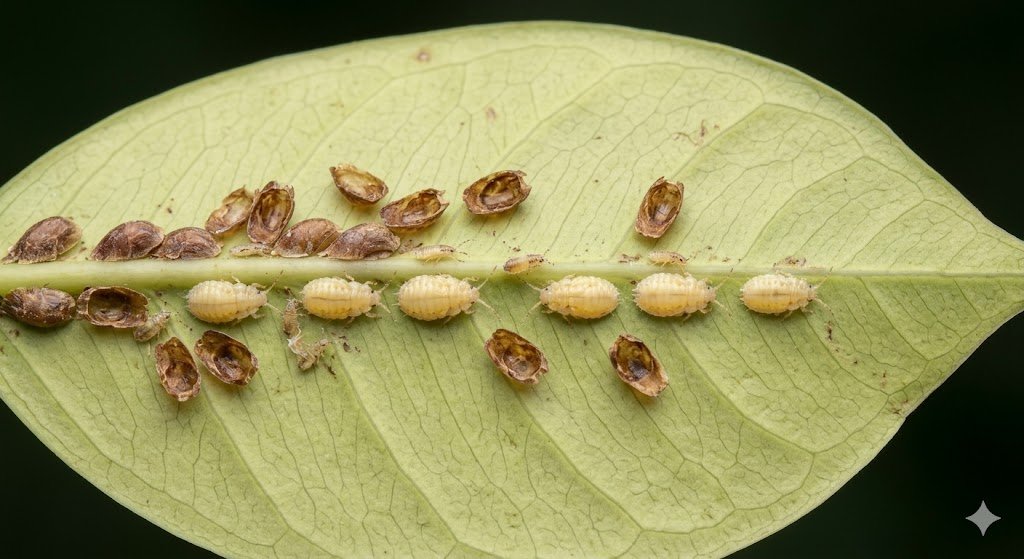
Brown Soft Scale
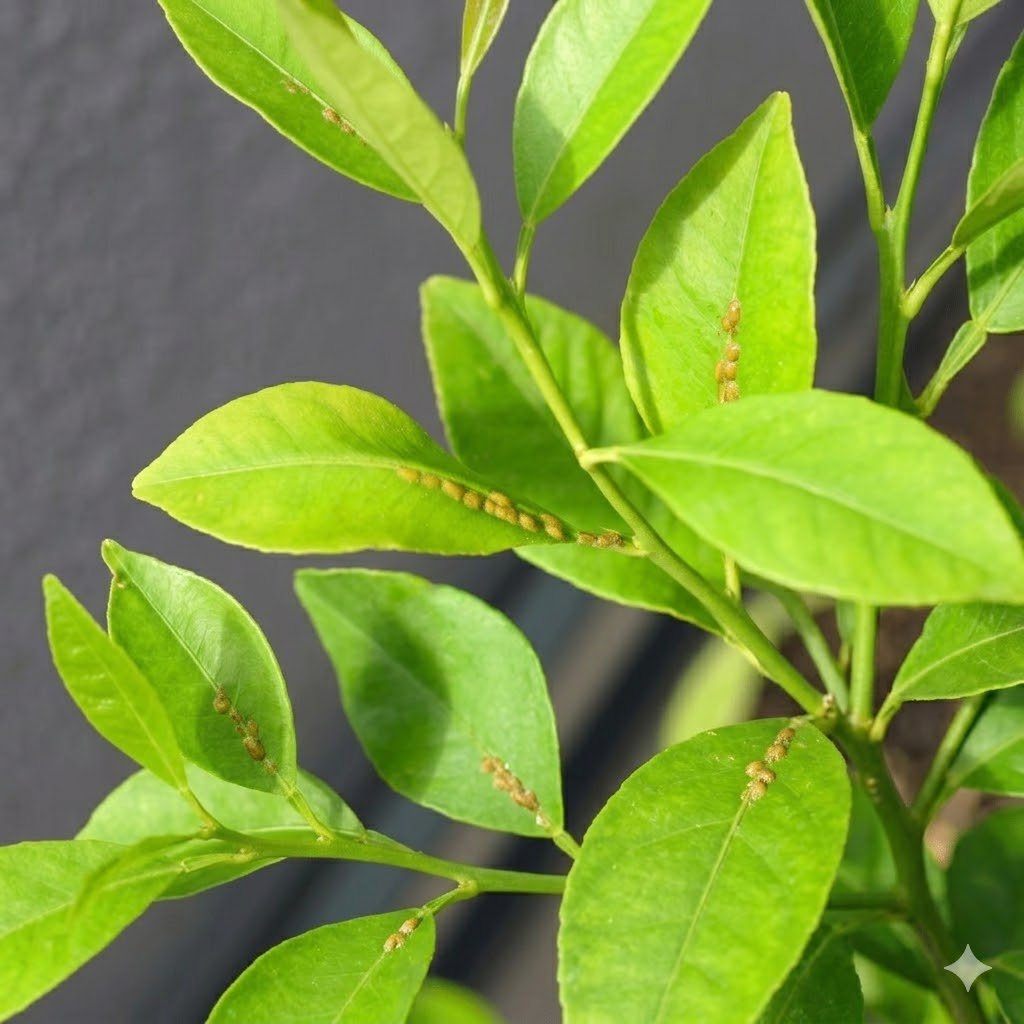
Red Scale
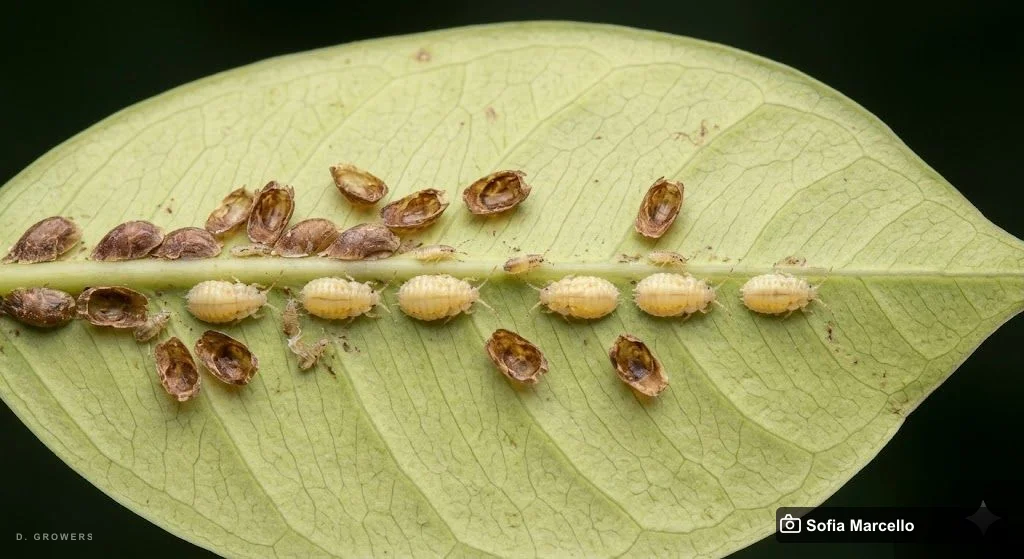
Watermarked Scale
Treatment Steps
- 1
Physically scrub adult scale from stems and leaves with a toothbrush dipped in 70% isopropyl alcohol
- 2
Apply neem oil solution (5 ml/L) or horticultural oil to smother crawlers and soften adult shells
- 3
Apply imidacloprid systemic insecticide as a soil drench — the most effective treatment for established infestations
- 4
Repeat contact treatments every 7–10 days for 8 cycles to intercept successive crawler hatches
- 5
Inspect with a magnifying lens 4 weeks after last visible adults are removed — crawlers are nearly invisible
Prevention
Inspect all new plants thoroughly under bright light and with a magnifying lens — scale is easy to miss
Examine stems and leaf midribs monthly as part of routine plant care
Avoid stressing plants with poor light or overwatering — stressed plants are more vulnerable
Quarantine new plants for 4 weeks before placing near existing ones
Frequently Asked Questions
How do I identify scale insects on plants?
Look for small, flat, hard bumps firmly attached to stems and leaf undersides. Unlike mealybugs, they are not cottony. Try to remove a bump with your fingernail — if it leaves an insect body or residue, it is scale.
What kills scale insects on houseplants?
Physically removing adults with an alcohol-soaked toothbrush, followed by neem oil or horticultural oil spray weekly for 8 cycles. A systemic imidacloprid drench is the most effective treatment for established infestations because it makes the plant toxic to feeding scale.
Why is scale so hard to get rid of?
The waxy or armoured shell of adult scale insects protects them from most contact insecticides. Crawler nymphs are the only highly vulnerable stage. Treatment must be repeated every 7–10 days to intercept multiple crawler generations, and the process typically takes 2–3 months.
Plant Problems Caused by Scale Insect
All pest problems →
Scale Insect Crawlers — Mobile Juvenile Stage & Colony Spread
Despite treating and removing visible adult scale, the plant re-infest…
Fiddle Leaf Fig Scale Insects — Brown Bumps on Stems & Leaf Undersides
Small, round or oval brown bumps (2-4 mm) appear along stems, at branc…

Snake Plant Scale Insects — Hard Brown Bumps on Leaf Surfaces
Small, flat, round, or oval hard brown bumps (2-4 mm) appear on leaf s…
Scale Insects on Passion Fruit Vines
Small, immobile brown or grey bumps attach to stems and leaf underside…
Scale Insects on Kiwi Vines
Small, immobile brown or grey bumps attach to canes and leaf underside…
Scale Insects on Orchids
Small, immobile brown or tan bumps attach to leaves and stems, secreti…
Care Guides for Affected Plants

See how growers dealt with Scale Insect
Browse real grow diaries from the community — treatments, timelines, and results.
Browse community diaries →