Leafhopper
Empoasca vitis
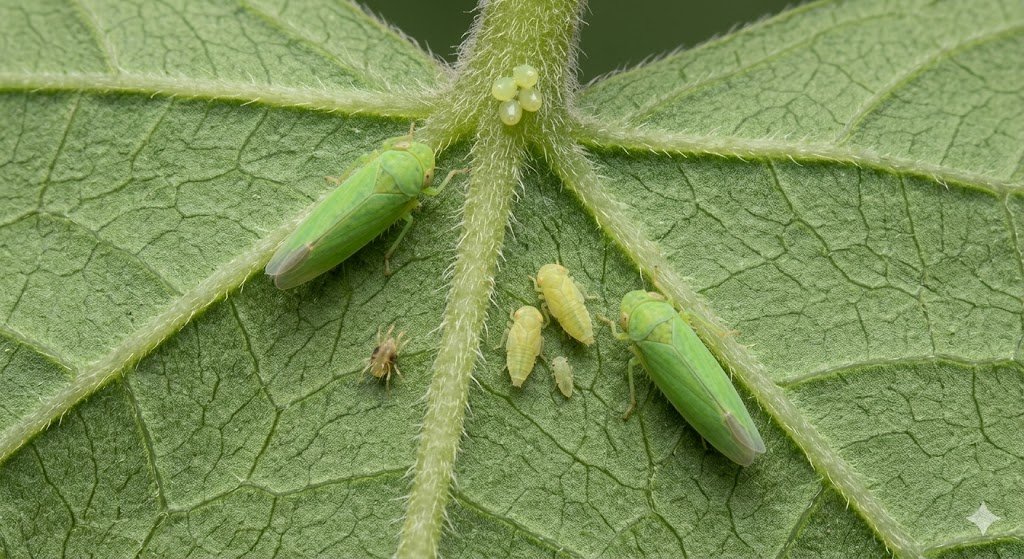
Leafhoppers (family Cicadellidae) are small, wedge-shaped insects that hop or fly rapidly when disturbed. They feed by piercing individual leaf cells and extracting their contents, creating characteristic pale stippling or white flecking on the upper leaf surface. Empoasca vitis (grape leafhopper) and related species attack a wide range of ornamental plants. Unlike aphids, leafhoppers do not produce honeydew. Heavy infestations cause leaves to turn white or bronzed and may cause premature leaf drop.
How to Identify
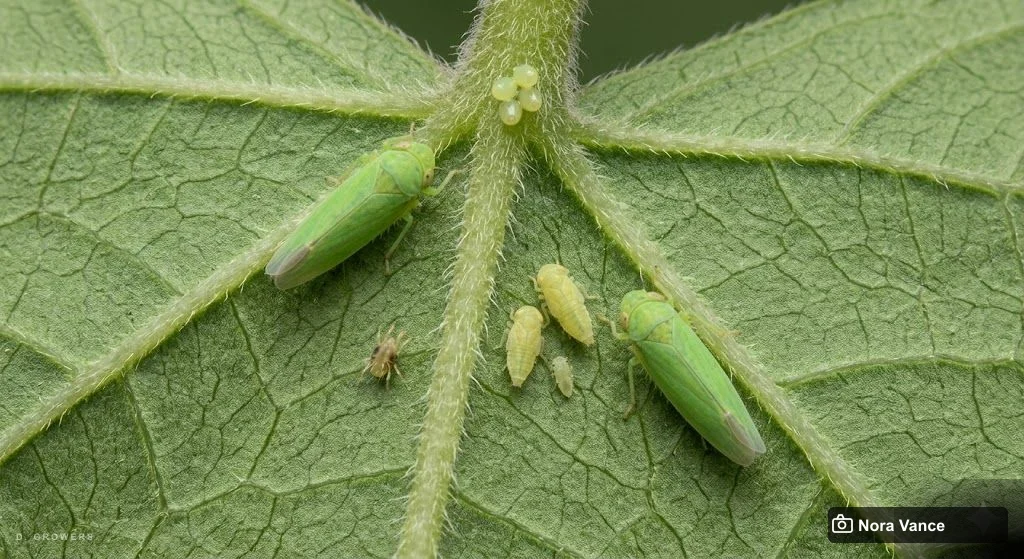
Adults 3–4 mm long, pale green or yellow-green, wedge-shaped, and very fast-moving. When disturbed, they run sideways along stems before jumping or flying. Nymphs are wingless and similar in shape. White cast skins (exuviae) on leaf undersides are a reliable sign. The leaf damage — pale white dots progressing to large white patches — is distinctive.
Life Cycle
Females insert eggs into plant tissue using a saw-like ovipositor. Eggs hatch in 10–14 days. Nymphs pass through 5 instars over 3–4 weeks before reaching adulthood. Multiple overlapping generations occur per year, with populations peaking in mid-to-late summer.
Visual Identification
Adult Leafhopper
Leaf Stippling
Treatment Steps
- 1
Apply insecticidal soap or pyrethrin spray to all plant surfaces
- 2
Target leaf undersides where nymphs congregate
- 3
Yellow sticky traps reduce adult populations significantly
- 4
Repeat treatment every 5–7 days for 4 cycles
- 5
Introduce Anagrus parasitic wasps for biological control of eggs
Prevention
Fine insect netting prevents adult entry on outdoor plants
Yellow sticky traps near plants provide early warning and reduce adult populations
Keep plants healthy — vigorous plants recover faster from leafhopper feeding
Avoid bringing plants indoors from outdoors without inspection
Frequently Asked Questions
What do leafhoppers look like?
Small (3–4 mm), pale green or yellow-green, wedge-shaped insects that run sideways and jump rapidly when disturbed. White cast skins on leaf undersides and pale stippled leaf damage are the most reliable signs of infestation.
How do I get rid of leafhoppers?
Apply insecticidal soap or pyrethrin spray to all leaf surfaces, especially undersides, every 5–7 days for 4 cycles. Yellow sticky traps catch adults effectively. For outdoor plants, fine insect netting prevents re-infestation.
Related Pests
Plant Problems Caused by Leafhopper
All pest problems →
See how growers dealt with Leafhopper
Browse real grow diaries from the community — treatments, timelines, and results.
Browse community diaries →