Caterpillar
Lepidoptera (larvae)
Caterpillars are the larval stage of moths and butterflies (order Lepidoptera). While beautiful as adults, the larval stage is a feeding machine — some species can consume their body weight in plant material daily. Indoors, caterpillars typically arrive as eggs laid on the plant before purchase, or as adults entering through open windows. Outdoors, they are a major defoliation risk on houseplants taken outside in summer.
How to Identify
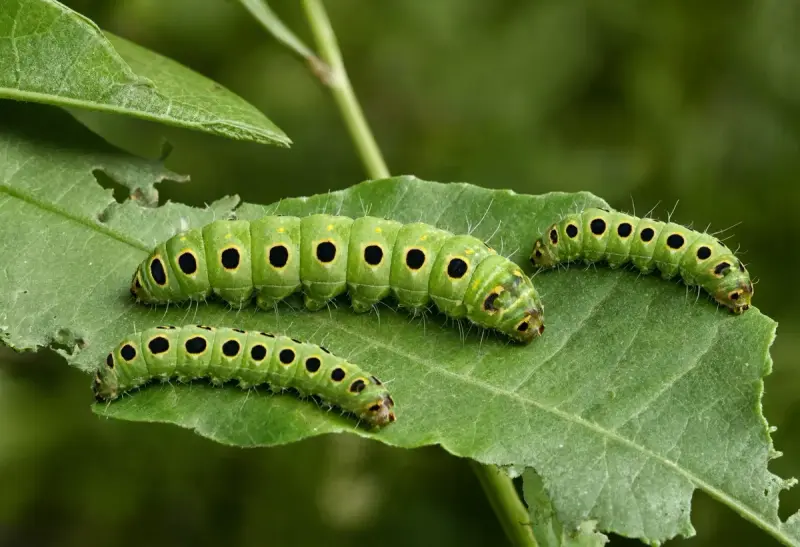
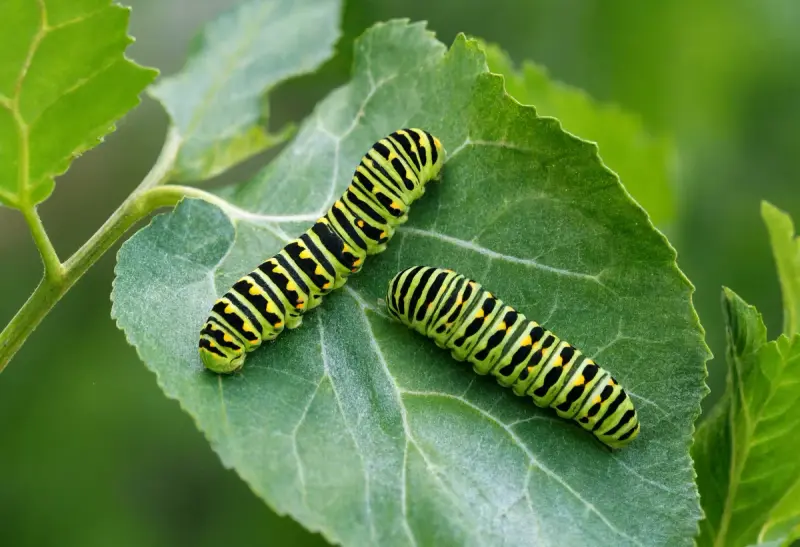
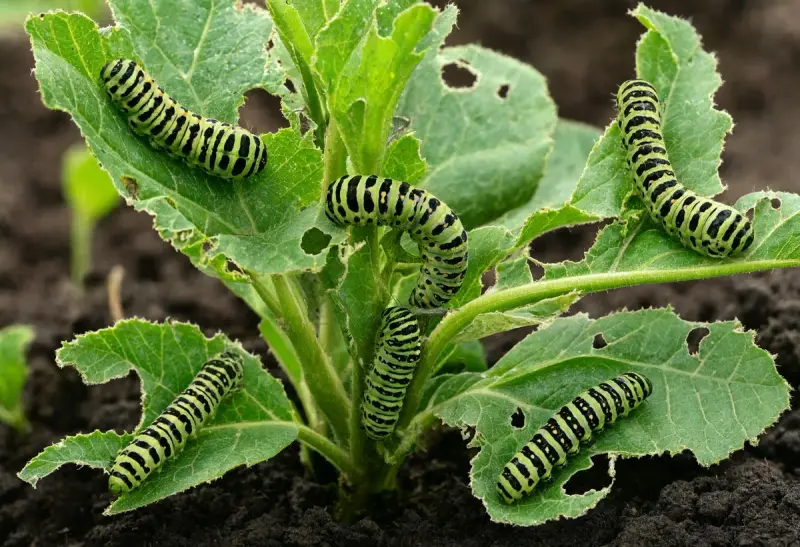
Irregular holes in leaves, often with ragged edges, and the presence of frass (dark green or brown droppings). Caterpillars range from 5–80 mm depending on species and instar stage. Some are camouflaged and match leaf colour — check leaf undersides and stems. Eggs appear as small clusters of round or oval dots on leaf undersides.
Life Cycle
Eggs are laid in clusters on leaves by adult moths or butterflies. Larvae hatch in 5–14 days and pass through 4–6 instars before pupating. Early instars cause minor damage; final instars are responsible for most feeding damage. Pupation occurs in the soil, leaf litter, or on the plant itself. Adults emerge in 2–4 weeks.
Visual Identification
Leaf Chewing Damage
Mass Defoliation
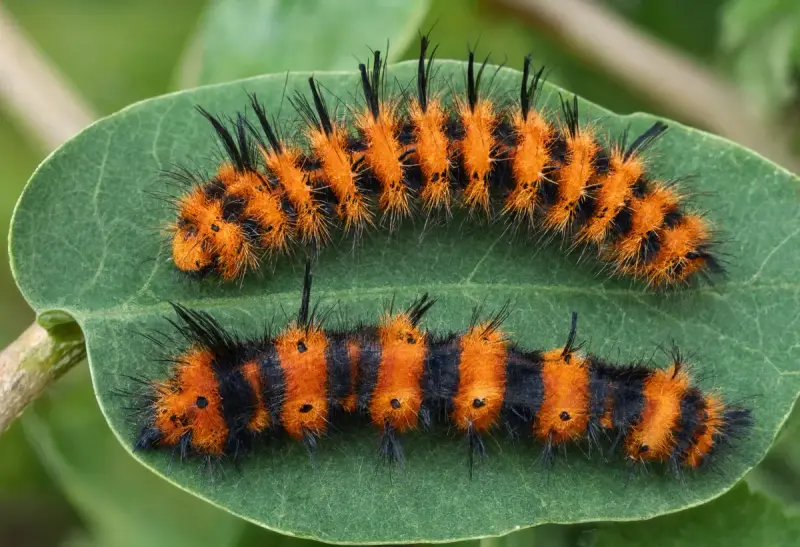
Caterpillar Variety
Treatment Steps
- 1
Hand-pick caterpillars and egg masses and dispose of them in sealed bags
- 2
Apply Bacillus thuringiensis (Bt) var. kurstaki to target larvae — highly effective and safe for beneficial insects
- 3
Use spinosad-based spray for rapid knockdown of larger larvae
- 4
Check the substrate surface for pupae — remove any cocoons found
- 5
Repeat treatment after 7–10 days to catch newly hatched larvae
Prevention
Inspect plants brought in from outdoors carefully before placing indoors
Check leaf undersides for egg masses on new purchases
Use fine insect netting over plants stored outdoors in summer
Remove and dispose of any egg masses immediately on discovery
Frequently Asked Questions
How do I get rid of caterpillars on houseplants?
Hand-pick caterpillars and egg masses immediately. Apply Bacillus thuringiensis (Bt) spray — a biological insecticide that specifically kills caterpillar larvae without harming beneficial insects. Repeat after 7–10 days for complete control.
What do caterpillars look like on plants?
You may see the caterpillars themselves (5–80 mm, various colours), irregular holes in leaves with ragged edges, or dark frass (droppings) on leaves. Check leaf undersides for egg clusters.
Related Pests
Plant Problems Caused by Caterpillar
All pest problems →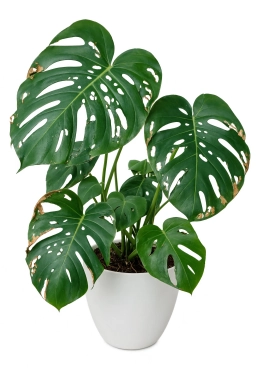
Chewing Damage — Caterpillars & Leaf-Eating Larvae
Irregular holes, ragged notches, and chewed margins appear in leaves, …

Tomato Hornworms Defoliating Plants
Large sections of foliage disappear rapidly, sometimes overnight, alon…
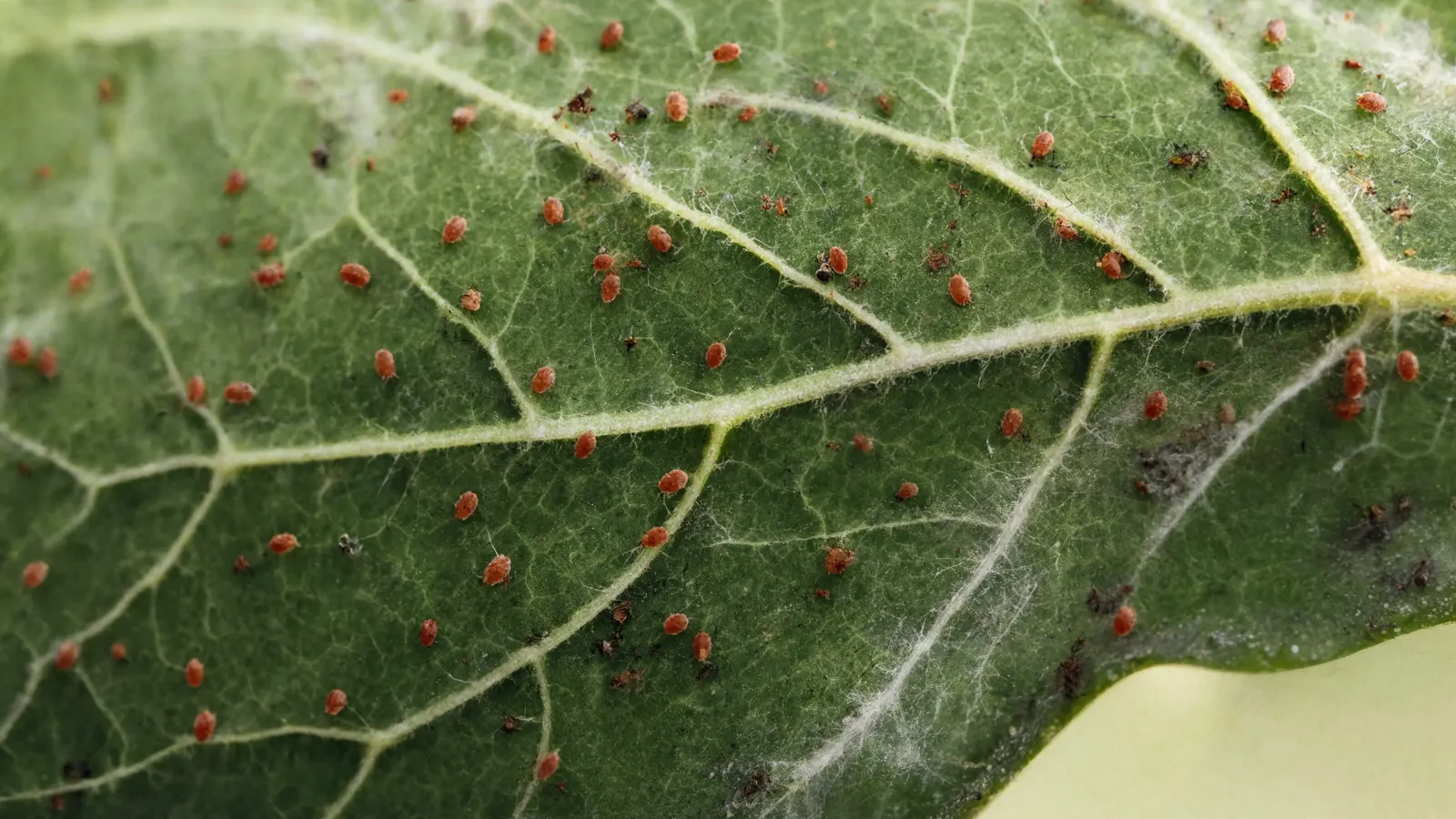
Leaf Roller Caterpillars on Kiwi Vines
Leaves are rolled or webbed together with caterpillars feeding inside,…
Care Guides for Affected Plants
.webp)
See how growers dealt with Caterpillar
Browse real grow diaries from the community — treatments, timelines, and results.
Browse community diaries →