

Snake Plant Problems
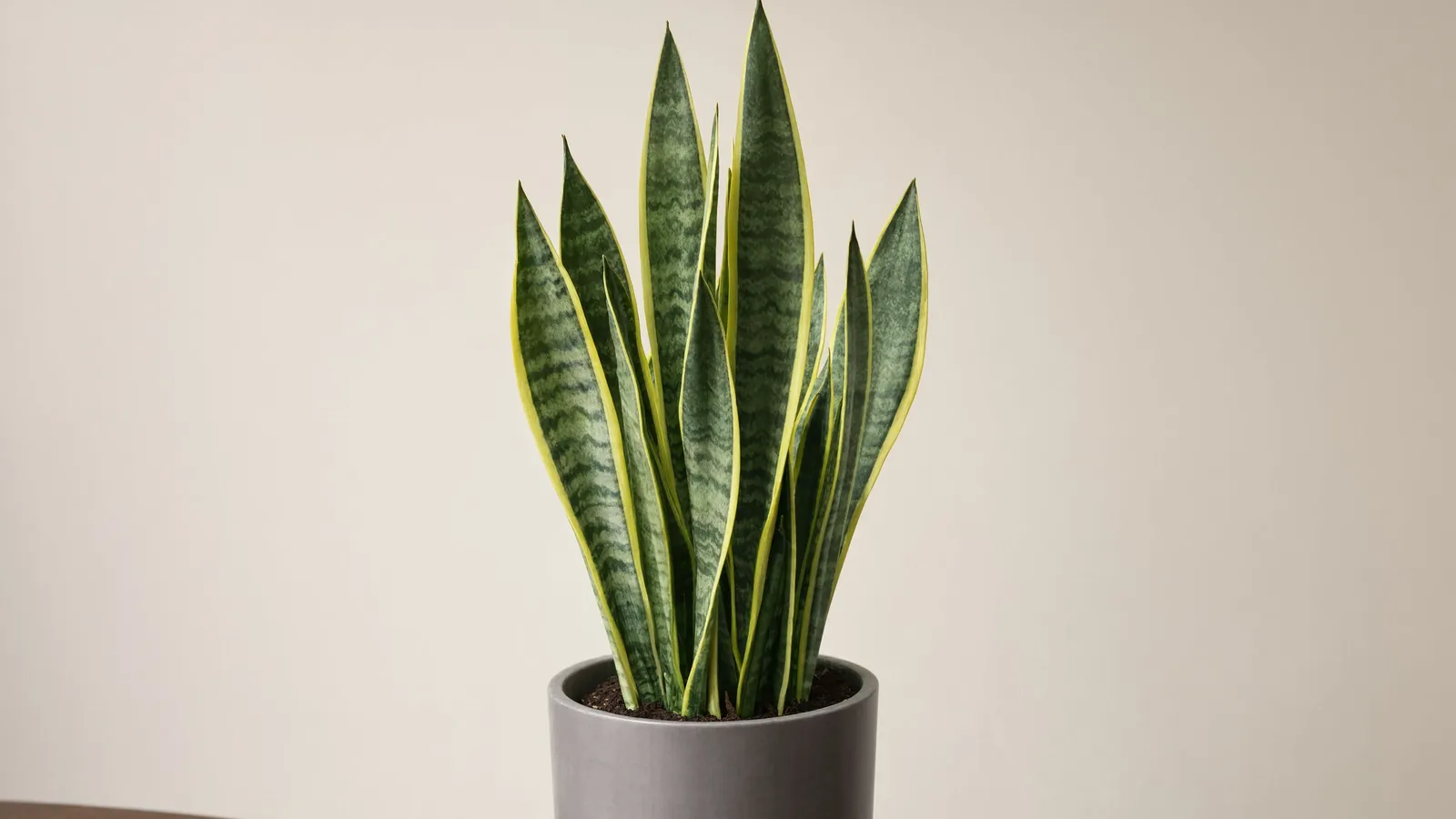
Sansevieria trifasciata
Snake Plant — also called Mother-in-Law's Tongue — is nearly indestructible in low light with minimal watering. Its main vulnerabilities are crown rot from overwatering and occasional pest issues.
All Snake Plant Problems
 ⚠ Critical
Snake Plant Soft Mushy Leaves — Crown Rot from Overwatering
Leaves at the base of the plant become soft, watery, and translucent, eventually collapsing entirely. A foul, putrid smell may be present. When the leaves are pulled, they detach easily at the base. The soil is wet or has been kept consistently moist. Crown rot is the most devastating and most common serious problem in snake plants. The crown — the growing point at substrate level — is extremely susceptible to rot when moisture sits against it continuously. Once the crown rots, the entire above-ground plant dies and cannot be saved, though healthy leaves can be used as cuttings.
 ⚠ Moderate
Snake Plant Yellow Leaves — Chronic Overwatering & Root Oxygen Starvation
Leaves turn uniformly yellow from base to tip, becoming soft and limp before eventually browning and collapsing. Multiple leaves may yellow simultaneously. The substrate is consistently moist. Yellow snake plant leaves almost invariably signal overwatering — either the frequency is too high, the drainage is inadequate, or the plant is sitting in too much shade reducing its minimal water consumption. Unlike most tropical plants that yellow from the older lower leaves first, snake plants typically yellow from the base upward as the root system fails.
 ⚠ Minor
Snake Plant Brown Tips — Fluoride Sensitivity, Salt Buildup & Inconsistent Watering
The tips of upright leaves turn brown and papery, sometimes progressing down the leaf margins. The tip browning is dry, not soft or mushy — distinguishing it from rot. Snake plants are among the most sensitive houseplants to fluoride in tap water, and the long, upright leaf shape means minerals concentrate at the leaf tip as water evaporates from the stomata clustered near the apex. This is a cosmetic problem that does not threaten the plant's survival, but it progressively diminishes the clean appearance that makes snake plants attractive.
 ⚠ Critical
Snake Plant Root Rot — Pythium in Waterlogged Substrate
The plant leans or tips to one side, leaves pull free from the base with little resistance, and roots are brown, slimy, and smell of decay. The substrate has been consistently moist. Root rot in snake plants progresses faster than in most houseplants because the roots are relatively few and thick — once a significant portion are compromised, the plant loses structural integrity rapidly. The characteristic symptom is leaves that wobble or fall over even without physical disturbance.
 ⚠ Minor
Snake Plant Wrinkled or Thin Leaves — Severe Underwatering & Dehydration
Upright leaves develop vertical wrinkles or furrows along their length and feel thin and flexible rather than firm and rigid. The substrate is completely dry and the pot feels very light. This represents the opposite problem from overwatering: the plant's thick leaves store water internally (which is why the plant is so drought-tolerant), and when drought is extreme and prolonged, they deplete their own reserves and show these characteristic wrinkle lines as the internal cells lose turgor. Unlike most houseplants, snake plants can recover from extreme underwatering without any lasting damage.
 ⚠ Moderate
Snake Plant Mealybugs — White Colonies at Leaf Bases & in Substrate
White cottony masses appear at the bases of leaves where they emerge from the substrate, and possibly in the substrate itself where rhizomes are present. Root mealybugs (Rhizoecus spp.) are particularly problematic in snake plants — they colonise the thick rhizomes underground and are invisible until the plant's health declines. Above-ground mealybugs appear as white cottony clusters at leaf sheaths and nodes. Both types cause yellowing, stunted growth, and progressive decline.
 ⚠ Minor
Snake Plant Not Growing — Winter Dormancy & Root-Bound Conditions
The plant produces no new leaves or offsets (pups) for months or years. Existing leaves remain healthy but no new growth points are visible at the substrate surface. Snake plants are naturally slow-growing and virtually stop all growth in winter regardless of care. However, chronically root-bound plants also stop producing pups even in summer — the dense root mass signals to the plant that space is exhausted and reproduction (which pup production essentially is) is suppressed.
 ⚠ Minor
Snake Plant Pale Washed-Out Leaves — Sun Bleaching & Chlorophyll Degradation
Leaf surfaces fade from deep green with vivid yellow or white banding (in variegated cultivars) to a washed-out, bleached appearance. In solid green cultivars, the characteristic dark green colour becomes yellowish. The leaves remain firm and structurally healthy. Snake plants are tolerant of bright light including some direct sun, but intense midday or afternoon direct sun through glass — which amplifies UV intensity — can degrade chlorophyll in unacclimatised plants faster than it can be regenerated.
 ⚠ Minor
Snake Plant Fungus Gnats — Infestation Despite Infrequent Watering
Small black flies hover around the snake plant's pot. Despite the snake plant's infrequent watering schedule, fungus gnats can still establish if the surface of organic substrate remains attractive to females. In a snake plant context, gnats are often a sign the substrate is too moisture-retentive (too much peat or coir relative to inorganic drainage material) and is remaining damp at the surface for extended periods after watering. Larval root feeding on the rhizomes is less common than in tropical aroids but can still occur in heavy infestations.
 ⚠ Minor
Snake Plant Leaf Splitting — Physical Damage, Rapid Growth & Temperature Stress
Vertical splits appear along the length of otherwise healthy leaves, typically running parallel to the leaf veins. The splits may be clean and sharp, or ragged. Leaves remain firm and green except at the split edges. Splitting in snake plants is almost always from physical causes — rapid rehydration after drought (cells expand faster than the leaf can accommodate), mechanical damage from contact with objects, or extreme temperature differentials causing expansion stress. It is not a disease or pathogen.
 ⚠ Moderate
Snake Plant Red & Rust Spots — Fusarium Fungal Leaf Spot
Small, reddish-brown to rust-coloured circular or oval spots appear scattered across the leaf surface, sometimes with a yellow halo. The spots are dry and slightly sunken. In humid conditions, spots may enlarge and develop a light-coloured centre. This is Fusarium fungal leaf spot — one of the few foliar pathogens that affects Sansevieria. It is opportunistic, typically colonising leaves that have been physically damaged (scratches, tip damage) or that have been kept wet from overhead watering.
 ⚠ Moderate
Snake Plant Spider Mites — Pale Stippling on Wide Leaf Surfaces
The broad, flat surfaces of snake plant leaves develop a pale, silvery or bronze stippled pattern — individual tiny dots where mites have pierced cells. The stippling progresses from faint to pronounced as the population grows. Fine silken webbing may appear at the base of leaf clusters in heavy infestations. Snake plants' smooth, waxy leaf surface actually makes early mite detection easier than in textured leaves — the stippling shows clearly against the dark green background.
 ⚠ Minor
Snake Plant Leaf Cutting Failure — Rot Before Rooting & Variegation Loss
Leaf sections cut for propagation turn mushy and rot from the cut end before producing roots, or root successfully but produce only plain green pups (variegation loss). Two distinct problems are grouped here because they share the propagation context. Leaf rot in cuttings is the result of planting cut sections in moist substrate before a callous forms. Variegation loss is an inherent genetic limitation of leaf-cutting propagation: variegated cultivars (like Laurentii with its yellow margins) revert to all-green when propagated from leaves — variegation in these cultivars is in the outer tissue only and is not reproduced by leaf cells.
 ⚠ Moderate
Snake Plant Scale Insects — Hard Brown Bumps on Leaf Surfaces
Small, flat, round, or oval hard brown bumps (2-4 mm) appear on leaf surfaces, particularly along the central groove and at the base of the plant. Unlike soft soil debris or substrate particles, scale bumps cannot be easily wiped off with a dry cloth — they are anchored to the leaf by a feeding stylet. Leaves may become sticky from honeydew and develop dark sooty mould. Scale infestations in snake plants tend to be noticed late because of the plant's tolerance — it often continues looking healthy while the population builds.
 ⚠ Moderate
Snake Plant Thrips — Silvery Streaks and Scarred Leaf Surfaces
The characteristic deep green colour of snake plant leaves is interrupted by silvery, metallic-looking streaks or patches where thrips have rasped the leaf surface and extracted cell contents. Black frass specks are visible with a magnifying lens. New growth from the centre of the rosette emerges scarred or with distorted edges. Snake plants' tight, upright leaf arrangement actually shelters thrips colonies in the gaps between leaves — making them particularly difficult to spray effectively without separating the leaf cluster.
Snake Plant Care Guide
Light, watering, humidity, fertilising, repotting and propagation — everything you need to keep your Snake Plant thriving.
Full care guide →See how growers fixed these problems
Browse real Snake Plant grow diaries from the community — treatments, timelines, and results.
Browse community diaries →Common Snake Plant Questions
Why are my Snake Plant leaves soft and mushy?
Leaves at the base of the plant become soft, watery, and translucent, eventually collapsing entirely. A foul, putrid smell may be present. When the leaves are pulled, they detach e… Read the full guide →
Why is my Snake Plant turning yellow?
Leaves turn uniformly yellow from base to tip, becoming soft and limp before eventually browning and collapsing. Multiple leaves may yellow simultaneously. The substrate is consist… Read the full guide →
How often should I water my Snake Plant?
The tips of upright leaves turn brown and papery, sometimes progressing down the leaf margins. The tip browning is dry, not soft or mushy — distinguishing it from rot. Snake plants… Read the full guide →
Why does my Snake Plant have brown tips?
The plant leans or tips to one side, leaves pull free from the base with little resistance, and roots are brown, slimy, and smell of decay. The substrate has been consistently mois… Read the full guide →