 ⚠ Critical
Root Mealybugs — Hidden Rhizoecus Infestation
Commonly affects: Anthurium spp., Philodendron hederaceum, Syngonium podophyllum, Alocasia spp.
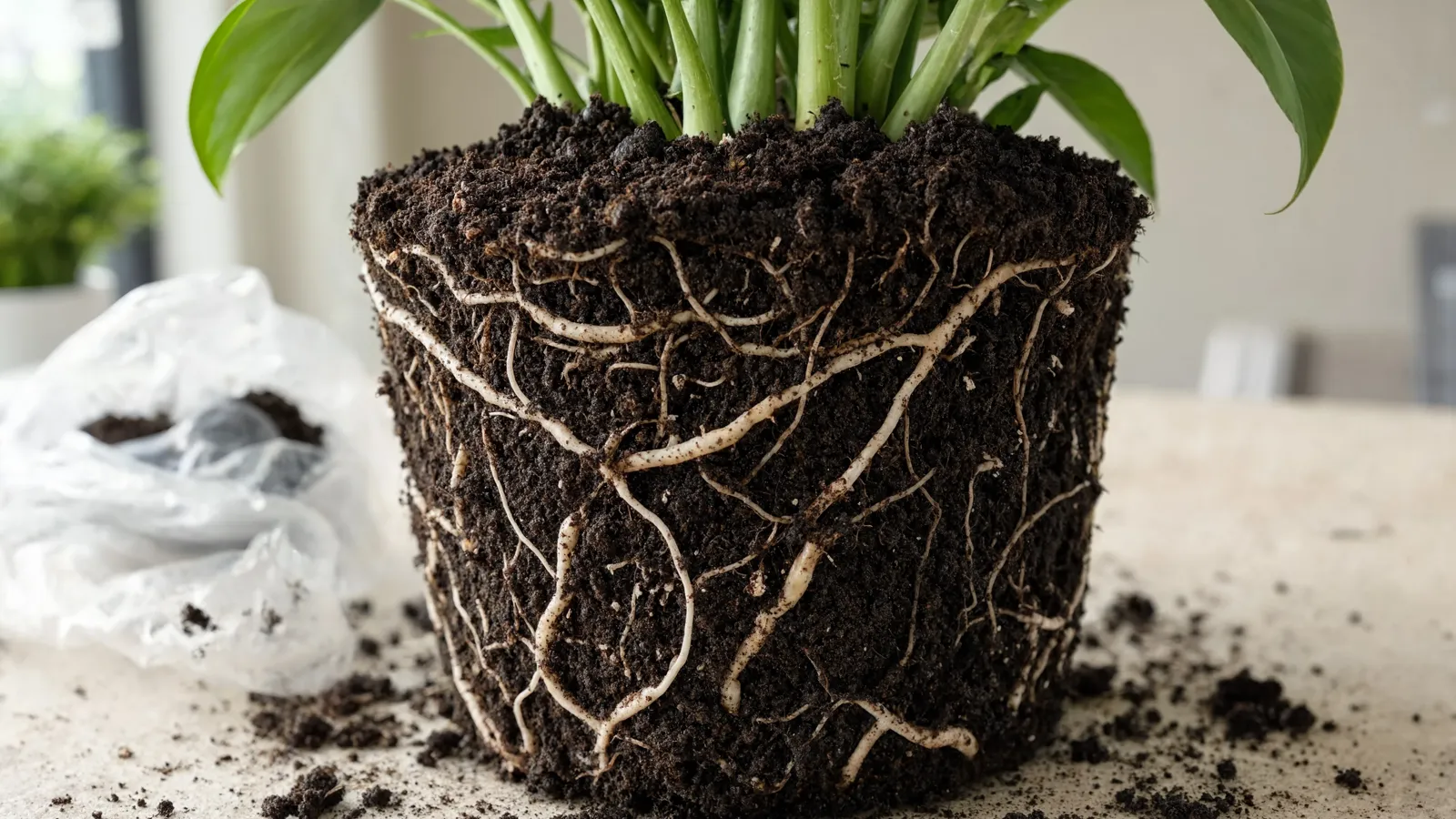
The plant declines slowly — stunted growth, persistent wilting, and yellowing — despite correct watering and feeding, with no visible pest on the foliage. On unpotting, white, powdery, cottony deposits coat the roots and the inner pot walls, resembling mould or fertiliser residue. These below-ground mealybugs feed directly on root sap, crippling water and nutrient uptake.
The short answer
A plant that declines steadily with no visible pest, no obvious watering fault and no response to feeding often has root mealybugs. They live entirely below the soil, so the only way to find them is to slide the plant out of its pot and look: white cottony specks on the roots and a white powdery film on the inside wall of the pot. Treatment means bare-rooting, washing and repotting into fresh mix.
Confirm it before you treat it
- 1Take the plant out of the pot. This is not optional — nothing above soil level diagnoses this, and most cases go unrecognised because nobody looks.
- 2Inspect the inside of the pot wall. A white powdery or waxy residue there is a strong indicator even before you find the insects.
- 3Look at the root ball surface for small white cottony clusters, most often against the pot wall and around the drainage holes.
- 4Note the pattern of decline: slow, steady, unresponsive to both watering and feeding. That combination is the giveaway.
- 5Check the other plants that share the same shelf or drip tray. Root mealybugs move between pots through standing water.
Potential Causes
- 1Introduction via infested nursery plants or shared, contaminated substrate
- 2Crawlers migrating through drainage holes between closely spaced pots
- 3Dry, bark-heavy mixes that provide the aerated root environment they prefer
- 4Long intervals between repotting allowing colonies to build unnoticed
Solution Steps
- 1Unpot the plant and rinse all substrate from the roots under running water to expose and remove the colony.
- 2Soak the bare root ball for 20–30 minutes in a systemic insecticide solution, or in an insecticidal soap drench, to kill insects clinging to the roots.
- 3Discard all old substrate — never reuse it — and sterilise the pot with a 10% bleach solution before replanting.
- 4Repot into fresh, clean aroid mix in a sanitised container.
- 5Apply a systemic insecticide soil drench at repotting and again 2–3 weeks later to catch any survivors.
- 6Quarantine the plant and re-inspect the roots at the next repot to confirm eradication.
What else looks like this
| Could be | How to tell it apart |
|---|---|
| Root rot | Roots brown and mushy with a sour smell. Root mealybug roots stay firm but carry white cottony specks. |
| Perlite in the mix | The most common false alarm. Perlite is hard, granular and uniform; mealybug clusters are soft, waxy and irregular. |
| Fungus gnat larvae | Small translucent maggots in wet soil, plus adult gnats flying. No white waxy coating. |
| Root-bound decline | Dense circling roots with no white residue anywhere. Repotting alone resolves it. |
| Nutrient deficiency | Responds to feeding. Root mealybug decline does not, because the insects are intercepting what you feed. |
Recovery timeline
- Day 1Isolate the plant immediately. Bare-root it, discard all the old mix, and wash the roots thoroughly under running water.
- Day 1Discard the pot or scrub and disinfect it. The waxy residue on the wall carries eggs and reinfests a clean plant.
- Week 1Repot into fresh mix in a clean pot. Water sparingly at first — the root system has been disturbed and is vulnerable.
- Weeks 2–4Growth resumes if the treatment worked. Check every plant that shared a shelf or tray with it.
- Weeks 6–8Unpot and inspect again. Reinfestation from missed eggs is common, and a second bare-rooting at this point usually finishes it.
If you do nothing
The insects feed on root sap continuously, so the plant is slowly starved regardless of how well it is watered and fed. Decline is gradual enough that it is usually blamed on something else for months. The population builds until root function collapses and the plant dies. More seriously, they spread readily between pots through shared trays and standing water, so one undiagnosed plant becomes a collection-wide problem — this is a common way an entire houseplant shelf declines at once with no apparent cause.
Common mistakes
- Never taking the plant out of the pot. This is the whole reason the pest goes undetected for so long.
- Reusing the same pot after repotting. Eggs survive in the residue on the wall and reinfest immediately.
- Treating only the affected plant. Anything sharing a tray is very likely infested too.
- Applying a leaf-directed pesticide. Foliar sprays never reach a soil-dwelling insect.
- Assuming success after one treatment. Eggs survive washing; a follow-up inspection at six to eight weeks is what confirms it.
Prevention Tip
Whenever a plant declines for no visible reason, unpot and inspect the roots — root mealybugs are a frequently missed cause. Keep pots off shared trays where crawlers can migrate, and always discard rather than reuse substrate from an infested plant.
Questions people actually ask
- How do I tell them from perlite?
- Press one. Perlite is hard and crumbles; a mealybug cluster is soft and waxy and smears. Perlite is also evenly distributed, while the insects cluster at the pot wall.
- Where did they come from?
- Almost always in with a new plant or in contaminated potting mix. Quarantining new plants for a few weeks prevents most introductions.
- Is bare-rooting safe for the plant?
- Most houseplants tolerate it well if repotted promptly and watered lightly at first. It is far less risky than leaving the infestation.
- Do soil drenches work?
- Systemic drenches can help alongside repotting, but on their own they rarely clear an established population. Physical removal is the reliable part.
- How do they spread between pots?
- Mainly through standing water in shared trays, and through crawling stages moving across a shelf. Emptying trays after watering breaks that route.
Related Issues to Explore

Mealybug Infestation — Pseudococcus spp.
Foliar and root mealybugs often occur together — finding one warrants inspecting for the other above and below the soil line.
Read guide
Root Rot — Pythium & Phytophthora Infection
Both root mealybugs and root rot cause unexplained decline — unpotting reveals white waxy deposits (mealybugs) versus black slimy roots (rot).
Read guide
Root-Knot Nematodes — Meloidogyne Galls
Nematodes are another hidden root pest causing slow decline — distinguished from root mealybugs by knotty galls rather than waxy deposits.
Read guideMore Root Problems Problems
See all →
Real Philodendron grow diaries
Growers on DailyGrowers log their plant week by week, one photo at a time. Here's how theirs are going.
 1 week
Philodendron propagation
@thepepperguy
 1 week
my Philodendron ordatum growth🪴🪴🪴
@spongyboby
 1 week
Propagation of Philodendron florida beauty
@tahibonursery
Growing Philodendron too? Start your own diary. It's free and takes 2 minutes.
Start my Philodendron diary →