




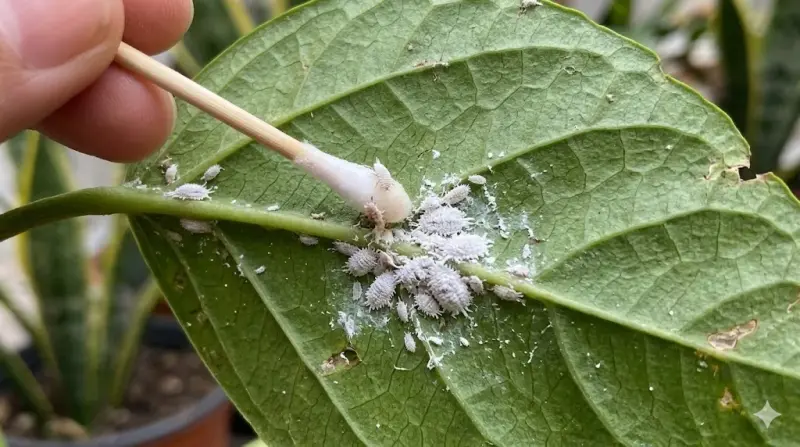
Mealybug
Planococcus citri
Mealybugs are soft-bodied scale insects covered in a distinctive white, waxy, mealy coating that protects them from contact insecticides. They feed by piercing plant tissue and extracting phloem sap, causing leaf yellowing, wilting, and distortion. Planococcus citri (citrus mealybug) is the most common species on houseplants, but root mealybugs (Rhizoecus spp.) are also a significant issue — colonising roots invisibly underground until the plant shows signs of decline.
How to Identify
White, cottony or waxy masses at leaf axils (where leaves meet stems), stem nodes, growing tips, and on leaf undersides near the midrib. The masses look like small cotton balls or white powder deposits. Leaves become sticky from honeydew secretion, and black sooty mould develops on the deposits. For root mealybugs, remove the plant from its pot and examine the roots and substrate — white waxy masses will be visible on the root surface.
Life Cycle
Females lay 300–600 eggs in protective cottony ovisacs over their 5–10 week lifespan. Crawlers (first instar nymphs) hatch in 6–14 days and are the only highly mobile stage. They walk to new feeding sites, then settle and begin feeding. Development takes 30–70 days depending on temperature. Males (rare) develop wings and do not feed.
Visual Identification
Cottony Colonies
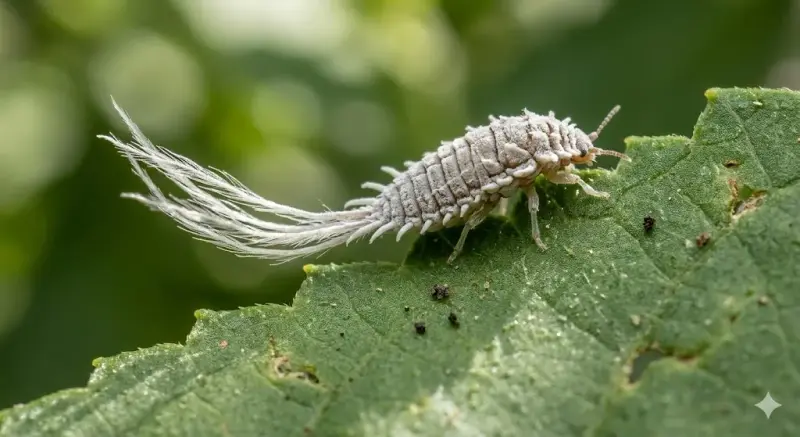
Scale Buildup
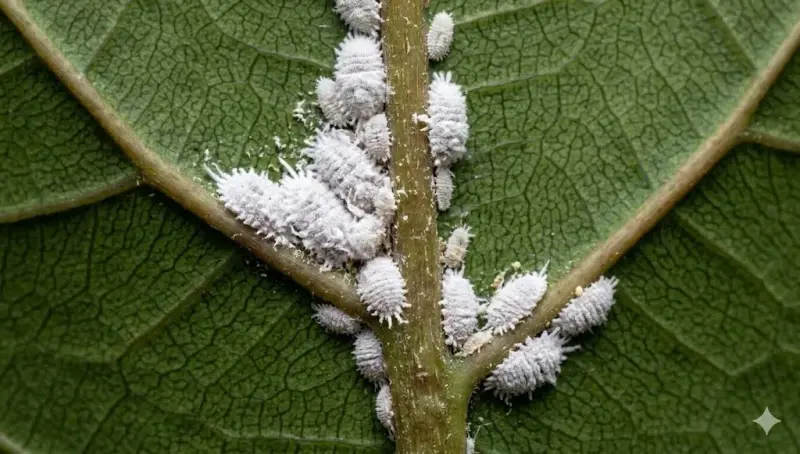
Waxy Masses
Treatment Steps
- 1
Isolate the plant immediately — mealybug crawlers are highly mobile
- 2
Dab individual colonies with cotton swabs dipped in 70% isopropyl alcohol — dissolves the wax instantly
- 3
Spray the entire plant with neem oil solution (5 ml/L with dish soap) weekly for 6–8 cycles
- 4
Apply imidacloprid systemic insecticide as a soil drench for persistent or root mealybug infestations
- 5
Introduce Cryptolaemus montrouzieri (mealybug destroyer) beetles for biological control
- 6
For root mealybugs: remove from pot, rinse roots under running water, repot in fresh substrate
Prevention
Quarantine all new plants for 3–4 weeks and inspect every stem node and leaf axil
Avoid moving plants between environments where mealybug populations might be present
Inspect roots annually during repotting for signs of root mealybug infestation
Avoid over-fertilising with nitrogen — soft growth is preferentially targeted
Frequently Asked Questions
How do I get rid of mealybugs on houseplants?
Dab each colony with a cotton swab dipped in 70% isopropyl alcohol to kill on contact. Follow with neem oil spray weekly for 6–8 cycles to intercept newly hatched crawlers. Apply imidacloprid systemically for persistent infestations.
What causes mealybugs on indoor plants?
Mealybugs most commonly arrive on infested nursery plants — their egg masses and crawlers are nearly invisible at point of sale. A 3–4 week quarantine for all new plants is the most reliable prevention.
Do mealybugs live in soil?
Root mealybugs (Rhizoecus spp.) do colonise soil and roots. If your plant declines despite no visible mealybugs on leaves and stems, remove it from its pot and inspect roots. White waxy masses on root surfaces confirm root mealybug infestation.
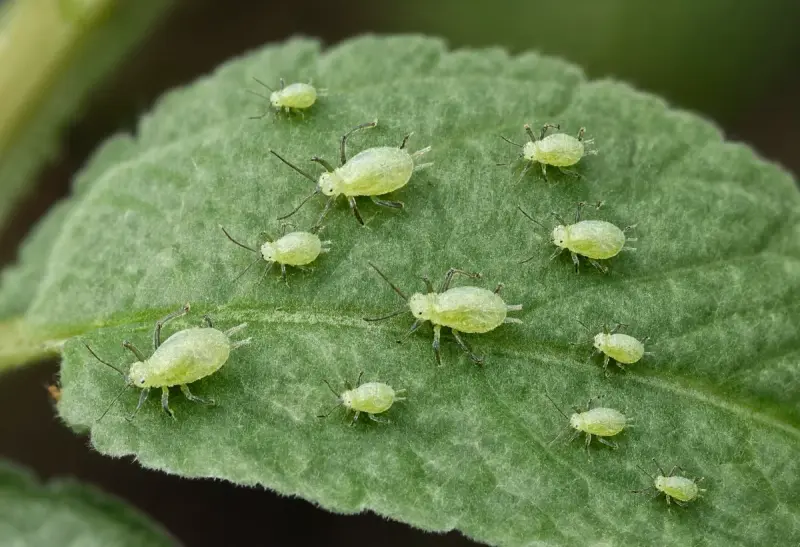
Plant Problems Caused by Mealybug
All pest problems →
Mealybug Infestation — Pseudococcus spp.
White, cottony, waxy masses appear in leaf axils, along stems, and on …
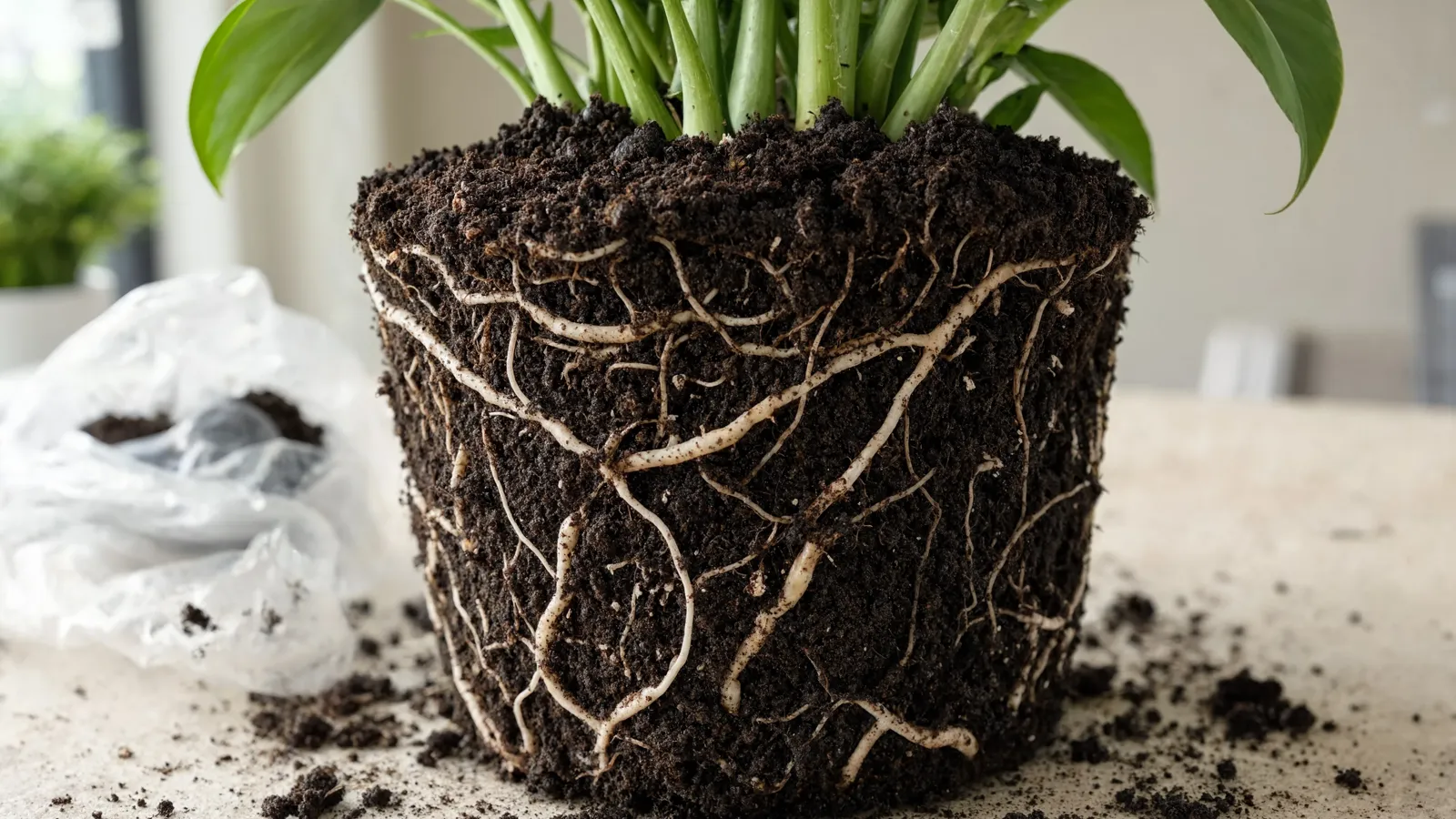
Root Mealybugs — Hidden Rhizoecus Infestation
The plant declines slowly — stunted growth, persistent wilting, and ye…

Calathea Leaf Curling — Underwatering, Low Humidity or Heat Stress
Calathea leaves curl inward along their length, forming tight cylinder…

Alocasia Seasonal Leaf Drop — Normal Dormancy vs. Root Stress
Alocasia leaves yellow one by one and detach, leaving bare stems or co…
Pothos Mealybugs — White Waxy Colonies in Leaf Axils & Node Crevices
White, cottony or waxy clusters appear in the angles where leaves meet…

Pothos Sudden Wilting — Underwatering, Root Bound & Heat Stress
Leaves and stems collapse and droop dramatically, the substrate is bon…
Care Guides for Affected Plants



See how growers dealt with Mealybug
Browse real grow diaries from the community — treatments, timelines, and results.
Browse community diaries →