 ⚠ Moderate
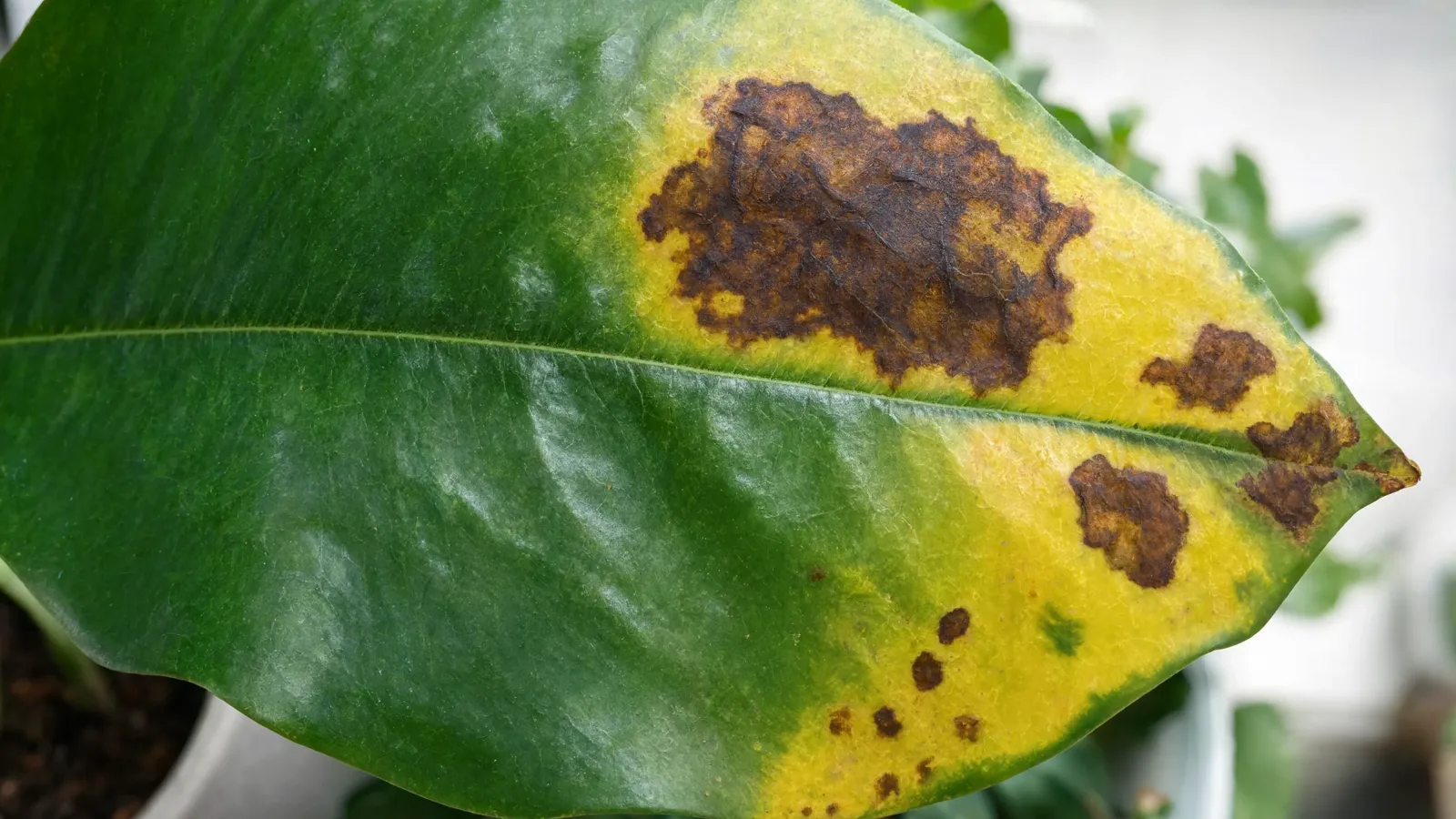
Soft, diffuse chlorosis spreading upward from lower foliage — caused by root oxygen deprivation in chronically waterlogged substrate.
Yellowing Leaves — Overwatering Stress
Commonly affects: Monstera deliciosa, Epipremnum aureum (Pothos), Philodendron hederaceum
Leaves turn uniformly pale yellow or lime-green, progressing from older lower foliage upward. Unlike nutrient deficiency, the yellowing is diffuse — no distinct green veining remains. Affected leaves feel limp and soft rather than crisp, and the potting substrate stays wet or waterlogged for extended periods.
The short answer
Uniform yellowing that starts at the bottom of the plant and feels soft is almost always overwatering — not a lack of fertiliser. Stop watering, check the roots for brown mushy tissue, and let the top 5 cm of mix dry completely before the next water. Leaves already yellow will not turn green again; you are protecting the ones above them.
Confirm it before you treat it
- 1Push a finger 5 cm into the mix. If it is damp at that depth and the plant is still yellowing, water is the problem — not the food.
- 2Lift the pot. A pot that stays heavy for more than 4–5 days after watering is holding water the roots cannot use.
- 3Squeeze a yellow leaf between two fingers. Overwatering yellowing feels limp and slightly cool; nutrient yellowing stays thin and papery.
- 4Slide the plant out of the pot and look at the outer roots. White or pale cream is healthy. Brown, grey or translucent roots that slip apart when pinched are rotting.
- 5Smell the root ball. A sour or drain-like smell confirms anaerobic decay and means you are past prevention and into treatment.
Potential Causes
- 1Watering too frequently before the substrate can sufficiently dry between sessions
- 2Dense, water-retentive potting mix with inadequate drainage components (e.g., no perlite)
- 3Pots lacking drainage holes or sitting in standing water in a saucer
- 4Low ambient light reducing the plant's metabolic water uptake significantly
Solution Steps
- 1Remove the plant from its pot and inspect the root ball — healthy roots are white or cream; overwatered roots are brown, mushy, and may smell sour.
- 2Trim any rotten roots with sterilised scissors or a clean blade. Dust cut ends with powdered cinnamon (a natural antifungal) or horticultural sulfur.
- 3Repot into a fresh, well-draining mix: 60% quality potting soil, 30% perlite, 10% orchid bark for aeration.
- 4Allow the repotted plant to rest for 48 hours without watering so cut root ends can callus.
- 5Resume watering only when the top 4–5 cm of soil registers dry — use a moisture meter for precision.
- 6Move the plant to a brighter location to increase evapotranspiration.
What else looks like this
| Could be | How to tell it apart |
|---|---|
| Nitrogen deficiency | Also starts on the oldest leaves, but the yellowing is even and the leaf stays firm and dry to the touch. The mix is usually dry, not damp, and the plant is often in the same tired soil it has had for over a year. |
| Natural leaf shedding | One or two of the very lowest leaves yellow and drop over several weeks while all new growth stays healthy. Overwatering yellows several leaves at once and slows or stops new growth at the same time. |
| Root rot (already established) | The same yellowing plus a plant that wilts even though the soil is wet. Wilting-while-wet is the tell — the roots can no longer move water at all, so the plant behaves as if it is drought-stressed while sitting in mud. |
| Spider mite damage | Yellowing appears as fine stippled dots rather than whole-leaf colour change, usually starting on upper leaves near the light, with fine webbing where the leaf meets the stem. |
| Cold shock near a window | Yellowing is confined to the leaves touching or nearest the glass, appears within days of a cold snap, and often has brown patches where tissue froze. |
Recovery timeline
- Days 1–3Nothing visible changes. Do not water. This is the hardest part and the stage most people abandon, watering again 'just a little' and restarting the cycle.
- Week 1The mix should be noticeably lighter. Already-yellow leaves may continue to fade or drop — that is expected and is not a sign the treatment failed.
- Weeks 2–3Yellowing stops spreading to new leaves. This is your first real signal that the plant has recovered enough to move water again.
- Weeks 4–6New growth appears, usually smaller than before. Small new leaves are normal while the root system rebuilds and are not a further problem.
- Months 2–3Leaf size returns to normal. If there is still no new growth by this point, the roots did not recover and the plant needs repotting into fresh dry mix with rotted roots removed.
If you do nothing
Waterlogged roots suffocate within one to two weeks, and dead root tissue becomes food for Pythium and Phytophthora. Once rot reaches the stem base the plant cannot be saved from its roots — the only remaining option is to cut healthy top growth and propagate it. Most houseplants that die of 'unknown causes' died this way, weeks after the yellowing began.
Common mistakes
- Adding fertiliser because yellow leaves look like hunger. Damaged roots cannot absorb it, and the added salts make the root damage worse.
- Watering less each time but just as often. The roots need dry periods, not smaller drinks — frequency is what matters, not volume.
- Cutting off every yellow leaf immediately. A yellowing leaf is still returning nutrients to the plant; remove leaves only once they are fully brown or fall away at a touch.
- Repotting into a bigger pot. A larger volume of mix holds water longer and makes the problem worse. If repotting is needed, use the same size or one step smaller.
- Moving the plant to a darker spot to 'let it rest'. Less light means less water use, which extends how long the mix stays wet.
Prevention Tip
Adopt a 'lift-test' routine: lift the pot after watering and again when it feels significantly lighter — that lightness signals the right time to re-water. Supplement with 10–20% perlite in every mix.
Questions people actually ask
- Will the yellow leaves turn green again?
- No. Chlorophyll does not return to a leaf that has lost it. The goal of treatment is protecting the leaves that are still green and getting new growth started.
- Should I repot straight away?
- Only if the roots are already brown and mushy, or the mix smells sour. If the roots are still firm and pale, letting the mix dry out is less stressful than a repot.
- How long should I wait before watering again?
- Until the top 5 cm is dry and the pot feels light. For most aroids in a normal room that is 7–14 days, but check by feel rather than by calendar.
- My plant is yellowing but the soil is dry. Is this still overwatering?
- It can be. Roots damaged in a previous wet period cannot absorb water even once the mix dries, so the plant shows both dry soil and continued yellowing. Check the roots directly.
- Does the pot material matter?
- Yes, considerably. Terracotta loses moisture through its walls and forgives over-watering; glazed ceramic and plastic do not. The same watering routine produces very different results in each.
Related Issues to Explore

Root Rot — Pythium & Phytophthora Infection
Chronically wet substrate enables Pythium oomycetes to destroy root tissue, cutting off water and causing rapid whole-plant wilt.
Read guide
Interveinal Chlorosis — Iron or Magnesium Deficiency
Yellow tissue between green veins indicates micronutrient lock-out — often triggered by the same overwatering that damages roots.
Read guide
Stem & Crown Rot — Botrytis & Fusarium spp.
Dark, collapsing stem tissue at soil level — an advanced consequence of saturated substrate and the same excess moisture that causes yellowing.
Read guideMore Leaf Problems Problems
See all →
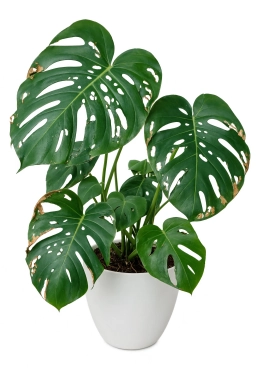
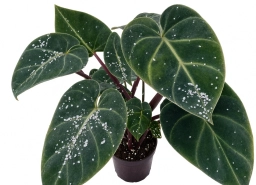
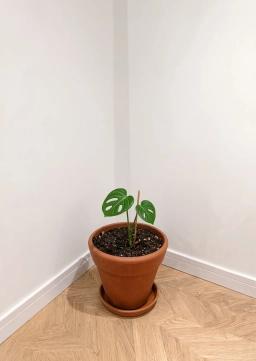
Real Monstera grow diaries
Growers on DailyGrowers log their plant week by week, one photo at a time. Here's how theirs are going.
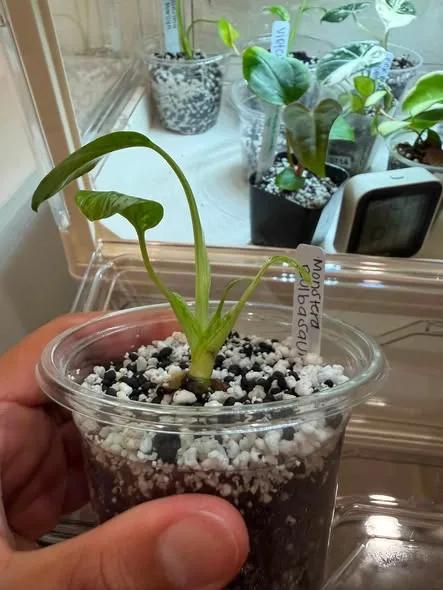
Growing Monstera too? Start your own diary. It's free and takes 2 minutes.
Start my Monstera diary →