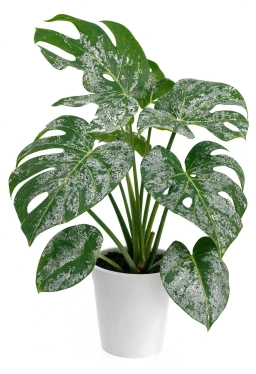
 ⚠ Moderate
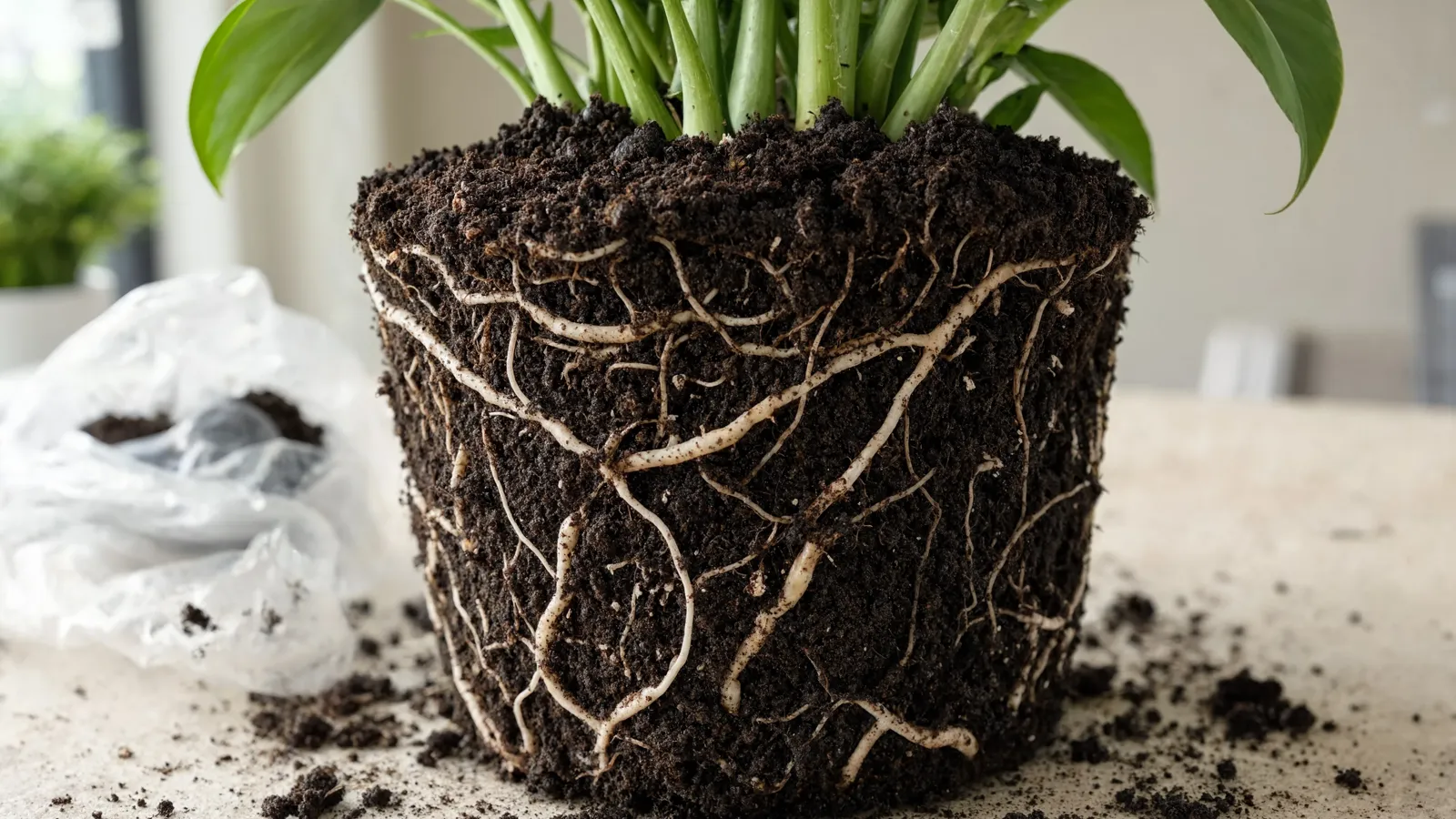
The excess substrate in an oversized pot retains moisture for weeks beyond what the root system can absorb — the surface appears dry while the base remains chronically waterlogged, invisibly developing Pythium rot.
Oversized Pot — Root Rot Risk from Excess Substrate Volume
Commonly affects: Monstera deliciosa, Philodendron spp., Spathiphyllum wallisii, Anthurium andraeanum, Alocasia spp.
A plant in a pot much larger than its root ball shows persistent slow growth, yellowing lower leaves, or develops root rot despite appearing to be watered correctly. The excess substrate volume around the root system retains far more moisture than the root ball can absorb — creating chronic wet conditions that are invisible at the surface. The substrate surface dries normally, masking the waterlogged base where root rot develops.
Potential Causes
- 1Repotting into a container more than 5–7 cm larger in diameter than the previous pot or root ball
- 2Optimistic sizing — attempting to 'future-proof' a pot by choosing a much larger container upfront
- 3Using a container sized for the plant's expected eventual size rather than its current root volume
- 4Dense, moisture-retentive substrate in a large volume remaining wet for weeks while appearing dry at the surface
Solution Steps
- 1Assess the ratio — if the pot is more than 5 cm larger in diameter than the root ball, consider downsizing to a more appropriately sized container.
- 2If downsizing is not feasible, amend the substrate mix to increase drainage: add additional perlite (30–40% of total volume) to improve drainage and aeration.
- 3Reduce watering frequency significantly when in an oversized pot — the surface will look dry before the deeper substrate has dried out.
- 4Insert a moisture meter probe 8–10 cm into the substrate before each watering — water only when the meter reads dry at depth, not just at the surface.
- 5Unpot the plant every 3–4 months initially to inspect root development and check for early-stage rot at the base of the substrate.
- 6If root rot is found: treat, repot into correct-sized container, and adjust the watering protocol for the new volume.
Prevention Tip
The correct pot size is 4–6 cm (1.5–2 inches) larger in diameter than the root ball — not the plant's above-ground size. A pot that looks 'too small' is often correct; a pot that 'gives the plant room to grow' is often dangerously large.
Related Issues to Explore

Root Rot — Pythium & Phytophthora Infection
Oversized pots are a leading cause of root rot — chronic wet substrate around a small root ball creates the anaerobic conditions Pythium requires.
Read guide
Repotting Shock — Post-Transplant Stress & Wilting
Correct pot sizing when repotting prevents both oversized pot syndrome and the need for premature re-repotting.
Read guideMore Root Problems Problems
See all →
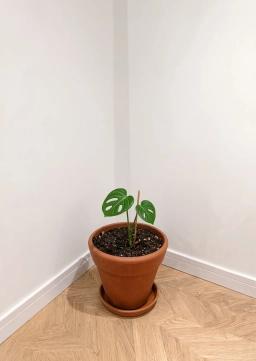
Real Monstera grow diaries
Growers on DailyGrowers log their plant week by week, one photo at a time. Here's how theirs are going.
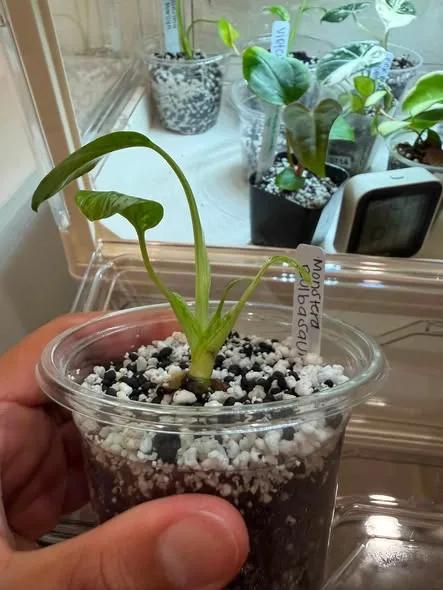
Growing Monstera too? Start your own diary. It's free and takes 2 minutes.
Start my Monstera diary →More rare plants and collector grows every day on Facebook: follow Exotics plants