 ⚠ Moderate
Burrowing Nematodes on Banana Roots
Commonly affects: Musa acuminata, M. balbisiana (Banana)
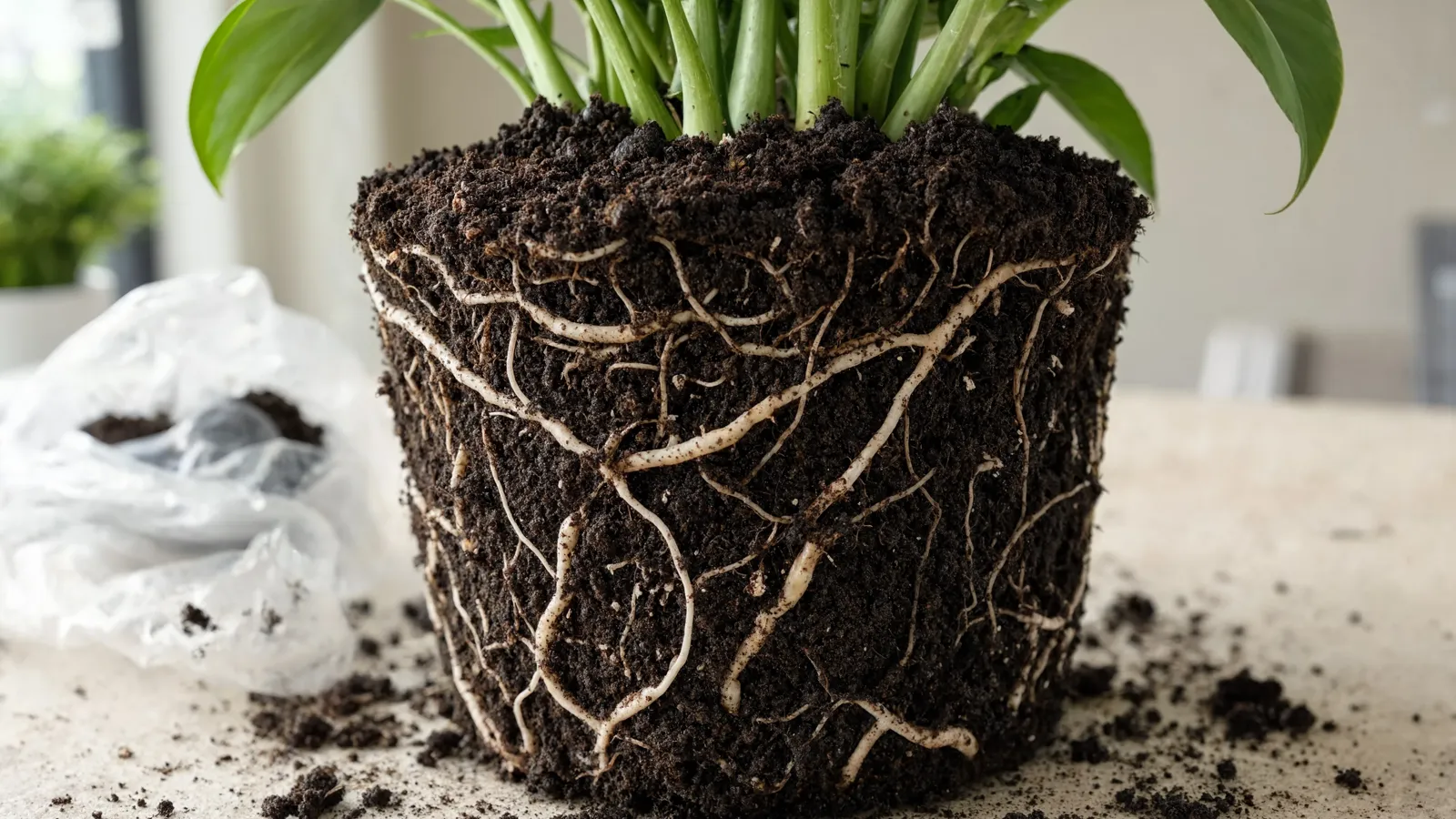
The plant shows stunted growth, poor fruit bunches, and increased susceptibility to toppling in wind. Roots show reddish-black lesions and reduced root mass when examined.
The short answer
A banana that topples in wind, or declines steadily despite good watering and feeding, often has burrowing nematodes destroying its root system. They are microscopic and there is nothing to see above ground — the diagnosis is made by digging up roots and finding dark reddish-brown tunnels through the tissue. There is no cure for an infested plant; the response is clean planting material and rotation.
Confirm it before you treat it
- 1Dig up a few roots and cut them lengthways. Dark reddish-purple to black lesions running along the root interior are characteristic.
- 2Check the anchorage. A plant that leans or falls in moderate wind has lost the structural root system that holds it, which is the classic sign.
- 3Look at the overall pattern. Steady decline with no response to watering or feeding, and no visible pest, is the shape of a root problem.
- 4Assess the root mass. Infested plants have far fewer functional roots than a healthy plant of the same size.
- 5Consider the planting material. Nematodes travel in infected suckers and corms, and that is how they arrive in most gardens.
Potential Causes
- 1Radopholus similis (burrowing nematode) feeding on and damaging root tissue
- 2Continuous banana cultivation in the same soil without rotation
- 3Infected planting material introducing nematodes to new areas
Solution Steps
- 1Use nematode-free, certified planting material (tissue culture plants are typically nematode-free)
- 2Rotate out of banana production for a season if nematode populations are severe
- 3Improve soil organic matter to support nematode-suppressing beneficial organisms
- 4Avoid moving soil or plant material from infested to clean areas
What else looks like this
| Could be | How to tell it apart |
|---|---|
| Panama disease | Yellowing that progresses upward with a distinct vascular discolouration inside the pseudostem. Also incurable, but it is a fungus and stays in the soil far longer. |
| Root rot from waterlogging | Soft brown mushy roots in soggy soil, rather than firm roots with dark internal tunnels. |
| Nutrient deficiency | Responds to feeding. Nematode-damaged plants do not, because the roots cannot take it up. |
| Weevil damage | Tunnelling in the corm itself, with visible grubs. Larger and directly visible, unlike nematodes. |
| Drought stress | Recovers with watering. Nematode decline continues regardless of how well the plant is watered. |
Recovery timeline
- Day 1Confirm by cutting roots open. Without that, this diagnosis is guesswork, since nothing above ground is specific to it.
- Week 1Remove and destroy badly affected plants including as much of the corm and root as possible. Do not move soil to other beds.
- Weeks 2–4Do not replant bananas in the same spot. The nematodes remain in root fragments left in the soil.
- Months 1–6Grow a non-host crop in that ground. Nematode populations fall when there is nothing left to feed on.
- ReplantingUse clean tissue-cultured plants rather than suckers from an existing clump, which is the main way infestations spread.
If you do nothing
The root system is progressively destroyed, so the plant cannot anchor itself or take up water and nutrients — it declines steadily and eventually topples, often when it is heaviest with fruit. Because nematodes multiply in the roots and survive in root fragments left in the soil, an infested planting site becomes progressively worse over successive plantings. Suckers taken from an infested clump carry the nematodes to every new site they are planted in, which is how a single infected plant seeds a whole garden.
Common mistakes
- Planting suckers taken from an existing clump. This is how the nematodes spread, and clean tissue-cultured material avoids it entirely.
- Feeding a declining plant. Damaged roots cannot take up nutrients, so the lack of response is itself diagnostic.
- Replanting bananas in the same spot immediately. Root fragments left in the soil keep the population alive.
- Moving soil or tools between beds without cleaning. Nematodes travel readily in soil on tools and boots.
- Diagnosing it without digging. Nothing above ground is specific to nematodes, and the same symptoms have several other causes.
Prevention Tip
Starting with certified nematode-free tissue-culture plants prevents most nematode problems from ever establishing.
Questions people actually ask
- Can an infested plant be cured?
- No. There is no practical treatment for a plant with established root damage. The response is removal and clean replanting material.
- How do I get clean plants?
- Tissue-cultured plants from a reputable supplier. Suckers from an existing clump are the main route of spread.
- How long should I rotate?
- At least six months to a year of a non-host crop, and longer where the infestation was severe.
- Is the fruit safe?
- Yes. Nematodes affect roots, not fruit, and they are not a human health concern.
- Can I see them?
- Not with the naked eye — they are microscopic. You diagnose them by the dark tunnels they leave inside the roots.
More Root Problems Problems
See all →
Real Banana grow diaries
Growers on DailyGrowers log their plant week by week, one photo at a time. Here's how theirs are going.
 14 weeks
Variegated Banana Musa Ae Ae ✨🍃🌿🌱💚
@tropicalthai
 3 weeks
My banana growth
@thepepperguy
 2 weeks
my banana plants
@weedy
Growing Banana too? Start your own diary. It's free and takes 2 minutes.
Start my Banana diary →