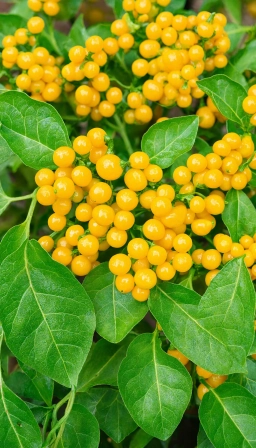
 ⚠ Moderate
Abundant flowers but few developing fruit � often a pollination or feeding-balance issue rather than disease.
Poor Fruit Set Despite Healthy Flowering
Commonly affects: Capsicum annuum, Capsicum chinense (Chili Pepper)
The plant produces plenty of flowers over an extended period, but very few develop into peppers. The plant otherwise appears vigorous and green, making the lack of fruit puzzling.
The short answer
A plant covered in flowers that drop without setting fruit is almost always a pollination or temperature problem, not a health problem. Peppers self-pollinate but need movement to shed their pollen, and pollen goes sterile above roughly 32 °C and below about 16 °C. Shake the plant daily, shade it through the hottest hours, and cut back the nitrogen. Fruit usually sets within two weeks.
Confirm it before you treat it
- 1Watch what the flowers do. Dropping at the stalk while still fresh and yellow means they were never pollinated. Shrivelling brown on the plant means something else.
- 2Check your temperatures for the past week, both day and night. Above about 32 °C by day or below 16 °C at night, pepper pollen simply does not work.
- 3Assess the air movement. Indoors or in a still greenhouse there is nothing to shake the pollen loose, and this alone accounts for most indoor cases.
- 4Look at the foliage. Lush dark green growth with few fruits is classic excess nitrogen — the plant is investing in leaves instead.
- 5Count the fruit already on the plant. A pepper carrying a heavy load deliberately drops new flowers, which is normal regulation rather than a fault.
Potential Causes
- 1Insufficient pollinator activity, especially indoors or in enclosed greenhouses
- 2Excess nitrogen encouraging vegetative growth at the expense of reproduction
- 3Temperature extremes during flowering affecting pollen viability
- 4Insufficient light levels reducing the plant's energy available for fruit development
Solution Steps
- 1Hand-pollinate flowers by gently transferring pollen between blooms using a small brush, especially for indoor-grown plants.
- 2Reduce nitrogen fertiliser and switch to a phosphorus-potassium bloom feed once flowering starts.
- 3Ensure the plant receives at least 6�8 hours of direct light daily.
- 4Avoid extreme temperature swings by moving container plants to a more stable environment during heatwaves or cold snaps.
What else looks like this
| Could be | How to tell it apart |
|---|---|
| Blossom end rot | Fruit sets and then develops a sunken brown patch at the bottom. Poor fruit set means no fruit forms at all. |
| Bud drop from stress | Buds fall before opening, usually after a sharp change in water, light or position. Poor set is open flowers dropping. |
| Thrips damage | Flowers scarred or distorted before they drop, with tiny insects inside the bloom. Open a flower and look before blaming the weather. |
| Root-bound container plant | Flowering with generally poor growth and water running straight through the pot. A well-fed root-bound plant still flowers but supports little fruit. |
| Normal early-season drop | The first flush on a young plant often drops and the next sets fine. Do not intervene on the first few flowers. |
Recovery timeline
- Days 1–3Tap or gently shake each flowering stem once a day, ideally around midday when pollen is driest. Move the plant somewhere with air movement.
- Week 1Switch from a general feed to a high-potassium tomato feed. Existing flowers may still drop — they were already pollinated or not.
- Weeks 1–2New flowers begin holding, and small green fruit appears behind the spent bloom. This is the confirmation.
- Weeks 3–4Fruit swells steadily. If flowers are still dropping and the weather has been in range, look again at thrips and at nitrogen.
- OngoingIn a hot climate, shade cloth through the afternoon protects pollen and is the single most effective measure for a summer crop.
If you do nothing
The plant stays healthy and keeps flowering, which is what makes this so frustrating — it looks fine and produces nothing. Every dropped flower is a fruit not made, and a season has a limited window. If the cause is excess nitrogen the plant simply grows larger and leafier while yield stays near zero. If it is heat, the crop resumes on its own once temperatures fall, so a late-summer plant often recovers without any intervention at all.
Common mistakes
- Adding more fertiliser. If nitrogen is the cause, feeding makes it strictly worse. Peppers need potassium once flowering starts, not nitrogen.
- Buying bees or pollinators. Peppers self-pollinate; they need vibration, not insects. A daily shake costs nothing and does the job.
- Watering more because the flowers are dropping. Flower drop is not a thirst signal, and wet roots add a second problem.
- Panicking over the first flush. Young plants routinely drop their first flowers and set normally on the next.
- Ignoring night temperature. People check the daytime high and miss that a cold night is what sterilised the pollen.
Prevention Tip
Hand-pollinate regularly if growing indoors or in a greenhouse without natural pollinators, and keep nitrogen feeding moderate once flowering begins.
Questions people actually ask
- Do peppers need bees?
- No. They are self-fertile and need movement to release pollen. A gentle daily shake or a fan replaces insects entirely.
- What temperature is too hot?
- Pollen viability falls sharply above about 32 °C. Shade through the hottest hours is more effective than anything you can add to the soil.
- Should I remove the first flowers?
- On a small young plant, yes — it puts energy into roots and structure first and yields more overall.
- Why does my plant look so healthy?
- That is often the clue. Very lush growth means high nitrogen, and a plant with plenty of nitrogen prioritises leaves over fruit.
- Will it recover this season?
- If the cause was heat, yes — set usually resumes as soon as temperatures drop, provided there is enough season left for the fruit to ripen.
More Growth Issues Problems
See all →
Real Chili Pepper grow diaries
Growers on DailyGrowers log their plant week by week, one photo at a time. Here's how theirs are going.
 12 weeks
Purple death - Hot Chilli 🌶️
@thepepperguy
 8 weeks
habanero hot pepper
@johnmint
 3 weeks
habaero & jalapeno peppers
@chantmint
Growing Chili Pepper too? Start your own diary. It's free and takes 2 minutes.
Start my Chili Pepper diary →