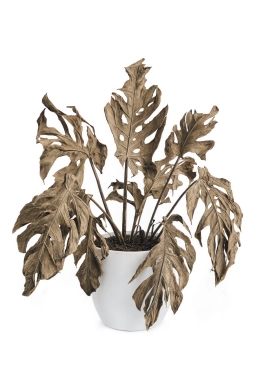
 ⚠ Minor
Solid, holeless leaves on a mature Monstera signal insufficient light or juvenility rather than disease — fenestration develops progressively with brighter light and a support to climb.
Failure to Fenestrate — Immature, Holeless Leaves
Commonly affects: Monstera deliciosa, Monstera adansonii, Philodendron bipinnatifidum
A mature Monstera or split-leaf Philodendron produces only small, solid, heart-shaped leaves without the characteristic splits (fenestrations) or holes expected at that size. New leaves remain juvenile in form, and internodes may be elongated. This is a developmental rather than a disease symptom, driven primarily by insufficient light and immature growth conditions.
Potential Causes
- 1Insufficient light intensity — fenestration requires bright, indirect light to develop
- 2Plant still in its juvenile phase, which naturally produces entire (unsplit) leaves
- 3Lack of a support to climb, keeping the plant in a juvenile, terrestrial growth mode
- 4General under-vigour from inadequate nutrition or a cramped root system
Solution Steps
- 1Move the plant to a brighter position with strong indirect light, the primary driver of fenestration.
- 2Provide a moss pole or support for climbing aroids — vertical growth encourages the mature, fenestrated leaf form.
- 3Ensure consistent feeding during the growing season to support vigorous, mature growth.
- 4Be patient: each new leaf typically shows more fenestration than the last once conditions improve.
- 5Avoid removing healthy juvenile leaves, which still feed the plant as it matures.
- 6Repot if root-bound, giving the plant the resources to produce larger, mature foliage.
Prevention Tip
Fenestration is a sign of maturity and good light, not a problem to fix overnight — provide bright indirect light and a support to climb, and the splits will develop progressively. Rushing with fertiliser under poor light only produces larger juvenile leaves.
Related Issues to Explore

Etiolation — Leggy, Weak Growth from Insufficient Light
Both stem from too little light — etiolation stretches the stems, while failure to fenestrate keeps leaves in their small, juvenile form.
Read guide
Aerial Roots & Lack of Climbing Support
Climbing aroids mature and fenestrate best when given a support — providing a moss pole addresses both unused aerial roots and juvenile leaves.
Read guide
Chewing Damage — Caterpillars & Leaf-Eating Larvae
Natural fenestration is sometimes confused with pest holes — true splits are clean and regular, unlike the ragged holes of chewing insects.
Read guideMore Growth Issues Problems
See all →
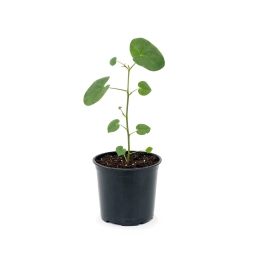
Real Monstera grow diaries
Growers on DailyGrowers log their plant week by week, one photo at a time. Here's how theirs are going.
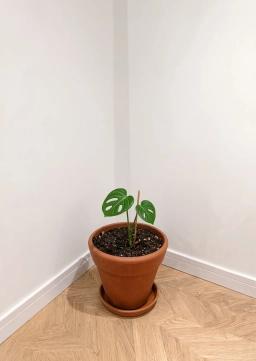
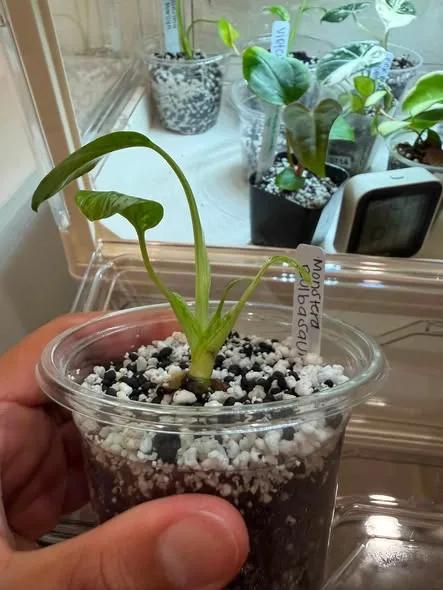
Growing Monstera too? Start your own diary. It's free and takes 2 minutes.
Start my Monstera diary →More rare plants and collector grows every day on Facebook: follow Exotics plants