 ⚠ Critical
Southern Blight — Sclerotium rolfsii
Commonly affects: Philodendron spp., Anthurium andraeanum, Syngonium podophyllum, Aglaonema
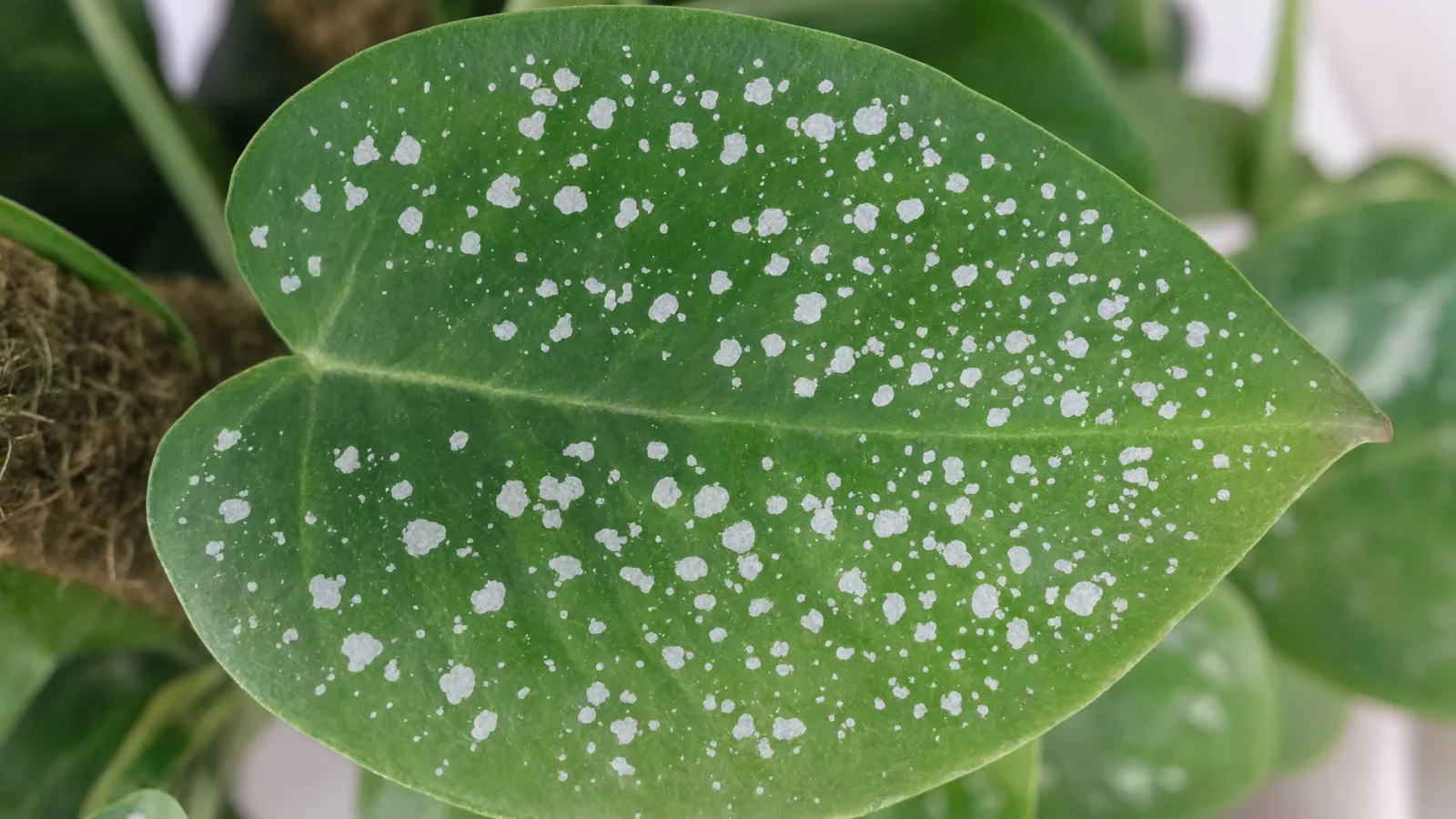
The plant collapses rapidly as the stem rots at and just above the soil line. A diagnostic white, fan-like fungal mat (mycelium) appears on the lower stem and surrounding substrate, studded with small round structures resembling mustard seeds — the sclerotia — which start white and mature to tan-brown. Wilting is sudden and the lower stem turns soft and brown.
Potential Causes
- 1Warm, humid conditions combined with moist substrate favouring Sclerotium rolfsii
- 2Contaminated soil or organic debris harbouring durable sclerotia
- 3Dense mulch or organic matter against the stem base retaining moisture
- 4Reusing infested substrate, as sclerotia survive for long periods in soil
Solution Steps
- 1Isolate the plant immediately and confirm the diagnosis by the white mycelial fan and mustard-seed sclerotia at the base.
- 2Remove and destroy severely affected plants and all surrounding contaminated substrate, sealing it in a bag.
- 3For early cases, cut well above the infected zone and propagate clean, symptom-free top growth.
- 4Sterilise pots and tools thoroughly with bleach — sclerotia are highly persistent.
- 5Repot any salvaged material into fresh, sterile substrate, keeping the stem base clear of mulch and debris.
- 6Improve airflow and avoid overwatering to deny the fungus the warm, humid conditions it requires.
Prevention Tip
Keep the stem base clear of damp mulch and organic debris, where southern blight establishes — and never reuse substrate from an affected plant, as the sclerotia survive for years. Good airflow and careful watering remove the warm, wet conditions the fungus needs.
Related Issues to Explore

Stem & Crown Rot — Botrytis & Fusarium spp.
Southern blight is one of several stem-base rots — the white mycelial fan and mustard-seed sclerotia distinguish it from Botrytis and Fusarium.
Read guide
Bacterial Soft Rot — Erwinia & Pectobacterium
Both cause rapid basal collapse — soft rot is slimy and foul-smelling, while southern blight is drier with visible white fungal growth.
Read guide
Rhizoctonia Damping-Off in Seedlings & Cuttings
Another soil-borne fungus attacking the stem base — damping-off targets young cuttings and seedlings rather than established plants.
Read guideMore Fungal & Bacterial Disease Problems
See all →
Real Philodendron grow diaries
Growers on DailyGrowers log their plant week by week, one photo at a time. Here's how theirs are going.
 1 week
Philodendron propagation
@thepepperguy
 1 week
my Philodendron ordatum growth🪴🪴🪴
@spongyboby
 1 week
Propagation of Philodendron florida beauty
@tahibonursery
Growing Philodendron too? Start your own diary. It's free and takes 2 minutes.
Start my Philodendron diary →