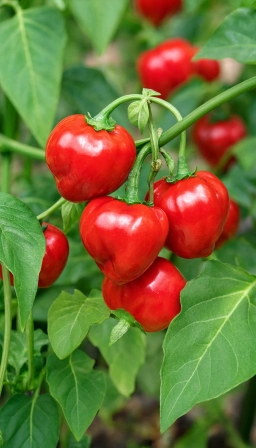
 ⚠ Moderate
A sunken, leathery dark patch at the blossom end � the classic sign of calcium-transport disruption from inconsistent watering.
Blossom End Rot on Peppers
Commonly affects: Capsicum annuum, Capsicum chinense (Chili Pepper)
A sunken, dark brown to black leathery patch develops on the bottom (blossom end) of developing fruit, while the rest of the pepper looks otherwise normal. The lesion doesn't spread as fuzzy mould, but it does soften and can allow secondary rot to set in.
The short answer
A sunken, leathery brown patch on the bottom of the fruit is blossom end rot. It is not a disease and nothing is attacking the plant — it is calcium failing to reach the developing fruit, and it is caused far more often by uneven watering than by a lack of calcium in the soil. Water consistently and mulch. Affected fruit will not recover, but the next fruit will be fine.
Confirm it before you treat it
- 1Look at where the damage is. Blossom end rot is always at the blossom end — the bottom of the fruit, opposite the stem. Damage anywhere else is something different.
- 2Feel the patch. It is sunken, dry and leathery. Soft wet rot with a smell is a bacterial or fungal problem instead.
- 3Think back over watering. A dry spell followed by heavy watering is the classic trigger, especially in containers.
- 4Check the first fruits specifically. Early fruit on a young plant is most often affected and later fruit frequently comes through clean without any intervention.
- 5Consider the feed. Very high nitrogen drives leafy growth that outcompetes fruit for calcium, so an over-fed plant shows this more.
Potential Causes
- 1Calcium deficiency in the developing fruit, usually triggered by inconsistent watering rather than a true soil shortage
- 2Rapid growth after a dry spell followed by heavy watering, which disrupts calcium transport to the fruit
- 3Root damage from overly aggressive cultivation around the plant base
- 4High salt levels in the soil interfering with calcium uptake
Solution Steps
- 1Remove affected fruit � they won't recover, and removing them lets the plant focus energy elsewhere.
- 2Water deeply and consistently, aiming for even soil moisture rather than a dry-then-flood pattern.
- 3Mulch around the base of the plant to help retain consistent moisture levels.
- 4Apply a calcium supplement such as gypsum or a foliar calcium spray as a precaution, especially in fast-draining container mixes.
- 5Avoid deep cultivation near the root zone that could damage feeder roots responsible for calcium uptake.
What else looks like this
| Could be | How to tell it apart |
|---|---|
| Sunscald | Pale, papery patches on the side of the fruit facing the sun, not at the bottom. Common when foliage has been stripped. |
| Anthracnose | Sunken circular lesions with dark spore rings, and they can appear anywhere on the fruit. Wet and spreading rather than dry and fixed. |
| Insect damage | An entry hole and internal tunnelling. Blossom end rot never breaks the skin from outside. |
| Normal ripening variation | Colour change without any change in texture. Blossom end rot is always sunken and firm to the touch. |
| Bacterial soft rot | Wet, foul-smelling collapse spreading quickly. Blossom end rot is dry, odourless and stops once the patch forms. |
Recovery timeline
- Day 1Remove affected fruit so the plant stops investing in it, and set up a consistent watering routine. Mulch to even out soil moisture.
- Week 1No new fruit affected if the watering is now steady. Existing damage does not spread from fruit to fruit — it is not contagious.
- Weeks 2–3New fruit sets and develops normally. This is how you confirm the cause was moisture rather than a genuine soil deficiency.
- Weeks 4–6Yield returns to normal. Later fruit on the same plant is usually completely unaffected.
- Next seasonTest the soil pH if it recurred badly. Below about 6.0 calcium is present but unavailable, and no amount of watering discipline will fix that.
If you do nothing
The plant is not in danger — blossom end rot damages fruit rather than the plant itself, and it does not spread. But every affected fruit is lost, and if the erratic watering that caused it continues, each successive truss is affected in turn. In a container crop, where soil moisture swings hardest, this can mean losing most of a season's yield to something that costs nothing to prevent.
Common mistakes
- Adding calcium. Most soils have plenty; the problem is transport, not supply, and calcium moves with water. Consistent watering does far more than any supplement.
- Spraying calcium on the leaves. Calcium is not mobile in the plant, so foliar application never reaches the fruit that needs it.
- Increasing nitrogen to help the plant recover. High nitrogen drives foliage growth that competes with fruit for calcium and makes it worse.
- Leaving affected fruit on the plant. It will not recover, and the plant continues to spend resources on it.
- Watering heavily to compensate after a dry spell. The swing itself is the cause; little and often beats drought followed by flood.
Prevention Tip
Keep soil moisture even throughout fruit development � a consistent watering schedule prevents blossom end rot far more reliably than added calcium alone.
Questions people actually ask
- Can I still eat the fruit?
- Yes — cut away the affected end. The rest is perfectly good, though it will not store as long.
- Do I need to add calcium to the soil?
- Usually not. Unless a soil test shows a genuine deficiency or the pH is below about 6.0, the calcium is already there and simply is not moving.
- Why do only the first fruits get it?
- Young plants have smaller root systems and less buffering against moisture swings. As the roots establish, the problem usually resolves itself.
- Are containers more prone to it?
- Considerably. A pot dries and rewets far faster than open ground, and that swing is precisely what causes it.
- Does mulching really help?
- It is one of the most effective single measures, because it evens out soil moisture — which is the actual cause.
More Growth Issues Problems
See all →
Real Chili Pepper grow diaries
Growers on DailyGrowers log their plant week by week, one photo at a time. Here's how theirs are going.
 12 weeks
Purple death - Hot Chilli 🌶️
@thepepperguy
 8 weeks
habanero hot pepper
@johnmint
 3 weeks
habaero & jalapeno peppers
@chantmint
Growing Chili Pepper too? Start your own diary. It's free and takes 2 minutes.
Start my Chili Pepper diary →