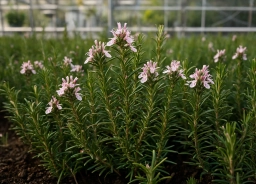
 ⚠ Minor
Pale, yellowing needles � most often a sign of overwatering rather than nutrient deficiency.
Yellowing Leaves on Rosemary
Commonly affects: Salvia rosmarinus (Rosemary)
Needle-like leaves turn pale yellow, sometimes starting with older, lower growth. The plant may also look generally less vigorous than expected.
The short answer
Yellowing on a Mediterranean herb almost always means the roots are too wet, not underfed. Rosemary, lavender, thyme and sage evolved on thin, dry, stony ground and are damaged by the moisture level ordinary potting compost holds. Stop watering, check the drainage, and if the mix stays soggy for days, repot into something at least a third grit or perlite.
Confirm it before you treat it
- 1Push a finger into the mix. Damp two days after watering means the substrate is wrong for the plant, whatever the watering routine.
- 2Check the pot. No drainage hole, or a decorative outer pot holding water, causes this reliably and is the single most common cause.
- 3Look at where the yellowing sits. Lower inner foliage yellowing while outer tips grow is classic wet-feet stress on a woody herb.
- 4Smell the base of the stem. A sour smell or soft brown tissue at soil level means rot has already started.
- 5Consider the light. These herbs need direct sun; in low light they use far less water, so the same watering routine that worked on a windowsill drowns them in a dim corner.
Potential Causes
- 1Overwatering, the most common cause of yellowing in a plant adapted to dry conditions
- 2Poor drainage keeping roots too wet for extended periods
- 3Nutrient deficiency in old, depleted potting mix
- 4Insufficient light reducing overall plant vigour
Solution Steps
- 1Check soil moisture before assuming a feeding issue � rosemary yellowing is overwhelmingly linked to overwatering rather than lack of nutrients.
- 2Allow the soil to dry out significantly between waterings going forward.
- 3Ensure the pot has good drainage and isn't sitting in standing water.
- 4If watering practice is already correct, apply a light, balanced feed and move the plant to a brighter spot.
What else looks like this
| Could be | How to tell it apart |
|---|---|
| Nitrogen deficiency | Dry mix, firm leaves, even yellowing from the bottom. On Mediterranean herbs this is much rarer than overwatering and is usually only seen in plants left years in the same pot. |
| Underwatering | Grey-green foliage that goes crisp and brittle rather than yellow, with the whole plant dulling at once. Rosemary wilts very little before it dies, which makes drought easy to miss. |
| Root rot | Yellowing plus branches dying back from the tips and a plant that does not respond to watering either way. The natural end point of prolonged wet feet. |
| Spider mites | Fine stippling and webbing, common on indoor rosemary in dry heated air. Look at the undersides before concluding it is a watering problem. |
| Cold damage | Sudden blackening or browning after a frost, affecting the exposed side. Most culinary rosemary is hardier than people expect but young plants in pots are not. |
Recovery timeline
- Days 1–5Stop watering entirely and move somewhere brighter and airier. Do not feed — a struggling root system cannot use it.
- Week 1The mix should be drying. If it is still damp after a week, repot now rather than waiting; the substrate is the problem.
- Weeks 2–3Yellowing stops spreading. Existing yellow leaves drop rather than recover.
- Weeks 4–8New growth at the tips confirms the roots recovered. Woody herbs regrow slowly, so patience is required here.
- OngoingWater only when the pot feels light, and let it approach dry between waterings. These plants tolerate drought far better than damp.
If you do nothing
Mediterranean herbs decline quietly and then fail suddenly. Roots sitting in moisture rot from the base, branches die back from the tips inward, and the plant reaches a point where the woody stem cannot support any recovery. Unlike soft-stemmed houseplants, rosemary and lavender do not readily regrow from bare wood, so a plant that has lost its foliage is usually finished. Most indoor rosemary that dies over winter dies of wet roots in low light, not of cold.
Common mistakes
- Watering because the leaves look tired. Wet-feet stress and drought look similar from a distance, and watering the wrong one is fatal.
- Using ordinary potting compost. It holds far too much water; these plants want a gritty free-draining mix.
- Keeping them in a decorative pot with no drainage. Water collects invisibly at the base and the roots sit in it.
- Growing them in a dim kitchen corner. Low light plus normal watering equals permanently wet roots, which is the actual cause in most indoor cases.
- Feeding to 'perk it up'. Mediterranean herbs grow on poor soil by design and produce better flavour with less feeding, not more.
Prevention Tip
Resist the urge to water rosemary on a fixed schedule � let the soil dry out substantially between waterings, since overwatering is far more likely to cause yellowing than underwatering.
Questions people actually ask
- Can I save a rosemary that has lost most of its leaves?
- Sometimes, if the stems are still green under a scratch of the bark and some roots are firm. If the wood is brown throughout, it will not regrow.
- How often should I water rosemary indoors?
- Far less often than most houseplants — typically every 10–14 days in a bright spot, and less in winter. Water by pot weight rather than by schedule.
- Does it need feeding at all?
- Very little. A single dilute feed in spring is plenty; over-fed rosemary grows soft and loses flavour.
- Is it better outdoors?
- Almost always, in a temperate climate. The main indoor problems — low light, still air and slow drying — all disappear outdoors.
- Why do the lower inner leaves go first?
- They get the least light and the most humidity, so they are the first to suffer when the roots are already struggling.