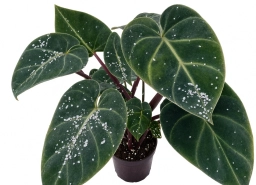
 ⚠ Moderate
Tospoviruses produce concentric chlorotic and necrotic ring and line patterns with uneven distortion — incurable and spread exclusively by thrips.
Tomato Spotted Wilt & Ringspot — Thrips-Vectored Virus
Commonly affects: Anthurium andraeanum, Philodendron spp., Spathiphyllum, ornamental aroids
Leaves develop concentric chlorotic or necrotic ring patterns, line patterns, and irregular dead spots, sometimes with one-sided distortion or bronzing of the foliage. Affected plants are stunted and decline unevenly. The ring-and-line patterning is distinctive and persists across new growth, unlike fungal leaf spots which lack the concentric ring structure.
Potential Causes
- 1Tospoviruses (e.g. tomato spotted wilt virus) transmitted exclusively by thrips
- 2Thrips acquiring the virus as larvae and transmitting it as adults while feeding
- 3Introduction of infected plants or proximity to infected ornamentals and weeds
- 4Established thrips populations enabling efficient plant-to-plant spread
Solution Steps
- 1Recognise that the virus is incurable; the priority is eliminating thrips and isolating the plant.
- 2Isolate the affected plant from the rest of the collection immediately.
- 3Implement aggressive thrips control with sticky traps and appropriate sprays to halt transmission.
- 4Remove weed and ornamental reservoirs near the grow area that can host both virus and thrips.
- 5Do not propagate from infected plants and sterilise tools between plants.
- 6Discard severely affected specimens to protect the wider collection from ongoing spread.
Prevention Tip
Since tospoviruses are spread only by thrips, controlling thrips is synonymous with preventing the disease. Quarantine new plants, run blue sticky traps continuously, and act on any thrips activity before the population can transmit the virus.
Related Issues to Explore

Thrips Infestation — Silvery Stippling & Black Frass
Thrips are the sole vector of tospoviruses — eliminating an infestation early is the only way to prevent transmission of this incurable disease.
Read guide
Cucumber Mosaic Virus — Mottling & Distortion
Both are incurable plant viruses managed through vector control — tospoviruses show concentric rings, while CMV shows blotchy mosaic mottling.
Read guide
Bacterial & Fungal Leaf Spot — Xanthomonas & Cercospora spp.
Ringspot patterns can resemble fungal leaf spot — viral rings are concentric and patterned, while fungal spots are random with halos.
Read guideMore Leaf Problems Problems
See all →

Real Philodendron grow diaries
Growers on DailyGrowers log their plant week by week, one photo at a time. Here's how theirs are going.
 1 week
Philodendron propagation
@thepepperguy
 1 week
my Philodendron ordatum growth🪴🪴🪴
@spongyboby
 1 week
Propagation of Philodendron florida beauty
@tahibonursery
Growing Philodendron too? Start your own diary. It's free and takes 2 minutes.
Start my Philodendron diary →