 ⚠ Moderate
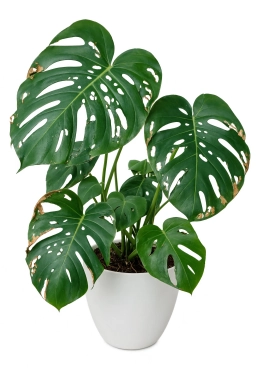
Ragged holes and notched margins with scattered frass distinguish caterpillar chewing from the clean, natural fenestration of mature aroid leaves.
Chewing Damage — Caterpillars & Leaf-Eating Larvae
Commonly affects: Monstera deliciosa, Alocasia spp., Philodendron bipinnatifidum, Colocasia esculenta
Irregular holes, ragged notches, and chewed margins appear in leaves, distinct from the natural fenestration of mature aroids. Dark pellets of frass collect on lower leaves or the soil surface, and a green or brown caterpillar may be found feeding on leaf undersides, often well camouflaged along a midrib. Damage typically appears overnight or progresses rapidly over a few days.
Potential Causes
- 1Moths laying eggs on plants moved outdoors for summer, then brought back inside
- 2Caterpillars hitchhiking on new plants or freshly cut foliage
- 3Open windows allowing egg-laying adults access during warm months
- 4Outdoor-grown aroids exposed to native leaf-feeding larvae
Solution Steps
- 1Inspect the plant thoroughly, especially leaf undersides and along midribs, and remove any caterpillars by hand.
- 2Check the soil surface and lower leaves for frass to gauge how many larvae may be present.
- 3For multiple or hidden larvae, apply a Bacillus thuringiensis (BTk) spray, which specifically kills caterpillars after they feed on treated foliage.
- 4Remove the most heavily skeletonised leaves if they are beyond recovery.
- 5Inspect any plants that summered outdoors carefully before returning them indoors.
- 6Continue monitoring for a week, as eggs may continue to hatch after the first larvae are removed.
Prevention Tip
Inspect plants thoroughly before bringing them in from any outdoor period — caterpillar problems indoors almost always originate from eggs laid outside. A quick check of leaf undersides for eggs and frass catches the problem before significant damage occurs.
Related Issues to Explore

Failure to Fenestrate — Immature, Holeless Leaves
Natural fenestration is sometimes confused with pest damage — true caterpillar holes are ragged and irregular, unlike the clean splits of mature growth.
Read guide
Mechanical Leaf Tears & Handling Damage
Both chewing and mechanical damage produce holes and tears — frass and clean-bitten edges identify caterpillars rather than physical injury.
Read guide
Thrips Infestation — Silvery Stippling & Black Frass
Both pests leave frass, but caterpillars chew large holes while thrips only rasp the surface — the scale of damage distinguishes them.
Read guideMore Leaf Problems Problems
See all →
Real Monstera grow diaries
Growers on DailyGrowers log their plant week by week, one photo at a time. Here's how theirs are going.
Growing Monstera too? Start your own diary. It's free and takes 2 minutes.
Start my Monstera diary →