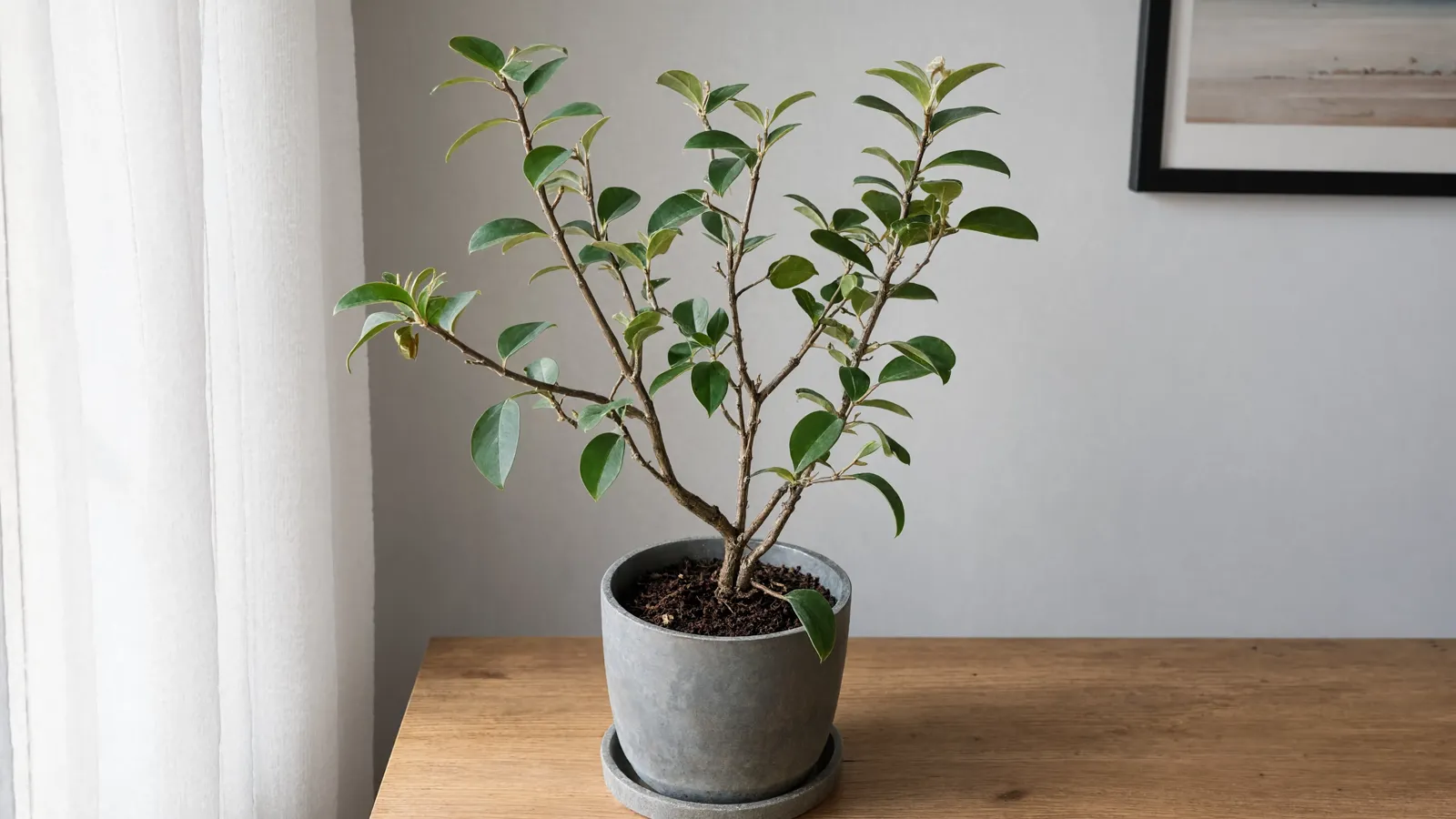
 ⚠ Minor
Anthurium Not Flowering — Low Light, Rootbound or Nutrient Imbalance
Commonly affects: Anthurium andraeanum, Anthurium scherzerianum, Anthurium crystallinum
An Anthurium that produces healthy foliage but no new spathes, or produces spathes at very long intervals of 6+ months between blooms. Under ideal conditions, a mature Anthurium should produce a new spathe every 6–8 weeks year-round. Prolonged gaps between spathes indicate the plant is allocating resources to vegetative recovery rather than reproduction, usually in response to an environmental limiting factor.
Potential Causes
- 1Insufficient light — Anthurium requires 2,000–5,000 lux of bright indirect light for sustained flowering; low-light positions sustain foliage but suppress spathes
- 2Root-bound conditions — a pot-filled root system redirects energy to root growth and cannot support simultaneous spathe production
- 3Excessive nitrogen fertilisation producing lush foliage growth at the expense of bloom initiation
- 4Temperature below 18°C — Anthurium is a tropical plant that requires consistent warmth to flower; temperatures below this threshold significantly delay spathe emergence
Solution Steps
- 1Move the plant to the brightest available indirect light — within 1 metre of an east or west-facing window. Anthurium tolerates morning direct sun without damage.
- 2Switch to a low-nitrogen, high-phosphorus bloom fertiliser (e.g., NPK 5-10-10 or 3-12-6) from early spring. Apply at half label strength every 2 weeks.
- 3Inspect the roots — if roots are circling the base of the pot or emerging from drainage holes, repot to the next size up (5 cm larger diameter) in a well-draining aroid mix.
- 4Ensure the temperature stays consistently above 18°C, ideally 22–28°C. Even brief cold snaps of a few hours below this threshold can delay the next spathe by several weeks.
- 5Remove all old, browning spathes promptly — the plant senses the ripening seed-bearing structure as a cue to reduce new spathe production while existing flowers are present.
- 6After correcting conditions, allow 8–12 weeks before expecting the first new spathe to emerge — bloom recovery is gradual.
Prevention Tip
The simplest way to ensure continuous Anthurium blooming is to follow a 3-2-1 fertilisation rhythm: 3 weeks of a balanced fertiliser, 2 weeks of a bloom-booster, 1 week of plain watering. This rotation prevents nitrogen dominance without creating deficiencies.
Related Issues to Explore

Etiolation — Leggy, Weak Growth from Insufficient Light
Low light suppresses spathe production before it affects foliage — increasing light intensity is the single most effective intervention for non-flowering Anthurium.
Read guide
Root-Bound Stress — Impacted Root System
Root-bound Anthurium cannot produce consistent spathes — repotting in spring typically restores the 6–8 week bloom cycle within one season.
Read guideMore Growth Issues Problems
See all →
Real Anthurium grow diaries
Growers on DailyGrowers log their plant week by week, one photo at a time. Here's how theirs are going.
 4 weeks
Mishel x rvdp anthurium first time growing
@thepepperguy
 4 weeks
Baby Anthurium growth
@thepepperguy
 4 weeks
Gieo hạt Clarinervium Queen của vườn “Đức Hùng Garden”
@duchunggarden
 3 weeks
Just bought another anthuriums
@thepepperguy
 1 week
A. Delta force x A. crystalinnum
@zrnkii
 1 week
Propagation of Anthurium portilae
@tahibonursery
Growing Anthurium too? Start your own diary. It's free and takes 2 minutes.
Start my Anthurium diary →