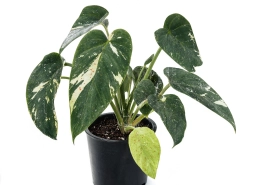
 ⚠ Moderate
Cucumber mosaic virus mottles leaves with irregular yellow-green patches and distortion, stunting the plant — an incurable, aphid-vectored disease with a vast host range.
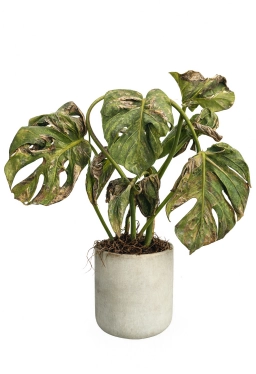
Cucumber Mosaic Virus — Mottling & Distortion
Commonly affects: Philodendron spp., Anthurium spp., Syngonium podophyllum, ornamental aroids
Leaves show a patchy mosaic of yellow and green, sometimes with ring patterns, line patterns, or puckering and distortion of the leaf blade. Affected plants are often stunted, with reduced leaf size and diminished vigour. The mottling is irregular and persists in every new leaf, separating it from transient nutrient deficiencies.
The short answer
Leaves with a mottled patchwork of light and dark green, often puckered or distorted, alongside stunted growth and misshapen fruit, indicate a mosaic virus. It has no cure and no treatment. The plant should be removed to stop aphids carrying it to healthy plants, and hands and tools should be washed afterwards — some of these viruses transmit by touch alone.
Confirm it before you treat it
- 1Look at the pattern. Mosaic virus produces irregular light and dark green patches across the leaf with no defined edges — quite unlike a spot or a lesion.
- 2Feel the leaf surface. Puckering, blistering or an uneven raised texture alongside the mottling is characteristic.
- 3Check the new growth. Viruses show most strongly on young leaves, which often come out narrow, strappy or distorted.
- 4Look at the fruit. Mottled, warty or misshapen fruit on a plant with mottled leaves is close to conclusive.
- 5Look for aphids. They are the main vector, and finding a colony supports the diagnosis and tells you what to do next.
Potential Causes
- 1Cucumber mosaic virus (CMV) transmitted by aphids in a rapid, non-persistent manner
- 2Propagation from infected parent plants carrying the systemic virus
- 3Mechanical spread through contaminated tools and handling
- 4A very wide host range allowing the virus to move from many ornamental and weed species
Solution Steps
- 1Accept that the virus is incurable; focus on containment and protecting healthy plants.
- 2Isolate the affected plant well away from the rest of the collection.
- 3Implement strict aphid control, since aphids spread CMV extremely efficiently.
- 4Remove nearby weeds and infected ornamentals that can serve as virus reservoirs.
- 5Never propagate from infected material and sterilise tools between plants.
- 6Discard severely affected plants if isolation is impractical or the collection is at risk.
What else looks like this
| Could be | How to tell it apart |
|---|---|
| Nutrient deficiency | Deficiencies follow a consistent pattern relative to the veins and affect leaves by age. Mosaic mottling is irregular and random. |
| Herbicide drift | Twisted, strap-like distorted growth without the light-and-dark mottling, usually affecting several different species at once along one side of the garden. |
| Natural variegation | Stable, symmetrical, present from the start and not accompanied by stunting or distorted fruit. |
| Spider mite stippling | Fine even dots rather than broad patches, with webbing on the undersides. |
| Cold or light stress | Uniform paling that recovers when conditions improve. Virus symptoms never reverse. |
Recovery timeline
- Day 1Confirm as best you can, then remove the plant entirely. There is no treatment and no point waiting.
- Day 1Wash hands and disinfect tools before touching any other plant. Several mosaic viruses transmit mechanically through sap on hands.
- Week 1Control aphids on the remaining plants — they are how it reached this one and how it reaches the next.
- Weeks 2–4Watch neighbours for early mottling on new growth. Symptoms take a couple of weeks to appear after infection.
- Next seasonClear perennial weeds, which host both the virus and the aphids over winter, and buy resistant varieties where they exist.
If you do nothing
The plant survives but never performs — growth stays stunted, fruit is misshapen and sparse, and quality is poor. The real damage is that it becomes a permanent reservoir: every aphid that feeds on it carries the virus to healthy plants, and cucumber mosaic virus in particular has an extremely wide host range, so it moves between vegetables, ornamentals and weeds freely. One tolerated plant can infect a whole garden over a season.
Common mistakes
- Trying to treat it. Nothing available cures a plant virus. Time spent on sprays is time the aphids spend spreading it.
- Handling the affected plant and then healthy ones. Sap on your hands transmits several of these viruses directly.
- Composting the plant. Some of these viruses persist in debris and in perennial weed roots.
- Mistaking it for a deficiency and feeding. Feeding produces more infected growth and nothing else.
- Ignoring weeds around the bed. They are the overwintering reservoir, and clearing them does more for next season than anything done to the crop.
Prevention Tip
CMV has an enormous host range, so keep the grow area free of weeds and check incoming plants carefully. Rigorous aphid control and tool sterilisation are the practical defences, since the virus cannot be treated once present.
Questions people actually ask
- Can the plant be cured?
- No. There is no cure for a plant virus at any scale, home or commercial. Removal is the only response.
- Is the fruit safe to eat?
- Yes — plant viruses do not affect humans. The fruit is often misshapen and of poor quality, but it is not harmful.
- How did it get in?
- Usually aphids, sometimes infected seed or transplants, and sometimes on hands and tools from another infected plant.
- Can I save seed?
- No. Several mosaic viruses are seed-transmitted, and saved seed carries the problem forward.
- Will it survive in the soil?
- Not generally in soil itself, but it persists in living perennial weed roots and in undecayed debris, which is why clearing those matters.
Related Issues to Explore

Dasheen Mosaic Virus — DsMV in Aroids
The classic aroid mosaic virus — both DsMV and CMV are incurable, aphid-spread, and managed through vector control and strict sanitation.
Read guide
Tomato Spotted Wilt & Ringspot — Thrips-Vectored Virus
Another incurable plant virus, but vectored by thrips rather than aphids — both are prevented by controlling the insect vector.
Read guide
Interveinal Chlorosis — Iron or Magnesium Deficiency
Viral mottling is sometimes mistaken for nutrient deficiency — chlorosis follows a vein-related pattern and corrects with feeding, unlike permanent viral mosaic.
Read guideMore Colour Changes Problems
See all →
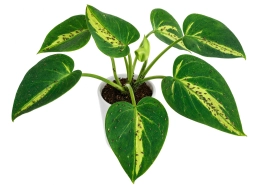
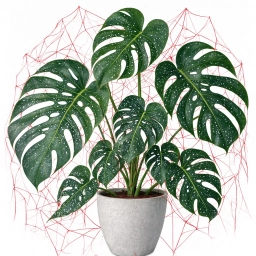
Real Philodendron grow diaries
Growers on DailyGrowers log their plant week by week, one photo at a time. Here's how theirs are going.
 1 week
Philodendron propagation
@thepepperguy
 1 week
my Philodendron ordatum growth🪴🪴🪴
@spongyboby
 1 week
Propagation of Philodendron florida beauty
@tahibonursery
Growing Philodendron too? Start your own diary. It's free and takes 2 minutes.
Start my Philodendron diary →