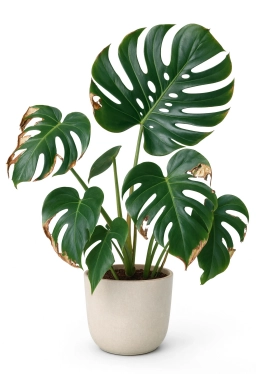
 ⚠ Critical
Broad mites are invisible to the eye; the diagnosis rests on the signature damage — hardened, downward-curled, bronzed new growth with no webbing present.
Broad Mites — Polyphagotarsonemus latus
Commonly affects: Anthurium spp., Alocasia amazonica, Philodendron erubescens, Monstera adansonii
New growth emerges severely distorted, hardened, downward-curled, and often bronzed or coppery, with a stunted, brittle texture. Unlike spider mites, broad mites produce no webbing and are invisible to the naked eye — diagnosis is made from the characteristic damage to emerging leaves. Affected growing points may abort entirely, and the plant appears chronically stunted despite good conditions.
Potential Causes
- 1Microscopic mites feeding on the meristem and unfurling leaves, injecting growth-distorting toxins
- 2Warm, humid conditions accelerating their extremely rapid life cycle
- 3Introduction on infested new plants — damage often appears weeks after acquisition
- 4Misdiagnosis as nutrient or viral problems delaying effective treatment
Solution Steps
- 1Isolate the plant immediately — broad mites spread readily and are easily transferred on hands and tools.
- 2Remove and discard the most severely distorted growing tips to reduce the mite population concentrated there.
- 3Treat with a miticide effective against tarsonemid mites, or with sulphur-based or abamectin products, coating new growth thoroughly.
- 4A hot-water dip (immersing foliage at ~43–45°C for 15 minutes) is a non-chemical option that kills broad mites without harming most aroids.
- 5Repeat chemical treatment every 5–7 days for three cycles, focusing on the meristem and newest leaves.
- 6Monitor new growth for 3–4 weeks — recovery is confirmed only when fresh leaves emerge undistorted.
Prevention Tip
Because broad mites are invisible, treat unexplained, persistent distortion of new growth as a mite problem until proven otherwise — especially on Anthurium and Alocasia, which are highly susceptible. Strict quarantine of new plants is the single best defence.
Related Issues to Explore

Spider Mite Infestation — Tetranychus urticae
Broad mites and spider mites are distinguished by damage pattern — spider mites stipple and web mature leaves, broad mites distort and bronze new growth.
Read guide
Calcium Deficiency — Deformed New Leaves
Both broad mites and calcium deficiency deform emerging leaves — rule out the invisible pest before assuming the cause is nutritional.
Read guide
Dasheen Mosaic Virus — DsMV in Aroids
Distorted, irregular new growth can stem from either broad mites or viral infection — a hand-lens inspection and treatment trial distinguishes the two.
Read guideMore Pest Infestations Problems
See all →
Real Monstera grow diaries
Growers on DailyGrowers log their plant week by week, one photo at a time. Here's how theirs are going.
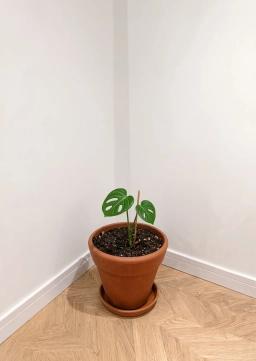
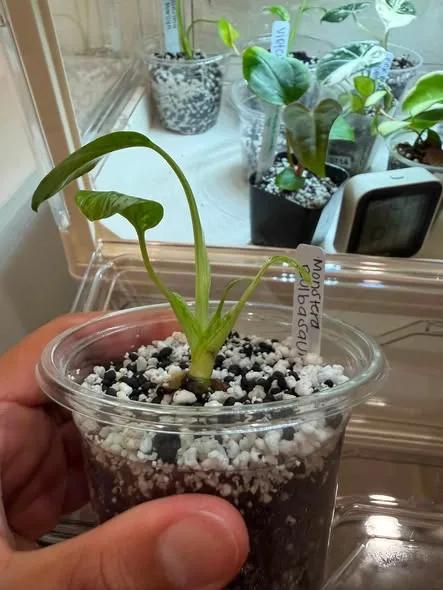
Growing Monstera too? Start your own diary. It's free and takes 2 minutes.
Start my Monstera diary →