 ⚠ Moderate
Calcium is immobile, so deficiency strikes the newest leaves specifically — hooked, deformed, and necrotic at the margins — while older foliage stays normal.
Calcium Deficiency — Deformed New Leaves
Commonly affects: Anthurium andraeanum, Alocasia spp., Philodendron spp., Monstera deliciosa
New leaves emerge distorted, hooked, or with dead, brown patches and necrotic margins, and growing tips may die back. Because calcium is immobile and cannot be relocated within the plant, symptoms appear specifically on the newest growth while older leaves remain normal. Affected leaves are often crinkled or fail to expand evenly.
Potential Causes
- 1Low calcium availability in soft-water or inert, calcium-poor substrates
- 2Erratic watering disrupting the steady transpiration stream that carries calcium to new growth
- 3Low humidity reducing transpiration and thus calcium delivery to leaf margins
- 4Excess potassium or magnesium competing with calcium uptake
Solution Steps
- 1Supply calcium via a cal-mag supplement or a fertiliser containing calcium at the correct dilution.
- 2Maintain consistent substrate moisture so the transpiration stream can carry calcium to new growth.
- 3Ensure adequate humidity, which supports the transpiration that distributes calcium.
- 4Avoid over-application of potassium and magnesium feeds that compete with calcium.
- 5If using pure rainwater or RO water, add a cal-mag supplement, as these waters lack calcium.
- 6Expect new growth after correction to be normal; deformed leaves will not recover.
Prevention Tip
Steady watering and humidity matter as much as calcium supply, because calcium moves only with the transpiration stream and cannot be relocated once deposited. Growers using rainwater or RO water should routinely add a cal-mag supplement.
Related Issues to Explore

Broad Mites — Polyphagotarsonemus latus
Both deform new growth — broad mites bronze and harden it, while calcium deficiency causes hooked, necrotic margins; rule out the invisible mite first.
Read guide
Crinkled New Leaves & Stuck Leaf Syndrome
Low humidity and calcium deficiency both deform emerging leaves and are linked through transpiration — improving both often resolves the problem.
Read guide
Interveinal Chlorosis — Iron or Magnesium Deficiency
A related nutrient disorder — immobile-nutrient deficiencies (calcium, iron) show on new leaves, while mobile ones show on old leaves.
Read guideMore Growth Issues Problems
See all →
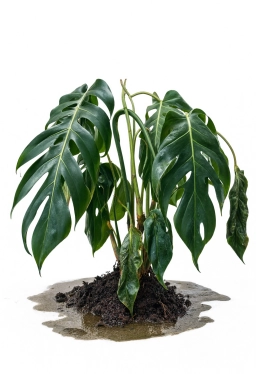
Real Monstera grow diaries
Growers on DailyGrowers log their plant week by week, one photo at a time. Here's how theirs are going.
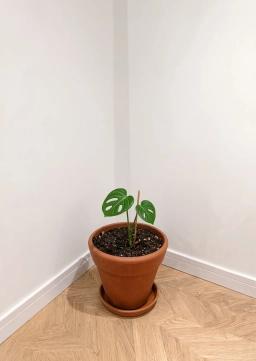
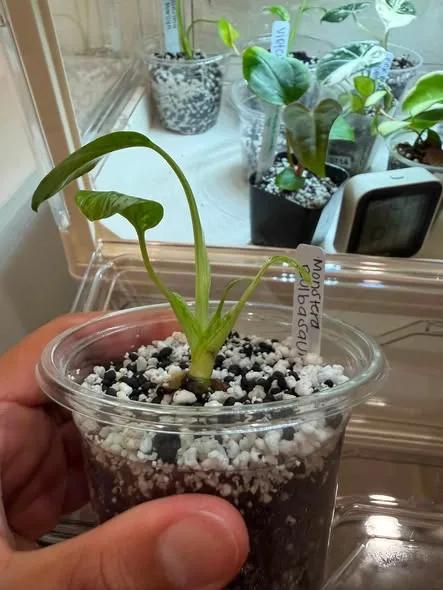
Growing Monstera too? Start your own diary. It's free and takes 2 minutes.
Start my Monstera diary →