 ⚠ Critical
Botrytis colonises the moisture trapped inside tightly rolled Calathea spears — the rot progresses from the tip inward, collapsing the emerging leaf before it can unfurl.
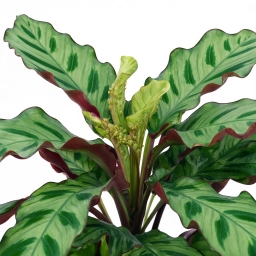
Calathea New Growth Dying — Unfurling Leaves Rotting Before Opening
Commonly affects: Calathea orbifolia, Calathea ornata, Calathea roseopicta
New leaves emerge as tightly rolled spears but fail to unfurl fully — the tips turn brown and mushy, the leaf sticks together, or the emerging shoot collapses before opening. In severe cases, the growth point itself rots, halting all new growth indefinitely. This condition differs from general tip burn as it exclusively affects developing growth that has not yet unfurled.
Potential Causes
- 1Water trapped inside tightly rolled emerging leaves, creating a microenvironment for Botrytis or bacterial rot to establish
- 2Low temperatures below 16°C slowing cell division and weakening developing tissue
- 3Overhead misting directly into the centre of the rosette, where water accumulates around emerging shoots
- 4Excessively compact new growth medium preventing moisture from escaping the rolled leaf's interior
Solution Steps
- 1Immediately remove all visibly rotted emerging growth with clean scissors, cutting the affected spear at its base. Dispose in a sealed bag.
- 2Stop all overhead misting — water only at soil level and never allow water to pool in the centre of the plant.
- 3Move the plant to a warmer location (minimum 18°C, ideally 20–24°C) — low temperatures dramatically slow the unfurling rate and extend the window during which rot can develop.
- 4Apply a dilute copper-based fungicide or diluted hydrogen peroxide (3%, 1:10 with water) to the growing point to eliminate residual fungal spores.
- 5Improve air circulation with a small fan on a low setting angled nearby — moving air accelerates drying of trapped moisture.
- 6If the main growing crown is affected, take stem cuttings or separate healthy side rhizome divisions before the rot spreads further.
Prevention Tip
Water Calathea from below (by standing the pot in a shallow dish for 20–30 minutes) rather than overhead — this eliminates water accumulation in the rosette while delivering moisture directly to the root zone.
Related Issues to Explore

Botrytis Grey Mould — Botrytis cinerea Infection
Botrytis is the primary fungal pathogen responsible for new growth rot in humid conditions — its spores persist in soil and on plant debris.
Read guideStem & Crown Rot — Botrytis & Fusarium spp.
Untreated growth point rot quickly progresses to the crown — monitor the stem base carefully if new growth continues to collapse.
Read guide
Low Humidity — Deformed and Desiccated New Leaves
Low humidity stresses developing tissue before unfurling — deformed growth often co-occurs with rot in plants experiencing both humidity and ventilation problems.
Read guide