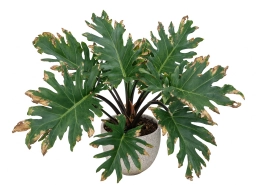
 ⚠ Minor
A confusing mix of crispy edges, yellowing, and intermittent wilting often reflects a boom-bust watering cycle that swings roots between drought and saturation.
Inconsistent Watering — Boom-Bust Cycle
Commonly affects: Calathea, Spathiphyllum, Alocasia spp., Philodendron spp., Anthurium
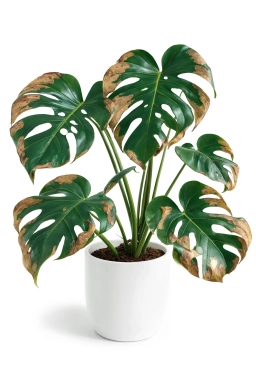
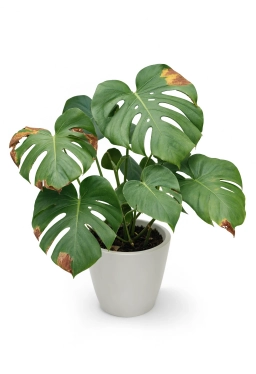
The plant shows a mixture of symptoms — some crispy edges, some yellowing, intermittent wilting, and uneven growth — reflecting alternating periods of drought and saturation. Roots are repeatedly stressed by swinging between bone-dry and waterlogged, never settling into a stable moisture range. Sensitive aroids and Calatheas are especially intolerant of this seesaw.
Potential Causes
- 1Watering only when the plant visibly wilts, then overcompensating with too much
- 2No consistent routine for checking substrate moisture
- 3Long gaps followed by heavy watering, swinging the root zone between extremes
- 4Substrate that drains or dries unevenly, exaggerating the swings
Solution Steps
- 1Establish a habit of checking substrate moisture (by finger or pot weight) on a regular cadence rather than waiting for wilting.
- 2Water thoroughly each time so the whole root ball is moistened, then allow the appropriate dry-down before the next watering.
- 3Use a moisture meter if judging by feel has been unreliable.
- 4Choose a well-structured, evenly draining aroid mix that wets and dries predictably.
- 5Keep conditions (light, temperature, airflow) reasonably stable so water demand is consistent.
- 6Log waterings briefly to build an accurate picture of the plant's real rhythm.
Prevention Tip
Consistency matters more than frequency — aroids tolerate a range of moisture, but not violent swings between drought and saturation. A simple routine of checking before watering, and watering thoroughly when you do, smooths out the cycle.
Related Issues to Explore

Underwatering & Chronic Drought Stress
The drought half of the boom-bust cycle — a consistent routine prevents the recurring dry-out that stresses roots.
Read guide
Yellowing Leaves — Overwatering Stress
The saturation half of the cycle — overcompensating after drought tips the plant into overwatering and its own set of symptoms.
Read guide
Brown, Crispy Leaf Tips — Low Humidity & Salt Stress
Erratic watering is explicitly a contributor to crispy tips — steadying the watering routine is part of the fix.
Read guideMore Watering Problems Problems
See all →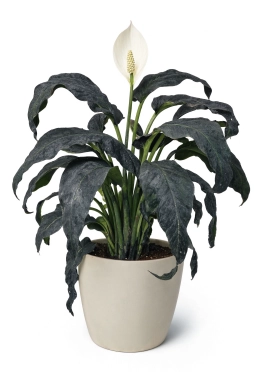

Real Philodendron grow diaries
Growers on DailyGrowers log their plant week by week, one photo at a time. Here's how theirs are going.
 1 week
Philodendron propagation
@thepepperguy
 1 week
my Philodendron ordatum growth🪴🪴🪴
@spongyboby
 1 week
Propagation of Philodendron florida beauty
@tahibonursery
Growing Philodendron too? Start your own diary. It's free and takes 2 minutes.
Start my Philodendron diary →