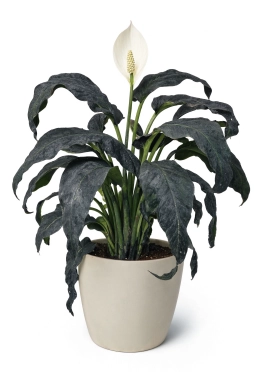
 ⚠ Moderate
A pale crust on the substrate surface and pot rim marks accumulated minerals and fertiliser salts that raise salinity and impair water uptake — cleared by thorough flushing.
Salt Crust & EC Build-Up in Substrate
Commonly affects: Most aroids — Monstera, Philodendron, Anthurium, Calathea, Alocasia
A white or yellowish crust accumulates on the substrate surface, pot rim, and drainage holes, accompanied by browning leaf tips and margins and a general loss of vigour. The build-up comes from dissolved minerals in tap water and fertiliser residue concentrating over time as water evaporates. High substrate salinity (electrical conductivity) impairs the roots' ability to take up water.
Potential Causes
- 1Hard tap water depositing minerals with every watering
- 2Repeated fertilising without periodic flushing of the substrate
- 3Watering little and often, so salts concentrate rather than leach away
- 4Poor drainage preventing salts from flushing out the bottom of the pot
Solution Steps
- 1Flush the substrate thoroughly — water slowly until it runs freely from the drainage holes for several minutes to leach out salts.
- 2Repeat the flush periodically (monthly during heavy feeding) to keep salinity low.
- 3Scrape off and replace any heavily crusted top layer of substrate.
- 4Switch to filtered, distilled, or rainwater if tap water is high in dissolved solids (TDS > 200 ppm).
- 5Always water generously enough that some drains away, rather than little and often.
- 6Ensure pots drain freely so flushed salts can actually exit.
Prevention Tip
Water thoroughly so excess drains away rather than little-and-often, and flush the substrate monthly during the feeding season — this carries salts out before they accumulate. Low-mineral water (filtered or rain) prevents the crust forming in the first place.
Related Issues to Explore

Fertiliser Burn — Nutrient Toxicity
Salt build-up is the chronic version of fertiliser burn — both stem from excess dissolved salts and are relieved by flushing the substrate.
Read guide
Brown, Crispy Leaf Tips — Low Humidity & Salt Stress
Salt accumulation is a primary driver of crispy tips — flushing the substrate and using low-mineral water resolves both.
Read guide
Chlorine & Fluoride Tip Toxicity
Tap-water minerals cause both salt build-up and chlorine/fluoride toxicity — switching to low-mineral water addresses the shared source.
Read guideMore Watering Problems Problems
See all →
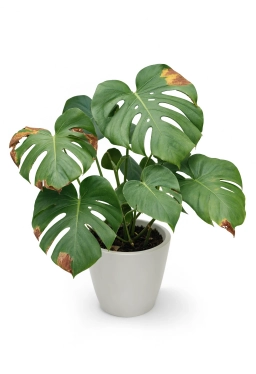
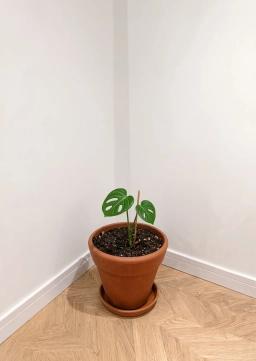
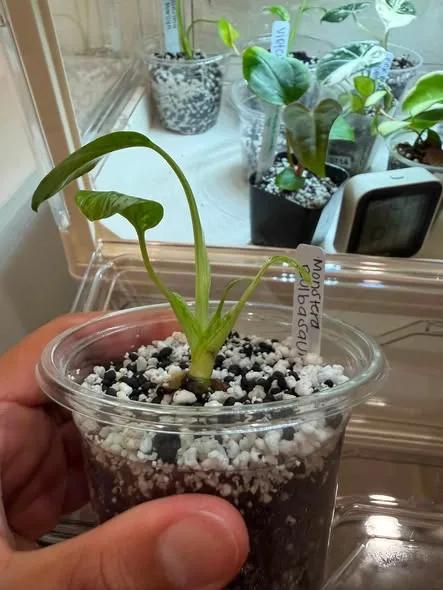
Real Monstera grow diaries
Growers on DailyGrowers log their plant week by week, one photo at a time. Here's how theirs are going.
Growing Monstera too? Start your own diary. It's free and takes 2 minutes.
Start my Monstera diary →More rare plants and collector grows every day on Facebook: follow Exotics plants