

Plant Clinic · Category
Watering Problems
Overwatering, underwatering, drought stress, and wilting from irrigation issues.
Watering errors are the most common cause of houseplant decline. Both overwatering and underwatering cause wilting and yellowing — often making them hard to distinguish without examining the substrate and roots. This guide covers the full spectrum of watering-related problems and how to recalibrate your watering routine.
All Watering Problems
 ⚠ Moderate
Most aroids — Monstera
Salt Crust & EC Build-Up in Substrate
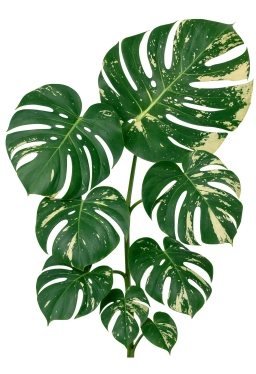
A white or yellowish crust accumulates on the substrate surface, pot rim, and drainage holes, accompanied by browning leaf tips and margins and a general loss of vigour. The build-up comes from dissolved minerals in tap water and fertiliser residue concentrating over time as water evaporates. High substrate salinity (electrical conductivity) impairs the roots' ability to take up water.
 ⚠ Moderate
Monstera deliciosa
Underwatering & Chronic Drought Stress
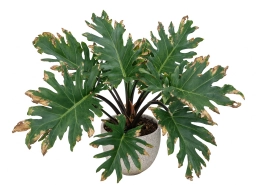
Leaves wilt, droop, and develop dry, crispy brown edges, and the whole plant may look limp and dull. The substrate is bone-dry, often pulling away from the sides of the pot, and feels very light when lifted. Unlike overwatering, the leaves are crisp rather than soft, and the plant typically perks up within hours of thorough watering.
 ⚠ Minor
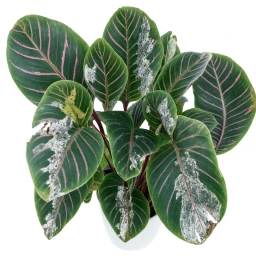
Calathea
Inconsistent Watering — Boom-Bust Cycle
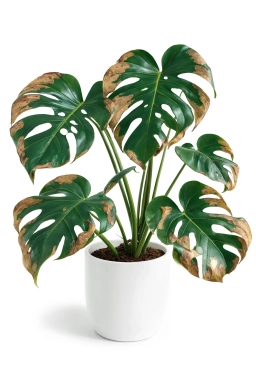
The plant shows a mixture of symptoms — some crispy edges, some yellowing, intermittent wilting, and uneven growth — reflecting alternating periods of drought and saturation. Roots are repeatedly stressed by swinging between bone-dry and waterlogged, never settling into a stable moisture range. Sensitive aroids and Calatheas are especially intolerant of this seesaw.
 ⚠ Moderate
Aroids in peat- or coir-heavy mixes — Monstera
Hydrophobic Substrate — Water Channeling
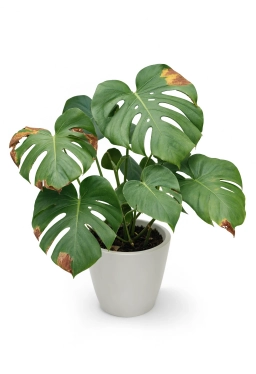
Water poured onto the substrate runs straight down the sides of the pot and out the drainage holes within seconds, leaving the root ball dry inside. The plant shows drought symptoms despite apparently being watered, and the substrate surface may look dry and dusty or have shrunk away from the pot wall. Peat- and coir-based mixes that have dried out completely become water-repellent.
 ⚠ Minor
Epipremnum aureum — all Pothos cultivars
Pothos Sudden Wilting — Underwatering, Root Bound & Heat Stress
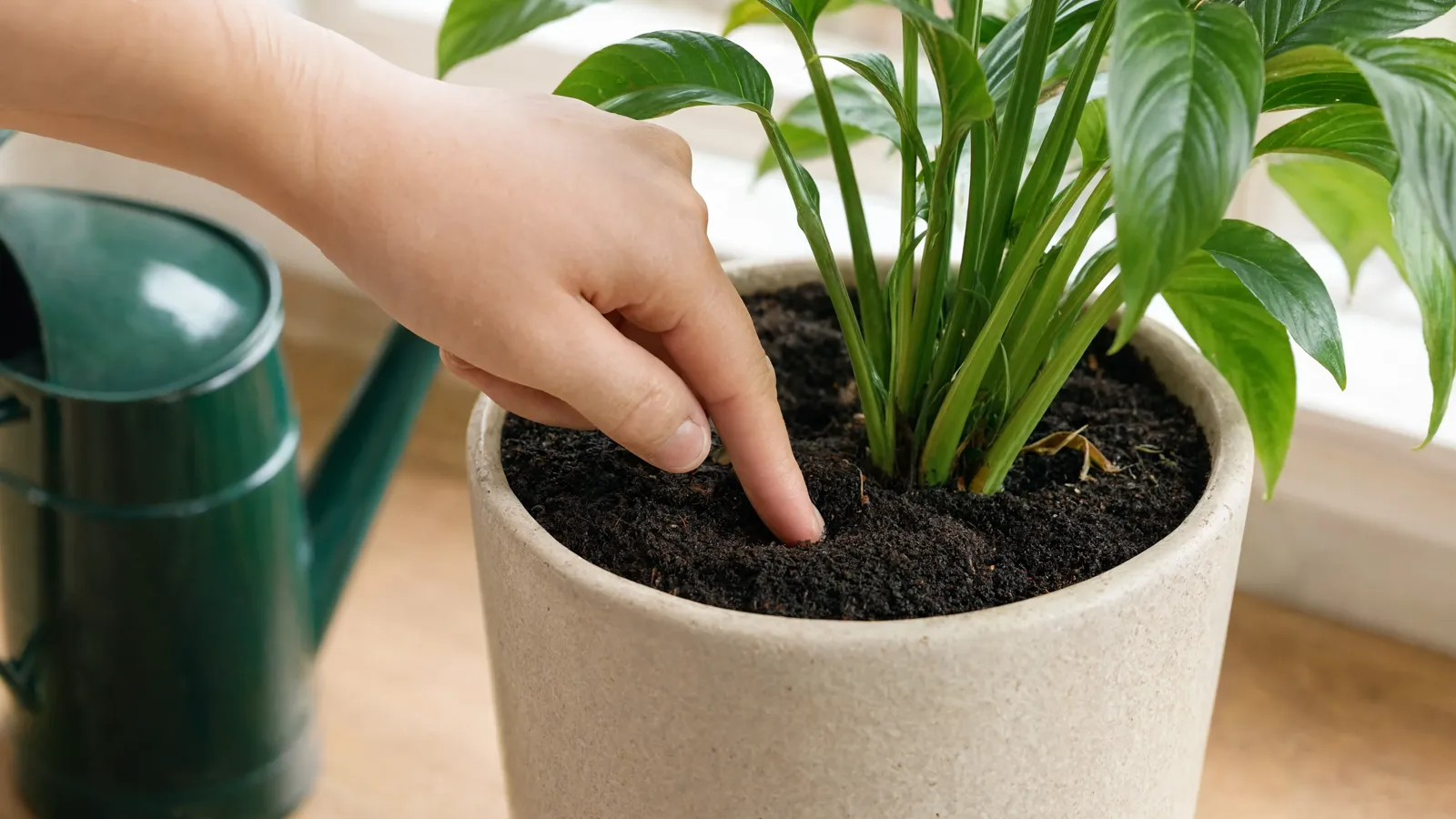
Leaves and stems collapse and droop dramatically, the substrate is bone dry and has pulled away from the pot edges, and the plant fails to recover to full turgidity even after watering. Alternatively, the substrate is moist but the plant still wilts — indicating root damage that prevents water uptake. Pothos has a distinctive wilting behaviour: it droops dramatically and rapidly when thirsty but typically recovers fully within 2-4 hours of thorough watering, making wilting a reliable watering indicator rather than a crisis signal — unless the substrate is already moist.
 ⚠ Minor
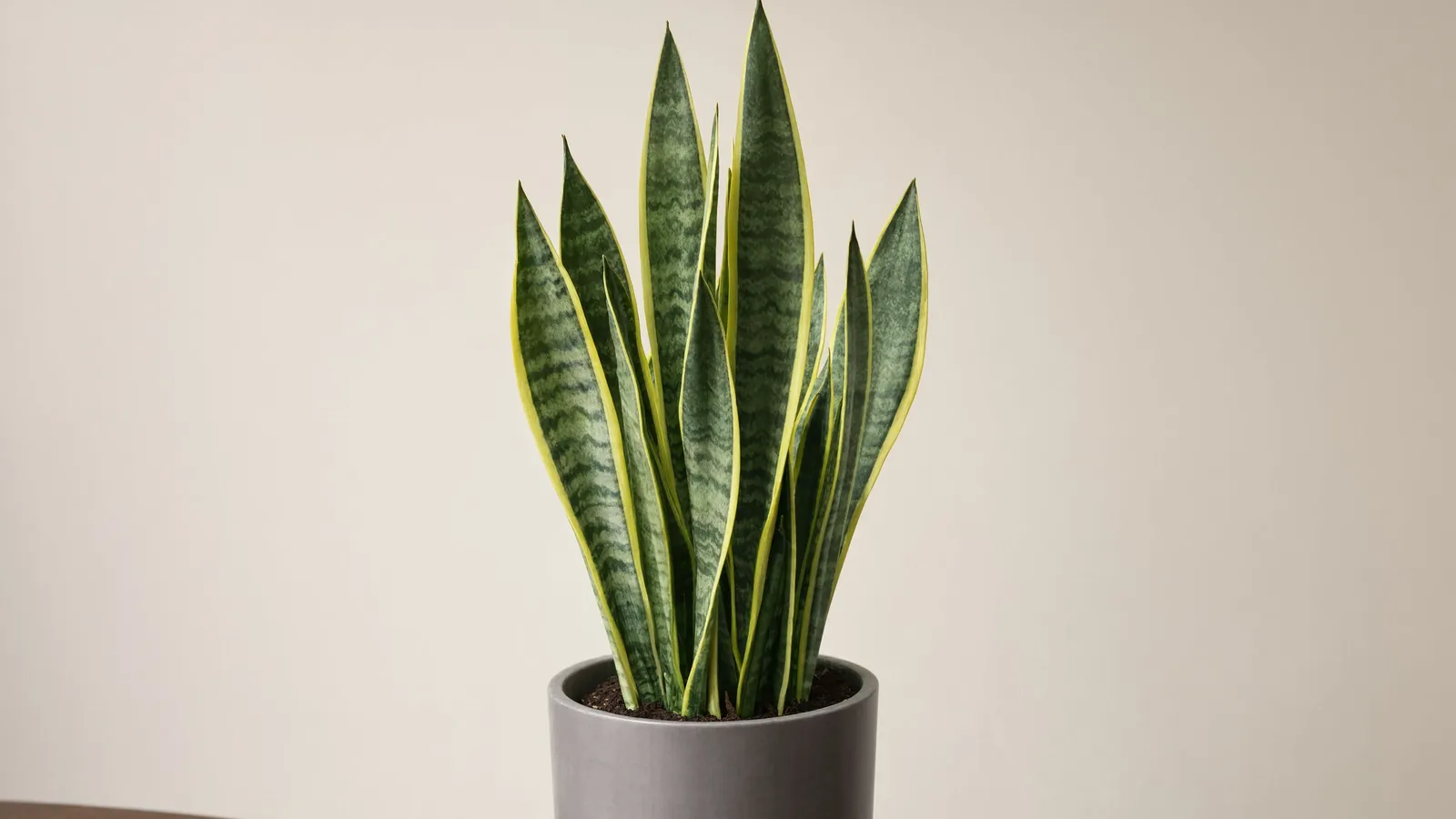
Sansevieria trifasciata / Dracaena trifasciata — all cultivars
Snake Plant Wrinkled or Thin Leaves — Severe Underwatering & Dehydration
Upright leaves develop vertical wrinkles or furrows along their length and feel thin and flexible rather than firm and rigid. The substrate is completely dry and the pot feels very light. This represents the opposite problem from overwatering: the plant's thick leaves store water internally (which is why the plant is so drought-tolerant), and when drought is extreme and prolonged, they deplete their own reserves and show these characteristic wrinkle lines as the internal cells lose turgor. Unlike most houseplants, snake plants can recover from extreme underwatering without any lasting damage.
 ⚠ Moderate
Mentha spicata
Wilting Mint Despite Regular Watering
Leaves droop and look limp even though the soil feels adequately moist, and the plant doesn't perk back up quickly after watering the way underwatered mint typically does.
⚠ ModeratePassiflora edulis (Passion Fruit)
Wilting Passion Fruit Vine Despite Watering
Leaves droop and look limp even though the soil feels adequately moist, and the vine doesn't recover quickly after watering as expected.
⚠ ModerateMusa acuminata
Waterlogging Stress in Banana Plants
Leaves yellow and the plant looks generally unwell despite regular watering, with the soil staying visibly wet for extended periods after each watering.
⚠ MinorPhalaenopsis spp. and other Orchidaceae (Orchid)
Understanding Green vs. Silvery Orchid Roots
Growers are often uncertain whether their orchid's root colour indicates a watering problem, since roots visibly change colour between watering and drying out.
⚠ MinorCactaceae (Cactus)
Wrinkling and Shrivelling in Cacti
The cactus body develops visible wrinkles or a shrunken, deflated appearance, most noticeable along its ribs.
⚠ MinorCactaceae (Cactus)
Severe Underwatering in Cacti
The plant becomes significantly shrunken, wrinkled, and lightweight, with growth stalling entirely over an extended dry period.
⚠ CriticalVarious succulents (Crassulaceae
Mushy, Translucent Leaves on Overwatered Succulents
Leaves turn soft, mushy, and translucent, sometimes with a darker, water-soaked appearance, and can detach easily with the slightest touch.
⚠ MinorVarious succulents (Crassulaceae
Shrivelled Leaves From Underwatering in Succulents
Leaves become noticeably thin, wrinkled, and deflated, drawing on the plant's internal water reserves faster than they're replenished.
⚠ ModerateVarious ferns (Polypodiopsida)
Fern Wilting Despite Moist Soil
Fronds droop and wilt even though the soil feels adequately or overly moist to the touch.
⚠ ModerateVarious palms (Arecaceae)
Overwatering and Waterlogging in Palms
Fronds yellow or brown, growth slows, and the plant may develop a generally unhealthy appearance despite regular watering, with roots showing rot when checked.
⚠ ModerateVarious palms (Arecaceae)
Underwatering and Drought Stress in Palms
Fronds droop, develop brown edges, or fold inward, and overall growth stalls during an extended dry period.
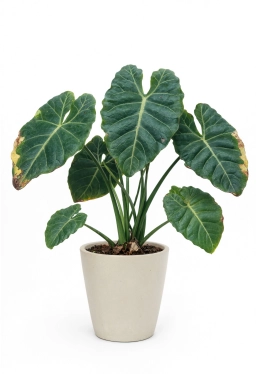
⚠ MinorColocasia esculenta (Taro / Elephant Ear)
Drooping Leaves on Colocasia
Large leaves droop or hang limply, sometimes recovering by evening or after watering, sometimes not.
⚠ MinorAloe vera (Aloe Vera)
Wrinkling and Shrivelling in Aloe Vera
Leaves develop visible wrinkles or a shrunken, deflated appearance, drawing on the plant's internal water reserves faster than they're replenished.
⚠ ModerateAloe vera (Aloe Vera)
Foul Soil Smell From Overwatered Aloe Vera
The potting soil develops an unpleasant, sour, or rotten smell, often noticed before any visible above-ground symptoms appear.
⚠ ModerateZamioculcas zamiifolia (ZZ Plant)
Drooping, Soft Stems on ZZ Plant
Stems that are normally upright and rigid become soft, floppy, and start drooping toward the pot's edge.
⚠ MinorChlorophytum comosum (Spider Plant)
Limp, Drooping Leaves on Spider Plant
Leaves lose their normal arching firmness and droop or flop, sometimes recovering after watering and sometimes not.
⚠ ModerateCapsicum annuum
Blossom End Rot in Container-Grown Bell Peppers
Container-grown bell peppers develop blossom end rot more frequently than garden-grown plants, even with apparently attentive care.
⚠ MinorCitrus limon (Lemon Tree)
Lemon Tree Flowers Dropping in Low Humidity
Flowers open but wither and drop quickly without setting fruit, particularly in dry indoor conditions during winter flowering.
Plant-Specific Guides
.webp)
Common Questions
What causes salt crust & ec build-up in substrate?
A white or yellowish crust accumulates on the substrate surface, pot rim, and drainage holes, accompanied by browning leaf tips and margins and a general loss o… Full guide →
What causes underwatering & chronic drought stress?
Leaves wilt, droop, and develop dry, crispy brown edges, and the whole plant may look limp and dull. The substrate is bone-dry, often pulling away from the side… Full guide →
What causes inconsistent watering — boom-bust cycle?
The plant shows a mixture of symptoms — some crispy edges, some yellowing, intermittent wilting, and uneven growth — reflecting alternating periods of drought a… Full guide →
What causes hydrophobic substrate — water channeling?
Water poured onto the substrate runs straight down the sides of the pot and out the drainage holes within seconds, leaving the root ball dry inside. The plant s… Full guide →