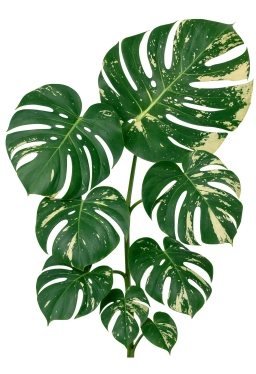
 ⚠ Moderate
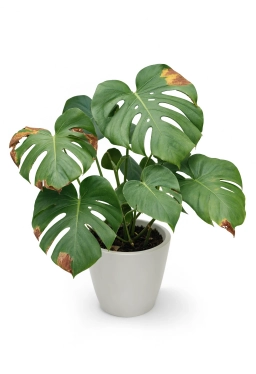
Crisp, drooping leaves with dry edges over a bone-dry, shrunken root ball signal underwatering — distinguished from overwatering by the crisp rather than soft tissue.
Underwatering & Chronic Drought Stress
Commonly affects: Monstera deliciosa, Philodendron spp., Syngonium podophyllum, Epipremnum
Leaves wilt, droop, and develop dry, crispy brown edges, and the whole plant may look limp and dull. The substrate is bone-dry, often pulling away from the sides of the pot, and feels very light when lifted. Unlike overwatering, the leaves are crisp rather than soft, and the plant typically perks up within hours of thorough watering.
Potential Causes
- 1Infrequent watering allowing the root ball to dry out completely
- 2A root-bound plant whose roots fill the pot and dry out rapidly
- 3Hydrophobic substrate repelling water so it runs off rather than soaking in
- 4Warm, bright, or breezy conditions raising water demand beyond the watering frequency
Solution Steps
- 1Water thoroughly — if the substrate has pulled away from the pot, bottom-water by standing the pot in water for 20–30 minutes to fully rehydrate the root ball.
- 2Follow with a top watering until water runs freely from the drainage holes.
- 3Trim crispy, dead leaf edges once the plant has rehydrated and stabilised.
- 4Check whether the plant is root-bound and repot if roots have filled the pot.
- 5Establish a consistent check-and-water routine based on substrate dryness, not a rigid calendar.
- 6Increase watering frequency during warm, bright, or actively growing periods.
Prevention Tip
Check the substrate by weight or with a finger rather than relying on a fixed schedule — most aroids want the top few centimetres dry before the next thorough watering, not bone-dry throughout. A root-bound plant dries out fast and is a sign it is time to repot.
Related Issues to Explore

Hydrophobic Substrate — Water Channeling
A dried-out mix often turns hydrophobic, repelling water so the plant stays dry despite watering — bottom-watering rehydrates both.
Read guide
Inconsistent Watering — Boom-Bust Cycle
Chronic underwatering is often part of an erratic boom-bust cycle — establishing a consistent routine prevents both extremes.
Read guide
Brown, Crispy Leaf Tips — Low Humidity & Salt Stress
Both produce dry, crispy foliage — underwatering wilts the whole plant, while humidity tip burn affects only the margins of otherwise turgid leaves.
Read guideMore Watering Problems Problems
See all →
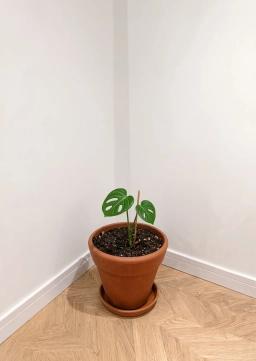
Real Monstera grow diaries
Growers on DailyGrowers log their plant week by week, one photo at a time. Here's how theirs are going.
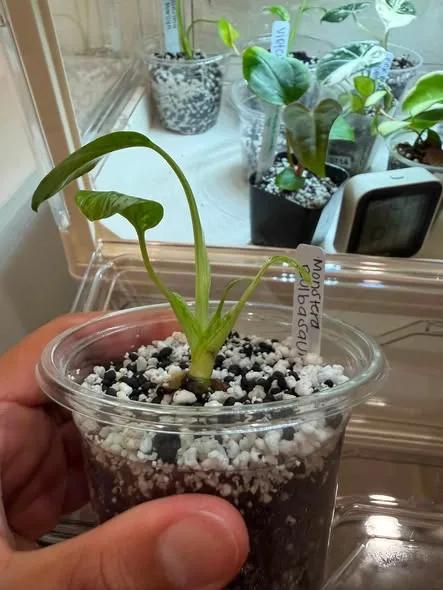
Growing Monstera too? Start your own diary. It's free and takes 2 minutes.
Start my Monstera diary →