 ⚠ Critical
Pseudococcus mealybugs shelter in protected leaf axils and stem joints, secreting a white waxy coat and honeydew that fuels secondary sooty mould.
Mealybug Infestation — Pseudococcus spp.
Commonly affects: Philodendron hederaceum, Syngonium podophyllum, Monstera adansonii, Anthurium clarinervium
White, cottony, waxy masses appear in leaf axils, along stems, and on the undersides of leaves near the veins. Affected plants show stunted growth and yellowing, and a sticky honeydew residue accumulates on lower leaves, often developing black sooty mould. Mealybugs are slow-moving, soft-bodied insects coated in a protective powdery wax that repels water and many contact sprays.
The short answer
White cottony clusters tucked into leaf joints and along stems are mealybugs. The waxy coating repels water and most sprays, which is why they persist — you have to touch them. Dab each one with alcohol on a cotton bud, then treat the whole plant, and check every week for a month, because the crawlers and the egg sacs hidden in the root ball are what bring them back.
Confirm it before you treat it
- 1Look in the joints, not on the leaf faces. Mealybugs sit where leaf meets stem, in new growth, and under the pot rim — anywhere tight and sheltered.
- 2Touch one. A mealybug crushes into an orange-brown smear; a mineral deposit or fungal spot does not.
- 3Check for sticky residue and black sooty mould on the leaves below. Both are honeydew, and both indicate the infestation is well established.
- 4Slide the plant out and check the roots. Root mealybugs are a separate, far more persistent problem and appear as white powdery patches on the root ball.
- 5Inspect every plant nearby and the shelf or windowsill itself. Crawlers move a surprising distance and hide in cracks between treatments.
Potential Causes
- 1Introduction of infested plants without quarantine — the most common entry route
- 2Warm temperatures and lush, nitrogen-rich new growth favouring rapid reproduction
- 3Crowded collections allowing crawlers to migrate between touching leaves
- 4Hidden egg sacs in leaf axils and on roots surviving spot treatments
Solution Steps
- 1Isolate the plant and remove visible colonies by dabbing each insect with a cotton swab dipped in 70% isopropyl alcohol — this dissolves the protective wax on contact.
- 2Follow with a thorough spray of insecticidal soap or neem oil solution, coating leaf axils, stems, and undersides where colonies hide.
- 3Repeat the alcohol-and-spray treatment every 5–7 days for at least three weeks to catch newly hatched crawlers.
- 4Inspect the root zone — if mealybugs are present on roots, unpot, rinse, and treat with a systemic insecticide drench.
- 5Wipe away sooty mould with a damp cloth once the honeydew source is eliminated.
- 6Discard heavily infested, weak plants rather than risk spreading to the wider collection.
What else looks like this
| Could be | How to tell it apart |
|---|---|
| Powdery mildew | A flat film across the leaf surface, not discrete lumps in joints. Mildew smears when rubbed; a mealybug crushes. |
| Woolly aphids | Very similar in appearance but found on woody stems and usually outdoors. Treatment is much the same, so a misidentification here matters little. |
| Scale insects | Hard, flat, immobile brown discs rather than soft white fluff. Scale needs scraping; mealybugs wipe away. |
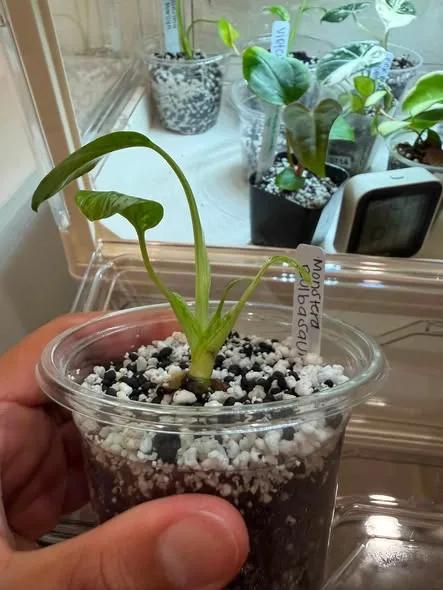
| Perlite or fertiliser granules | Sits on the substrate, not on the plant, and does not crush wet or coloured. |
| Fungus gnat larvae in the mix | In the soil rather than on stems, translucent rather than white and waxy, with flies present. |
Recovery timeline
- Day 1Isolate the plant and remove every visible insect by hand with alcohol on a cotton bud, then treat the whole plant. Manual removal first is what makes the rest effective.
- Week 1New individuals appear. This is normal — crawlers hatch from eggs the treatment did not reach, and it does not mean the first pass failed.
- Week 2Second full treatment. Numbers should be clearly lower than week one.
- Weeks 3–4Third and fourth checks. Most reinfestations trace back to stopping here, one generation before the population is actually gone.
- Weeks 6–8If nothing has appeared for a month, the plant can rejoin the others. Check it again a fortnight after it does.
If you do nothing
Mealybugs feed on sap and excrete honeydew, which grows sooty mould that blocks light from the leaf. Growth deforms, new leaves emerge small and puckered, and the plant weakens progressively. They also spread readily to every plant nearby and are among the hardest houseplant pests to eradicate once established in a collection — an untreated plant reliably becomes an untreated shelf.
Common mistakes
- Spraying without removing them by hand first. The wax coat sheds water, so a spray largely runs off an adult mealybug.
- Stopping when the visible ones are gone. Eggs and crawlers in leaf axils and the root ball hatch over several weeks.
- Missing the roots. Root mealybugs survive every foliar treatment and repopulate the plant from below.
- Returning the plant to the shelf too early. Four clear weeks is the minimum before it stops being a risk to its neighbours.
- Using undiluted alcohol on thin or fuzzy leaves. It damages some species — test one leaf and wait a day before treating the whole plant.
Prevention Tip
Inspect leaf axils and stem joints monthly with a hand lens — mealybugs hide in tight crevices long before colonies become obvious. Avoid over-fertilising with high-nitrogen feeds, as the soft, sappy growth it produces is especially attractive to them.
Questions people actually ask
- Where do they come from?
- Nearly always a newly acquired plant. They are small and well hidden on arrival, and infestations typically become visible two to six weeks after a new plant joins the collection.
- Does alcohol harm the plant?
- Diluted to roughly 70% and applied to the insects rather than sprayed over the whole plant, it is safe on most species. Test first on anything thin-leaved, fuzzy or succulent.
- Do I need to repot?
- Only if you find root mealybugs. If you do, wash the roots clean, discard all the old mix, and sterilise the pot — otherwise they return within weeks.
- Is neem oil enough on its own?
- It works, but slowly, and it needs full coverage into every crevice. Manual removal plus neem is far more reliable than neem alone.
- Should I just throw the plant away?
- Rarely necessary for a plant you value, but reasonable for a cheap, badly infested one in a large collection — the risk to everything else is real and the treatment takes over a month.
Related Issues to Explore

Soft Brown Scale & Honeydew
Scale and mealybugs are closely related sap-feeders that both excrete honeydew — the same alcohol-and-systemic protocol controls both.
Read guide
Root Mealybugs — Hidden Rhizoecus Infestation
Foliar mealybugs frequently have a hidden root-dwelling counterpart — always inspect the root zone when treating a stubborn, recurring infestation.
Read guide
Aphid Colonies — Sap-Sucking on New Growth
Aphids and mealybugs share the honeydew-and-sooty-mould signature — check new growth and undersides to distinguish the two soft-bodied pests.
Read guideMore Pest Infestations Problems
See all →
Real Monstera grow diaries
Growers on DailyGrowers log their plant week by week, one photo at a time. Here's how theirs are going.
Growing Monstera too? Start your own diary. It's free and takes 2 minutes.
Start my Monstera diary →