 ⚠ Moderate
Soft brown scale lines stems and midribs and excretes copious honeydew, leaving foliage sticky and prone to the black sooty mould that often reveals the infestation.
Soft Brown Scale & Honeydew
Commonly affects: Philodendron erubescens, Monstera deliciosa, Syngonium podophyllum, Anthurium spp.
Flat to slightly domed, oval brown bumps appear along stems, petioles, and leaf veins, often in rows following the midrib. Unlike armoured scale, soft scale excretes abundant sticky honeydew, leaving leaves glossy and tacky and frequently coated in black sooty mould. Affected plants show gradual yellowing, leaf drop, and reduced vigour.
Potential Causes
- 1Introduction of infested plants without quarantine
- 2Warm, stable indoor temperatures supporting continuous breeding
- 3Ant activity transporting and protecting scale colonies for their honeydew
- 4Dense canopies and poor inspection allowing colonies to establish unnoticed
Solution Steps
- 1Isolate the plant and remove visible scale by wiping stems and leaves with a cloth dipped in 70% isopropyl alcohol.
- 2Spray remaining surfaces with horticultural oil or insecticidal soap to smother insects and crawlers.
- 3For widespread infestations, apply a systemic insecticide drench that the scale ingests through the phloem.
- 4Clean off sticky honeydew and sooty mould with a damp cloth once the insects are controlled.
- 5Eliminate ant trails, which actively farm and defend soft scale colonies.
- 6Repeat treatments weekly for 4–6 weeks to interrupt successive generations.
Prevention Tip
The honeydew and sooty mould are often noticed before the insects themselves — treat sticky, blackened lower leaves as a prompt to inspect the stems above for scale. Keeping ants out of the grow area removes the colonies' protectors and slows their spread.
Related Issues to Explore

Armoured Scale — Diaspididae on Stems & Petioles
Armoured scale is the drier, honeydew-free counterpart to soft scale — distinguishing them determines whether sooty mould management is also needed.
Read guide
Mealybug Infestation — Pseudococcus spp.
Mealybugs share the honeydew-and-sooty-mould signature with soft scale — both respond to alcohol removal followed by systemic treatment.
Read guide
Powdery Mildew — Erysiphe & Golovinomyces spp.
Black sooty mould from scale honeydew is sometimes confused with surface fungal disease — sooty mould wipes away and sits over honeydew, unlike powdery mildew.
Read guideMore Pest Infestations Problems
See all →

Real Monstera grow diaries
Growers on DailyGrowers log their plant week by week, one photo at a time. Here's how theirs are going.
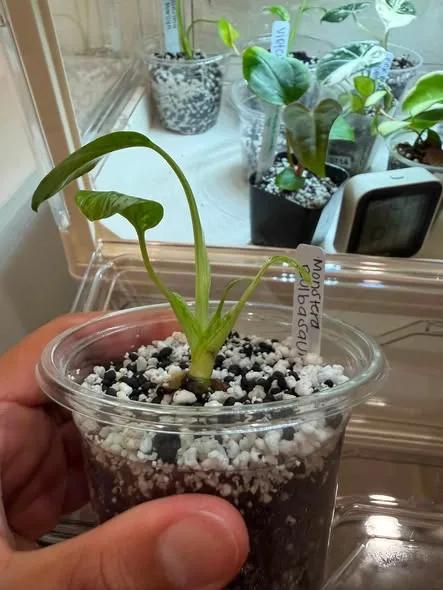
Growing Monstera too? Start your own diary. It's free and takes 2 minutes.
Start my Monstera diary →