

Vine Weevil
Otiorhynchus sulcatus
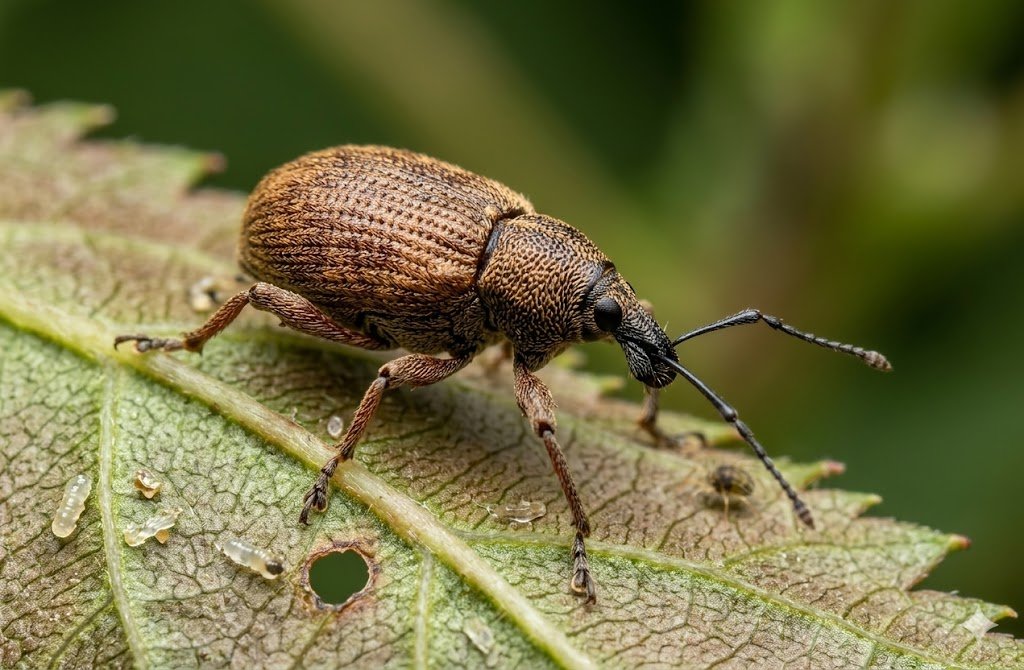
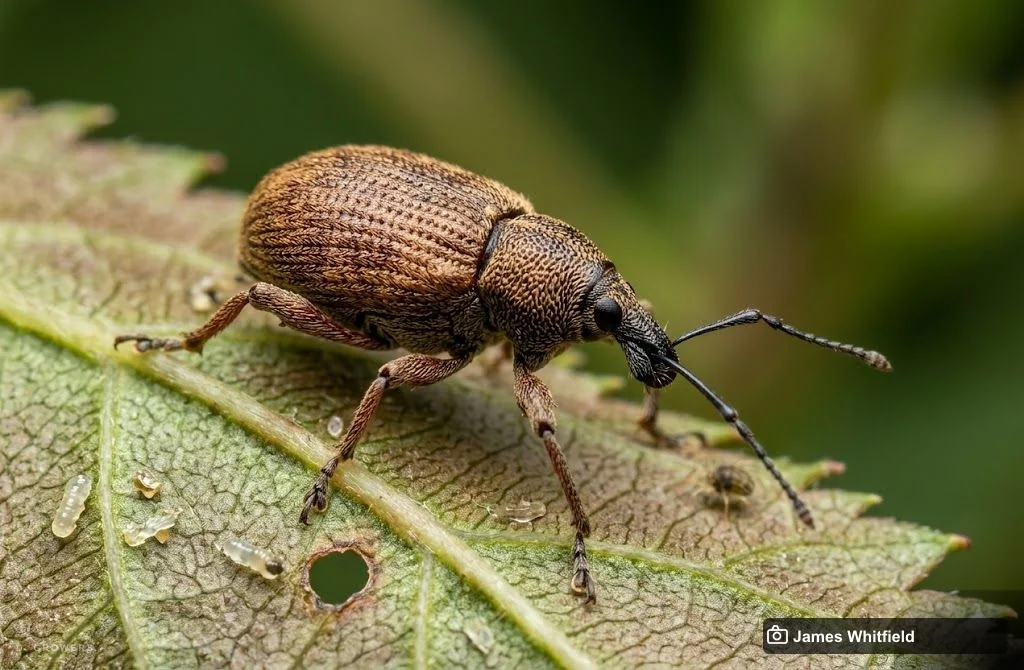
Vine weevil (Otiorhynchus sulcatus) is one of the most destructive plant pests because the damaging stage — the larva — is underground and invisible until the plant suddenly collapses. Adult beetles are dull black, 9 mm long, with a characteristic snout, and feed on leaf margins at night creating scalloped notches. The larvae are the critical stage: C-shaped, cream-coloured, and feed on roots from late summer through winter, potentially destroying the entire root system of container plants.
How to Identify
Adults: dull black beetles found on leaf edges or in substrate at night; characteristic notches cut from leaf margins (not holes). Larvae: C-shaped, 10 mm long, creamy white with a brown head, found in the substrate. Plant suddenly wilts despite adequate watering — removing from pot reveals destroyed or absent root system. Finding larvae when repotting is common.
Life Cycle
All vine weevils are female (parthenogenesis) and lay 500–1500 eggs in substrate through summer. Larvae hatch in 2–3 weeks and feed on roots from late summer through spring. Pupation occurs in the substrate in spring. Adults emerge in late spring/early summer and begin feeding on foliage, then laying eggs. One generation per year.
Visual Identification
Adult Vine Weevil
Root Damage
Treatment Steps
- 1
Apply Steinernema kraussei nematodes as a substrate drench in late summer — most effective against young larvae
- 2
Imidacloprid soil drench is effective against larvae in container plants
- 3
Remove plant from pot, shake off substrate, and hand-pick all visible larvae
- 4
Discard all old substrate and repot in fresh compost — do not reuse contaminated mix
- 5
For adults: hand-pick at night (they are nocturnal) or place sticky traps on pot rims
Prevention
Apply Steinernema kraussei nematodes to substrate in late summer and autumn when larvae are young and vulnerable
Check substrate for larvae during repotting — discard any soil with larvae present
Apply a sticky barrier (Tree Banding Grease) around pot rims to prevent adult access
Inspect leaf margins for characteristic scalloped notching — early adult detection allows treatment before larvae are established
Frequently Asked Questions
How do I know if I have vine weevil?
Look for scalloped notches cut from leaf margins (adult feeding) and sudden plant collapse despite adequate care (larval root destruction). Removing the plant from its pot and finding C-shaped creamy white larvae confirms the diagnosis.
How do I get rid of vine weevil larvae?
Apply Steinernema kraussei nematodes as a soil drench in late summer when larvae are small and vulnerable. Imidacloprid soil drench is also effective. Remove all visible larvae by hand when repotting and discard contaminated substrate.
Plant Problems Caused by Vine Weevil
All pest problems →
Care Guides for Affected Plants
See how growers dealt with Vine Weevil
Browse real grow diaries from the community — treatments, timelines, and results.
Browse community diaries →