


.webp)
Pothos Problems
Epipremnum aureum
The ultimate beginner plant — tolerates low light, drought, and neglect. Pothos trails or climbs vigorously but is vulnerable to overwatering, mealybugs, and variegation loss in dim conditions.
All Pothos Problems
 ⚠ Moderate
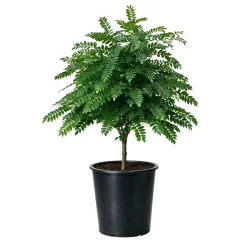
Pothos Yellow Leaves — Overwatering & Root Oxygen Deprivation
Lower leaves turn solid yellow and fall, or large sections of multiple leaves yellow simultaneously. The yellowing is typically uniform across the leaf rather than interveinal. The potting mix remains wet for extended periods. Pothos is extremely drought-tolerant — its roots absorb oxygen from air pockets in the substrate, and when those pockets fill with water for more than 5-7 days, roots begin to suffocate and die, triggering the characteristic yellow-then-drop cycle that is frequently mistaken for nutrient deficiency.
 ⚠ Critical
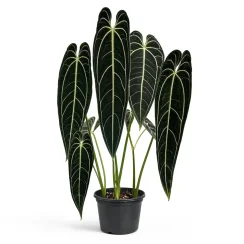
Pothos Root Rot — Pythium & Phytophthora in Waterlogged Substrate
The plant wilts even when the substrate is moist, leaves yellow and collapse, and a foul odour rises from the pot when watered. Removing the plant from the substrate reveals brown-black, slimy roots that fall apart on handling. Healthy Pothos roots are white to cream and firm. Root rot in Pothos is caused by water moulds (Pythium spp., Phytophthora spp.) that colonise waterlogged root zones, breaking down root tissue and cutting off water and nutrient uptake entirely. The plant effectively dies of thirst while sitting in water.
 ⚠ Minor
Pothos Leggy Growth — Long Bare Stems from Insufficient Light
The plant produces long internodes (the stem sections between leaves) with smaller-than-normal leaf size, and lower leaves drop leaving bare woody stems. New leaves emerge but are widely spaced rather than clustered. In variegated cultivars like Marble Queen, leaves in low light lose their white variegation and revert to plain green as the plant maximises chlorophyll production. Pothos is famously tolerant of low light but will grow slowly and leggily, not thrivingly, in poor conditions.
 ⚠ Minor
Pothos Brown Leaf Tips — Fluoride Toxicity, Salt Buildup & Low Humidity
The tips of otherwise healthy green leaves turn papery brown, with the brown zone progressively expanding inward along the leaf margins. The rest of the leaf remains green and turgid. This pattern — tip necrosis with a yellow halo between brown and green tissue — is the classic presentation of fluoride toxicity or accumulated fertiliser salt stress in Pothos. Tap water in many urban areas contains fluoride at 0.7-1.5 mg/L, which Epipremnum is particularly sensitive to.
 ⚠ Moderate
Pothos Mealybugs — White Waxy Colonies in Leaf Axils & Node Crevices
White, cottony or waxy clusters appear in the angles where leaves meet stems (leaf axils), at nodes, and on the undersides of leaves near the midrib. Leaves become sticky from honeydew secretion, and black sooty mould develops on honeydew deposits within 1-2 weeks. Infested leaves yellow and distort. Mealybugs (Pseudococcidae) are soft-bodied, slow-moving insects that feed by piercing plant tissue and extracting phloem sap. Their waxy coating protects them from many contact insecticides, making early interception critical.
 ⚠ Minor
Pothos Variegation Loss — Reversion to Green in Low Light
New leaves emerge entirely green without the characteristic white, cream, or yellow variegation of the cultivar. Existing variegated leaves are not affected, but all new growth lacks colour. In some cases, a highly variegated stem reverts gradually over several leaf cycles until growth is entirely plain green. Variegation in Pothos results from sectors of cells lacking chloroplasts — these white sectors cannot photosynthesise. In low light, the plant selectively produces all-green shoots that photosynthesise more efficiently for survival, at the cost of ornamental appearance.
 ⚠ Minor
Pothos Sudden Wilting — Underwatering, Root Bound & Heat Stress
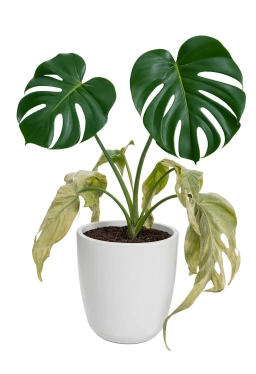
Leaves and stems collapse and droop dramatically, the substrate is bone dry and has pulled away from the pot edges, and the plant fails to recover to full turgidity even after watering. Alternatively, the substrate is moist but the plant still wilts — indicating root damage that prevents water uptake. Pothos has a distinctive wilting behaviour: it droops dramatically and rapidly when thirsty but typically recovers fully within 2-4 hours of thorough watering, making wilting a reliable watering indicator rather than a crisis signal — unless the substrate is already moist.
 ⚠ Moderate
Pothos Spider Mites — Fine Webbing and Stippled, Pale Leaves
Leaves develop a fine bronze or silver stippled pattern — thousands of tiny pale dots where mites have pierced the leaf cells. Fine silken webbing appears between leaves and stems, particularly at the growing tip. In heavy infestations the webbing may cover the entire plant. The plant's overall vigour declines rapidly. Spider mites (Tetranychus urticae and relatives) are not insects but arachnids — they are not killed by insecticides and require specific miticides or contact treatments. They thrive in hot, dry indoor conditions and can complete a full life cycle in 7 days at 30°C.
 ⚠ Minor
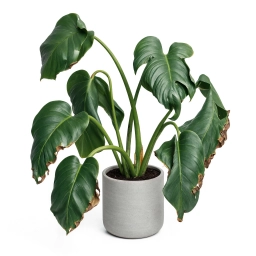
Pothos Pale Washed-Out Leaves — Sun Bleaching from Direct Exposure
Leaves that were deep green or vividly coloured fade to a washed-out pale yellow-green, sometimes with bleached white patches where light was most intense. The affected leaves remain firm and turgid — unlike yellowing from overwatering, which produces soft, collapsing tissue. New leaves emerging after the plant is moved may be a different colour than older leaves. This is chlorophyll degradation from UV exposure: direct sun destroys the chlorophyll molecules in leaf cells faster than the plant can regenerate them.
 ⚠ Moderate
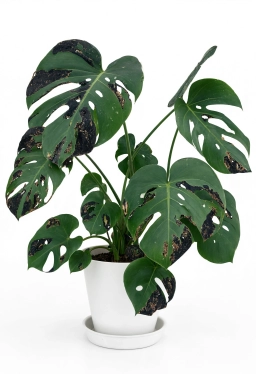
Pothos Brown Spots — Bacterial Leaf Spot & Cold Water Damage
Irregular brown spots appear on the leaf surface, sometimes with a yellow halo, sometimes water-soaked at the edges before turning brown. Spots may enlarge over days and merge. Bacterial leaf spot (Pseudomonas or Erwinia spp.) is a common cause in humid conditions with poor air circulation, while cold water applied directly to warm leaves causes cell damage that manifests as brown irregular marks. These two causes are sometimes confused — bacterial spots have a yellow halo and may spread; cold water damage is more random in placement and static.
 ⚠ Moderate
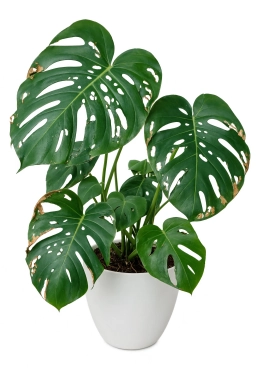
Pothos Thrips — Silvery Leaf Scarring and Deformed New Growth
Leaves develop a characteristic silvery, shiny, or bronze stippled surface as thrips rasp and suck the contents of individual surface cells. New leaves emerge deformed, curled, or with brown streaks. Black thrips frass (excrement) dots appear on the underside of leaves. Thrips (order Thysanoptera) are slender, 1-2 mm insects barely visible to the naked eye. They are particularly damaging because they feed on developing tissue inside rolled new leaves before emergence, causing deformation that persists for the life of the leaf.
 ⚠ Minor
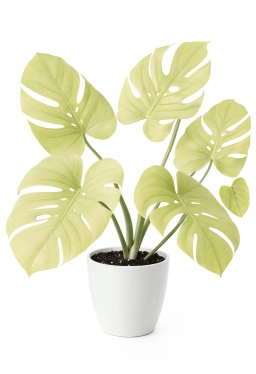
Pothos Nutrient Deficiency — Interveinal Yellowing & Stunted Growth
Leaves yellow between the veins while the veins themselves remain green (interveinal chlorosis) — the classic pattern of iron, manganese, or magnesium deficiency. Or leaves uniformly pale with slowed growth — indicating general nitrogen depletion. Pothos growing in the same substrate for more than 12-18 months without fertilisation will eventually exhaust the available nutrients, displaying these symptoms. Unlike yellowing from overwatering (which affects whole leaves uniformly), nutrient deficiency produces patterned chlorosis specific to which element is lacking.
 ⚠ Moderate
Pothos Cutting Stem Rot — Node Decay in Water & Substrate Propagation
Stem cuttings placed in water or moist substrate turn soft, brown, and slimy at the submerged cut end, progressing upward toward the node and ultimately killing the cutting before roots form. The water in the propagation vessel turns green or cloudy. Pothos is one of the easiest plants to propagate, but improper technique — particularly submerging too much stem tissue, using stagnant warm water, or propagating damaged cuttings — creates ideal conditions for the bacteria and water moulds that cause stem rot before adventitious roots form.
 ⚠ Minor
Pothos Leaf Curling — Dehydration Stress, Cold & Root Restriction
Leaves curl inward along their length (edges rolling toward the midrib) or droop and curl downward. The plant looks thirsty but may not respond normally to watering. Leaf curling in Pothos is a water conservation response — by reducing the exposed leaf surface area, the plant slows water loss through transpiration. Unlike wilting (which is more extreme), curling indicates the plant is under stress and self-regulating before the situation becomes critical.
 ⚠ Moderate
Pothos Fungus Gnats — Larval Root Damage from Bradysia spp.
Tiny black flies (2-4 mm) hover around the pot and fly up when the plant is disturbed or watered. The plant's new growth slows and leaves yellow despite seemingly adequate care. Larvae in the substrate are 4-6 mm long, white with a black head capsule, and feed on organic matter and young roots. In heavy infestations, larval root feeding mimics root rot — the plant wilts and yellows because the root system is physically damaged. Pothos in moist, peat-rich substrates are particularly susceptible.
Pothos Care Guide
Light, watering, humidity, fertilising, repotting and propagation — everything you need to keep your Pothos thriving.
Full care guide →Real Pothos grow diaries
Growers on DailyGrowers log their plant week by week, one photo at a time. Here's how theirs are going.

Growing Pothos too? Start your own diary. It's free and takes 2 minutes.
Start my Pothos diary →See how growers fixed these problems
Browse real Pothos grow diaries from the community — treatments, timelines, and results.
Browse community diaries →Common Pothos Questions
Why are my Pothos leaves turning yellow?
Lower leaves turn solid yellow and fall, or large sections of multiple leaves yellow simultaneously. The yellowing is typically uniform across the leaf rather than interveinal. The… Read the full guide →
Why is my Pothos losing its variegation?
The plant wilts even when the substrate is moist, leaves yellow and collapse, and a foul odour rises from the pot when watered. Removing the plant from the substrate reveals brown-… Read the full guide →
How do I fix leggy Pothos?
The plant produces long internodes (the stem sections between leaves) with smaller-than-normal leaf size, and lower leaves drop leaving bare woody stems. New leaves emerge but are … Read the full guide →
How do I get rid of mealybugs on Pothos?
The tips of otherwise healthy green leaves turn papery brown, with the brown zone progressively expanding inward along the leaf margins. The rest of the leaf remains green and turg… Read the full guide →