 ⚠ Minor
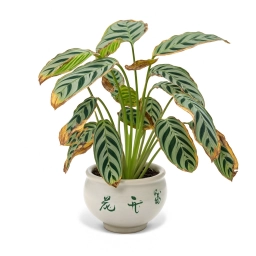
Brown necrotic tips with a thin yellow margin, accumulating with each watering, point to chlorine or fluoride toxicity from tap water rather than dry-air tip burn.
Chlorine & Fluoride Tip Toxicity
Commonly affects: Calathea, Spathiphyllum, Dracaena, sensitive aroids, Maranta leuconeura
Leaf tips and margins turn brown and necrotic, often with a thin yellow band separating the dead tissue from healthy green. The damage accumulates gradually with each watering and is most pronounced on sensitive species that concentrate these elements at the leaf extremities. Unlike low-humidity tip burn, the cause is chemical — chlorine and fluoride in treated tap water.
Potential Causes
- 1Fluoride added to municipal tap water accumulating in leaf tips
- 2Chlorine or chloramine disinfectants in tap water damaging sensitive tissue
- 3Phosphate fertilisers (e.g. superphosphate) contributing additional fluoride
- 4Hard water concentrating these elements at leaf margins as it transpires out
Solution Steps
- 1Switch to filtered, distilled, or rainwater for sensitive species to remove the source.
- 2If using tap water, leave it standing uncovered for 24 hours to allow chlorine to off-gas (note this does not remove fluoride or chloramine).
- 3Flush the substrate periodically to leach out accumulated salts and fluoride.
- 4Avoid phosphate-heavy fertilisers for fluoride-sensitive plants.
- 5Trim brown tips at a natural angle for appearance, cutting only dead tissue.
- 6Monitor new growth — it should emerge clean once the water source is corrected.
Prevention Tip
Fluoride- and chlorine-sensitive plants such as Calatheas and Spathiphyllum do best on rainwater or filtered water. Standing tap water off-gasses chlorine but not fluoride or chloramine, so filtration is the more reliable solution for persistent tip burn.
Related Issues to Explore

Brown, Crispy Leaf Tips — Low Humidity & Salt Stress
Both cause brown tips — chemical toxicity comes from tap-water chlorine and fluoride, while humidity tip burn relates to dry air; sensitive species suffer both.
Read guide
Salt Crust & EC Build-Up in Substrate
Tap water delivers both salts and chlorine/fluoride — switching to low-mineral water and flushing the substrate addresses both problems.
Read guide
Potassium Deficiency — Marginal Scorch
Marginal scorch has several causes — chemical toxicity affects sensitive species via water, while potassium deficiency starts on the oldest leaves.
Read guide